Languages
Thursday, November 26, 2026



News and Views from the Global South
Civil Society

More U.S. Diplomas Come with Crushing Debts
Leah Hughes has big dreams of becoming a community organiser in Appalachia. A rising senior at the California-based Scripps College, Hughes is pursuing a dual degree in International Relations and Studio Art, and is incredibly thankful for her higher education experience thus far.
Africa Activists Urge Obama to Act on Extractive Industries Law
As the three-day U.S.-Africa Leaders Summit got underway here Monday, anti-corruption activists urged President Barack Obama to prod a key U.S. agency to issue long-awaited regulations requiring oil, gas, and mining companies to publish all payments they make in countries where they operate.
Ethics of ‘Mercy Killing’ Up for Debate in India
If a terminally ill patient, with scant hope of recovery, pleads for his death to be facilitated, should the doctors comply? Or, if the family of a patient who has been declared brain-dead requests that her life-support system be withdrawn, should their will be respected?
Indigenous Leaders in Costa Rica Tell Ban Ki-moon Their Problems
Indigenous people in Costa Rica, hemmed in by violent attacks from farmers and ranchers who invade their land and burn down their homes, have found a new ally: United Nations Secretary-General Ban Ki-moon, who met with 36 native leaders during a recent visit to this country.
How Farming is Making Côte d’Ivoire’s Prisoners ‘Feel Like Being Human Again’
François Kouamé, prisoner Number 67, proudly shows off a sow and her four piglets. Dressed in his rubber boots, he passes by two new tractors as he happily makes his way to a field where pretty soon cassava and corn plants will start growing. “Look at those sprouts. It is a lot of work!”
Laws that Kill Protesters in Mexico
People in this town in the central Mexican state of Puebla found out the hard way that protesting can be deadly.
Human Rights Low on U.S-Africa Policy Summit
As the White House prepares to host more than 40 African heads of state for the upcoming U.S.-Africa Leaders Summit, civil society actors from the U.S., Africa and the international community are urging the Barack Obama administration to use the summit as an opportunity to more thoroughly address some of Africa’s most pressing human rights violations.
Cameroon’s Muslim Clerics Turn to Education to Shun Boko Haram
Motari Hamissou used to get along well with his pupils at the government primary school in Sabga, an area in Bamenda, the capital of Cameroon’s North West Region. In the past, Hamissou also lived in peace with his neighbours. No one was bothered by his long, thick beard or the veil his wife, Aisha Hamissou, wore, or the religion they followed.World Bank Board Declines to Revise Controversial Draft Policies
A key committee of the World Bank’s governing board Wednesday spurned appeals to revise a draft policy statement that, according to nearly 100 civil-society groups, risks rolling back several decades of reforms designed to protect indigenous populations, the poor and sensitive ecosystems.
China’s ‘Left-Behind Girls’ Learn Self-Protection
A normally quiet second-grade student, Yuan Yuan* suffers from a mild mental disorder that impacts her ability to learn and communicate. Her father, also mentally disabled, left her several years ago to find work in the city and his family hasn’t heard from him since. Unable to support the family, her mother also left and never returned.
Bill to Fight Discrimination Against HIV-Positive Venezuelans
Venezuela is gearing up to pass a new law to combat discrimination against people living with HIV/AIDS, in a country where the epidemic claims nearly 4,000 lives and infects 11,000 mainly young people every year, including increasing numbers of women.
Is Europe’s Breadbasket Up for Grabs?
Amidst an exodus of some 100,000 people from the conflict-torn eastern Ukraine, ongoing fighting in the urban strongholds of Donetsk and Luhansk between Ukrainian soldiers and separatist rebels, and talk of more sanctions against Russia, it is hard to focus on the more subtle changes taking place in this eastern European nation.
Israel Lobby Galvanises Support for Gaza War
Pro-Israel activists assembled a huge crowd and a long list of congressional leaders and diplomats to declare their unconditional support for Israel’s military operations in the Gaza Strip on Monday, largely downplaying tensions between Jerusalem and Washington.
Under Water: The EPA’s Struggle to Combat Pollution
For years, the U.S. Environmental Protection Agency (EPA) has been frustrated in its efforts to pursue hundreds of cases of water pollution — repeatedly tied up in legal fights about exactly what bodies of water it has the authority to monitor and protect.
Somali Refugees Find an Unlikely Home … In Istanbul
Among the labyrinth of winding narrow streets just outside a major shopping centre in the Kumkapi neighbourhood of Istanbul is a rundown road, congested with shops and apartments stacked atop one another.
In Turbulent Iraq, Children Bear the Brunt of War
As the ambulance stopped in Iraq’s northern city of Kirkuk, people rushed in to help. They unloaded six children, from several months to 11 years old, all injured allegedly by an air attack in the neighbouring town of Tuz Khurmatu.
Drought and Misuse Behind Lebanon’s Water Scarcity
In front of Osman Bin Affan Mosque, in a central but narrow street of Beirut, several tank trucks are being filled with large amounts of water. The mosque has its own well, which allows it to pump water directly from the aquifers that cross the Lebanese underground. Once filled, the trucks will start going through the city to supply hundreds of homes and shops.
A Carrot Is a Carrot – or Is It?
Food security is often thought of as a question of diversifying supply and being able to move food through areas plagued by local scarcity, relying on the global economic system – including trade and transport – as the basis for operations.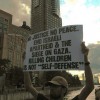
Thousands of New Yorkers Protest Gaza Killings
Thousands of New Yorkers took to the streets in multiple protests this past week against the Israeli offensive in Gaza, which has left at least 1,049 Palestinians dead and over 6,000 injured since Jul. 8.
Oil Lubricates Equatorial Guinea’s Entry into Portuguese Language Community
Evidently, oil talked louder. By unanimous resolution, the Community of Portuguese Language Countries (CPLP) admitted Equatorial Guinea as a full member, in spite of the CPLP’s ban on dictatorial regimes and the death penalty.
AIDS Conference Mourns the Dead, Debates Setbacks
The 20th International AIDS Conference concluded today as the first in its history that remembered not just the 39 million people worldwide who have died of AIDS but also those who lost their lives in the crashed MH17 flight carrying six of its delegates, one of whom was the past president of the International AIDS Society (IAS).« Previous Page — Next Page »


 Representatives of Civil Society, Sierra Leone. Credit: UN Photo/Eskinder Debebe
Civil society faces mounting threats worldwide, even as it remains essential for democratic accountability, especially in countries struggling with economic instability and social inequality. However, at the same time, nations with weak democratic governance structures also systemically suppress the power of civil society. Human rights activists across the Global South frequently challenge issues such as political persecution and gender oppression, but in return face state-sanctioned punishment for their advocacy. Imprisonment and exile are common mechanisms of punishment that seek to erode the strength of civil society. The 2026 World Press Freedom Index has reached its lowest level in 25 years, with more than half of the world’s countries now falling into the "difficult" or “very serious” category for press freedom. IPS seeks to highlight the work of civil society across the Global South as well as the challenges that they face.
Updated by Yilan Batista and Shuli Wong August 2026

The Week with IPS

NEXT STOP - SDGs
Tracking global progress towards a sustainable world
