Languages
Saturday, November 28, 2026



News and Views from the Global South
Civil Society
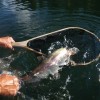
Trout Trump the Taliban
The rivers in northern Pakistan’s Khyber Pakhtunkhwa (KP) province were once thick with trout. Spanning hundreds of kilometres, these water bodies played host to the exotic fish, first introduced by the British in the early 1900s, which eventually became a staple in the diets and livelihoods of the province’s 20 million residents.U.S. Urged to Lean Harder on Bahrain’s Ruling Family
On the eve of the second anniversary of the uprising in Bahrain, the administration of President Barack Obama is being urged to press the royal family to make genuine compromises with the predominantly Shi’a opposition.
Cuba – Five Decisive Years
Early this month, Cubans went to the polls to elect delegates nominated by municipal and provincial assemblies to the island's parliament, the highest government body where citizens' votes carry decisive weight. The turnout, as usual, was over 90 percent, and all the municipal candidates, as usual, were voted in.
Spain’s Crisis Pits Fair Trade Against Empty Wallets
The Spanish public is well aware of the widespread exploitation of workers in the globalised garment industry. But low prices, shrinking buying power and the lure of brand names act as strong disincentives to responsible clothes shopping.
Brazilian President Stumbles on Energy
Brazilian President Dilma Rousseff, whose political career was fuelled by her stellar performance in the energy sector, is now faced with an ironic challenge: how to bring down the unusually high price of electricity predominantly generated by hydropower – the cheapest source – in this South American country of 196.6 million people.
River Restoration Remains Out of Reach
The process of cleaning up the Matanza-Riachuelo river, which runs through the Argentine capital, shows remarkable progress. But the biggest challenge is purifying the water in the basin, which has been damaged by centuries of neglect.
Advocates Lay Groundwork for New Arms Trade Talks
With a new round of negotiations for an international treaty regulating the international trade of small-scale weapons slated for next month, advocates here have stepped up a campaign to clarify what exactly the treaty is trying to accomplish – and to eliminate some opposition to the treaty from within the U.S. Congress that, they say, is based on misinformation.In the Land of Gas, the Residents Have None
The 19,000 inhabitants of the municipality of Caraparí, the area supplying a third of Bolivia’s gas exports, do not have access to gas or petrol, six years after the nationalisation of the mega deposit and almost a quarter century after its discovery.
Q&A: Community Radio Reflects Levels of Democracy
In 1983, producers of popular radio, alternative radio and educational radio convened in Montreal to define a new genre of radio: community radio. Those dialogues led to the formation of the World Association of Community Radio Broadcasters (AMARC).
Gaza Gags Civil Liberties
Gaza is becoming increasingly radicalised as Hamas continues its crackdown on civil liberties, press freedom and the rights of women. In the last few weeks a number of journalists have been arrested and accused of being involved in “suspicious activities”, several detainees shot dead by police during arrest attempts, and female students asked to abide by a strict Islamic dress code.
U.S. Environment Agency Releases First Climate Adaptation Plan
For the first time, the U.S. Environmental Protection Agency (EPA) has publicly released a draft plan on how the department’s programmes will adapt to global warming, in a move that could lay additional groundwork for important new emissions rulemaking the agency may announce in coming months.
U.N.’s Water Agenda at Risk of Being Hijacked by Big Business
Amidst growing new threats of potential conflicts over fast-dwindling water resources in the world's arid regions, the United Nations will commemorate 2013 as the International Year of Water Cooperation (IYWC).
‘We Grow, They Bulldoze, We Re-Plant’
Tawfiq Mandil, 45, stands amongst hundreds of Palestinian farmers, activists, and international supporters in the Gaza Strip's eastern Zeitoun district, about half a kilometre from the border with Israel. They are renewing a call for the boycott of Israeli goods.
Saving a Shrinking Lake
Approaching the Lake Chad basin from Gulfe, a small locality 45 kilometres from Cameroon’s Far North Regional capital Maroua, the atmosphere of despair is palpable: dusty air, fierce and unrelenting winds, wilting plants and sand dunes suggest that this once lush area is undergoing a terrible change.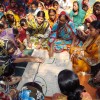
Women’s Leadership Breathes New Life into Bangladesh
Monashatoli, a small coastal village of 5,000 residents in Bangladesh’s southwestern Barguna district, located about 470 kilometres south of the capital Dhaka, is a living model of the success of bottom-up community development.
Marriage Made in Civil Heaven
One couple’s modest marriage in Lebanon has catapulted them into media limelight and sparked a national debate pitting the Prime Minister against the President while eliciting stern condemnation from leading religious figures. Their union is both exceptional and controversial - it is the first civil marriage in the country.IFC Under Fire on Environment, Social Safeguards
Campaigners are seizing on a new internal audit of financial-market lending by the International Finance Corporation (IFC), the World Bank arm that engages in private sector investment, pointing to unusually stark criticism of the institution’s commitment to due diligence.
Mexican Victims Get Law That “Should Not Have to Exist”
"We will not stop fighting until there is justice for our children," says Araceli Rodríguez, the mother of a young federal police agent in Mexico who disappeared along with seven other people in the western state of Michoacán on Nov. 16, 2009.
Corruption Muddies the Waters in Argentina
Two corruption scandals - one homegrown and the other originating in Spain – are again highlighting the connections in Argentina between irregular investments, the misuse of environmental remediation projects for private gain, and plans that contribute to the degradation of natural resources.
U.S. ‘Divestment’ Movement Gaining Momentum
A months-old national campaign to convince U.S. colleges, universities and city governments to withdraw investments from the world’s largest oil and gas companies has seen some notable initial successes.
Q&A: FGM Is About Culture, Not Religion
The fight against female genital mutilation and cutting (FGM/C) continues to gain traction around the world.« Previous Page — Next Page »


 Representatives of Civil Society, Sierra Leone. Credit: UN Photo/Eskinder Debebe
Civil society faces mounting threats worldwide, even as it remains essential for democratic accountability, especially in countries struggling with economic instability and social inequality. However, at the same time, nations with weak democratic governance structures also systemically suppress the power of civil society. Human rights activists across the Global South frequently challenge issues such as political persecution and gender oppression, but in return face state-sanctioned punishment for their advocacy. Imprisonment and exile are common mechanisms of punishment that seek to erode the strength of civil society. The 2026 World Press Freedom Index has reached its lowest level in 25 years, with more than half of the world’s countries now falling into the "difficult" or “very serious” category for press freedom. IPS seeks to highlight the work of civil society across the Global South as well as the challenges that they face.
Updated by Yilan Batista and Shuli Wong August 2026

The Week with IPS

NEXT STOP - SDGs
Tracking global progress towards a sustainable world
