Languages
Sunday, November 15, 2026



News and Views from the Global South
Development & Aid

Tapping into the Power of Young People for Climate Action
Today, our world is 1.1°C warmer than it was in the pre-industrial era, and failure to act urgently could possibly result in increases of 1.5°C-2°C between 2026 and 2042. Climate change poses a serious risk to the fundamental rights of people of every age.
Global Public Investment: Time to Build the Movement Now
Global Public Investment. A short and simple phrase. But one that means so much. At its most basic, GPI means public money being used to invest in goods and services that are of global benefit. There is no shortage of goods and services that need GPI, whether they be used to prevent or respond to environmental catastrophe, international war and conflict, or the next pandemic.
Refugees Face Often Neglected Mental Health Challenges – Report
While refugees globally face insecurity and uncertainty, a new World Health Organization (WHO) report highlights that they also face poorer health outcomes.
Rural Systems Mitigate Impact of Overuse of Water in Chile
Local leaders of the Rural Sanitation Services (RSS) warn that the digging of illegal wells by large agro-export companies in Chile is aggravating the effects of drought and threatening drinking water supplies and social peace.
A World in Crisis Needs Both Trade and Aid
We are in the toughest period the world economy has faced since the creation of the multilateral system more than three-quarters of a century ago. A quadruple shock of COVID, climate change, conflict and cost-of-living has undone years of hard-fought development gains.
Stagflation: From Tragedy to Farce
Half a century after the 1970s’ stagflation, economies are slowing, even contracting, as prices rise again. Thus, the World Bank warns, “Surging energy and food prices heighten the risk of a prolonged period of global stagflation reminiscent of the 1970s.” In March, Reuters reported, “With surging oil prices, concerns about the hawkishness of the Federal Reserve and fears of Russian aggression in Eastern Europe, the mood on Wall Street feels like a return to the 1970s”.
Afghan Refugees, Medical Visitors Bemoan Treatment in Pakistan
Afghan refugees living in Pakistan face a host of problems, ranging from seeking medical treatment to shelter, business, police harassment and violence. Many of those affected have been there for four decades.
Education Cannot Wait Proud to Participate in Global Citizen Festival 2022: Calling on World Leaders and Donors to Empower Girls and End Extreme Poverty Now
Education Cannot Wait (ECW) - the United Nations global fund for education in emergencies and protracted crises - is proud to support and participate in the 2022 Global Citizen Festival. Participants will call on world leaders at the UN General Assembly - and ahead of the G20 and COP27 in November - to step up and invest $600 million into the future of women and girls, close the annual $10 billion climate financing shortfall, deliver $500 million to help African farmers respond to the global food crisis, and provide relief from crushing debts to End Extreme Poverty Now.
The Hunger Factory (II): The Modern Horsemen of the Apocalypse
While often too quickly attributing -quasi exclusively- the world unprecedented hunger tragedy to the current proxy war in Ukraine, other major causes remain hidden in plain sight.
ECW Interviews Three Inspiring #Youth4EiE Advocates on International Youth Day
On this International Youth Day, ECW interviewed three inspiring #Youth4EiE Advocates – Nataly Rivas, Angela Abizera, and Jean-Paul Saif. Nataly, Angela, and Jean-Paul are three Global Youth for Education in Emergencies panel members.
‘Aid Organizations Must Include the Youth Voice’ August 12, 2022—International Youth Day
Today marks International Youth Day, a global celebration of the transformative power of young people. Introduced by the United Nations General Assembly in 1999, the event was inaugurated not only to observe the power of the youth voice, but to serve as a promise from those in power to activate the power of youth across the development sector.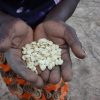
The Hunger Factory (I): The Miracle of the Sudden Rise and Fall of Food Prices
The benchmark for world food commodity prices declined “significantly” in July, with major cereal and vegetable oil prices recording double-digit percentage declines.
Tragic Irony of Hunger Deaths in Karamoja, Uganda Amidst Plenty of Climate Adaptation Technologies
Hundreds of people have died of famine in Uganda’s Karamoja region, and local leaders say that some people are now eating grass to survive.
Pariah Solidarity Between Myanmar & Russia
On August 3rd residents of the Myanmar capital Naypyitaw were suddenly awakened by the sound of military helicopters in the air. The helicopters hovered over the city all day. The way to the regime's foreign ministry was also blocked for hours.
Climate Change Conclusion: Time for Bold Action
With climate change bringing about increasing numbers of human deaths and untold suffering, and rising economic, social, and environmental consequences worldwide, it’s time for governments to take bold action to address the climate change emergency.
UN’s Education Summit: An Opportunity to Create a Bottom-Up Global Governance
The upcoming summit on Education, part of the UN Secretary General’s ambitious agenda, can truly bring accountability and participation to the inevitably new ways education will be imparted in the future.
Women Have Always Trailed Men in Research Output: How COVID Made the Situation Worse
The under-representation of women in research is well documented. Emerging evidence suggests that the COVID-19 pandemic has exacerbated this inequality and disrupted the research enterprise globally.
Managing sea cucumber fisheries in the Pacific region: a one-day training to educate key stakeholders in New Caledonia
Holothurians, also known as sea cucumbers, are an important source of income for coastal communities in the Pacific. Their exploitation has grown over the past decades, targeting international markets. In some parts of the world, they are considered a delicacy where they can fetch very high prices consequently, they are being overfished in some areas of the Pacific region.
Aid Workers Encounter Courage, Damage, Dislocation and Resilience in War-Torn Ukraine
During Todd Bernhardt’s visit to Ukraine’s conflict zones, he encountered untold damage to hospitals, healthcare clinics, and communities. The Senior Director of Global Communications at the International Medical Corps also encountered enormous courage.
Infrastructure Growth Threatens Brazilian Amazon with Further Deforestation
The mandatory initial permit granted by Brazil's environmental authority for the repaving of the BR-319 highway, in the heart of the Amazon jungle, intensified the alarm over the possible irreversible destruction of the rainforest.
Colombia’s New President May Need U.S. Blessing to Realize his Domestic Agenda
For the first time in its contemporary history, Colombia has a left-wing government. The presidency of Gustavo Petro, who took the reins August 8, marks a significant break from the political status quo. He also represents a stiff test for U.S. influence in Latin America.« Previous Page — Next Page »


 2026 High-level Political Forum on Sustainable Development. Credit: UN Photo/Eskinder Debebe
In 2015, the United Nations and its Member States adopted the Sustainable Development Goals (SDGs) in an effort to make the world a more sustainable and peaceful place for future generations. Progress on the 17 SDGs has been uneven, and inequality persists across the globe. 10 years after adoption, the 2025 UN SDGs Report revealed that only 35% of the SDG targets are on track, with more than half moving too slowly, and 18% moving backwards from the 2015 baseline. Poverty remains one of the world’s most pressing issues, with hunger, violence, and inequality impeding the opportunities for all people to achieve success. In September 2024, the United Nations Summit of the Future introduced a new goal: to eradicate global poverty by 2030, ensure universal rights to basic services, and increase the overall standard of living in terms of industrialization, economic well-being, citizen health, and literacy. Furthermore, recent shifts in United States foreign aid policy – notably, major budget cuts to USAID and the termination of thousands of development programmes– have severely threatened vital lifelines of financial aid to impoverished communities around the world. Additionally, the United States’ withdrawal from the Paris Climate Agreement has undercut international efforts at sustainable development. With the upcoming 2030 deadline, the UN Secretary-General has called for urgent multilateralism across six priority areas: food systems, energy, digital connectivity, education, jobs and social protection, and climate and biodiversity. IPS sheds light on marginalized communities that struggle on a daily basis to survive and have their stories heard and respected.
Updated by Yilan Batista and Shuli Wong August 2026

The Week with IPS

NEXT STOP - SDGs
Tracking global progress towards a sustainable world
Tracking global progress towards a sustainable world
