Languages
Sunday, November 22, 2026



News and Views from the Global South
Development & Aid

Regional Solutions Key for Asia-pacific’s Transition to Sustainable Energy
The Asia-Pacific region is at a turning point in its energy trajectory. The energy solutions that have fuelled growth in the region over the past few decades are no longer compatible with the sustainable development aspirations of our nations and their people. In transitioning to a new era of sustainable energy, policymakers across the region face complex decisions. Supplies must be secure and affordable, and they must fill the energy access gap which leaves half a billion people across the region without access to electricity. At the same time mitigating the local impacts of energy generation and use will be vital in resolving problems such as the air pollution choking our cities and the global consequences of greenhouse gas emissions causing climate change. Solutions exist, but only through regional cooperation and integration can Asia and the Pacific transition to sustainable energy in time to meet the ambitious 2030 Agenda for Sustainable Development and its Goals.
Why Polio Campaigns Must Reach Every Last Child in Kenya
For a long time, no person in Kenya suffered the devastating disability that is caused by polio. In fact, the only reminder in the early 2000s was the victims in the streets of Nairobi, many of whom had been paralyzed as children and adults. Their lives were ravaged by this terrible, vaccine-preventable disease.
A Women’s March on the World
Just one day after the inauguration of President-elect Donald Trump, hundreds of thousands of women are expected to attend one of the largest demonstrations in history for gender equality.
Pacific Islanders Call for U.S. Solidarity on Climate Change
The new political power of business magnate Donald Trump, who will be inaugurated Jan. 20 as the 45th President of the United States, will have ramifications for every global region, including the Pacific Islands.
It’s Time We Get Serious About Organic Farming
Conventional farming and food production practices in this country are creating serious environmental and public health problems. Every day, an industrial farming system spinning out of control confronts all Americans with serious challenges. Among these are the explosion in toxic algae blooms in sensitive waterways, cancer-causing pesticides on foods we feed our children, the rapid spread of antibiotic-resistant superbugs, and, of course, contaminated drinking water, all courtesy of corporate agribusiness.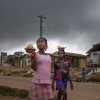
Inequality (II): “It Will Take 170 Years for Women to Be Paid as Men Are”
While just eight individuals, all of them men, own the same wealth as 3.6 billion people -- half of world’s total population -- it will take 170 years for women to be paid the same as men, warns a new major report on inequality.
Kenya Can Lead the Way to Universal Health Care in Africa
Consider this: every year, nearly one million Kenyans are pushed below the poverty line as a result of unaffordable health care expenses.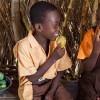
Is Cash Aid to the Poor Wasted on Tobacco and Alcohol?
Not at all. Or at least not necessarily. The fact is that cash transfer programmes –regular money payments to poor households—are meant to reduce poverty, promote sustainable livelihoods and increase production in the developing world. One in four countries on Earth are applying them. But are they effective?
Ordinary Citizens Help Drive Spread of Solar Power in Chile
Chile, Latin America’s leader in solar energy, is starting the new year with an innovative step: the development of the country´s first citizens solar power plant.
Tobacco Industry Misleads Developing Countries Over Regulations
Low and middle-income countries have far fewer tobacco regulations than high-income countries and are paying the price - with bigger health and economic impacts.
The Cuban Recession and the Introduction of Public Bonds
The macroeconomic data for the close of the year provided by the Cuban government confirms the projections that Cuba would enter a recession as a result of the Venezuelan shock.
Looting and Unrest Spread in Mexico Over Gas Price Hike
“We are absolutely fed up with the government’s plundering and arbitrary decisions. We don´t deserve what they’re doing to us,“ said Marisela Campos during one of the many demonstrations against the government´s decision to raise fuel prices.
When Your Healers Become Your Killers
There is a major though silent global threat to human and animal health, with implications for both food safety and food security and the economic well-being of millions of farming households. It is so-called anti-microbial resistance.
China’s Billion-Dollar Re-entry in Sri Lanka Met with Public Protests
Beragama is a typical Sri Lankan rural village, with lush green paddy fields interspersed by small houses and the village temple standing at the highest location. Despite being close to the island’s second international harbour and its second international airport, Beragama appears untouched by modernity.
Native Seeds Sustain Brazil’s Semi-Arid Northeast
In his 76 years of life, Raimundo Pinheiro de Melo has endured a number of droughts in Brazil’s semi-arid Northeast region. And he remembers every one of them since 1958. “The worst one was in 1982 and 1983, the only time that the river dried up,” said Pinheiro do Melo, who has lived near the river since 1962. “The one in 1993 was also very bad,” he told IPS, because neither Bolsa Familia nor Networking in Brazil’s Semi-Arid Region (ASA) existed yet, which contribute to a less traumatic coexistence with droughts like the current one, which has dragged on for five years.
Threat of Famine Looms in Yemen
Millions of Yemenis could soon face widespread famine if no action is taken to improve food access through humanitarian or trade means, an early warning system has said.
Migrants Seeking Europe Catch Their Breath in Morocco
With a stable economy and a peaceful political climate, Morocco – which has always been a transit country for migrants -- is becoming a potential new destination for settlement. The elusive dream for most of those who cross the Sahara, though, is still Europe.
PKSF and IPS to Partner on Communicating for Positive Change
The Palli Karma Sayahak Foundation (PKSF), a public sector apex development body in Bangladesh, and Inter Press Service (IPS), the international news agency focused on development issues, have teamed up to raise public awareness globally about PKSF’s best practices and provide vital information to decision-makers.
Anti-Fracking Movement Alarmed at Trump’s Focus on Fossil Fuels
Earl Hatley, a descendant of the Cherokee/Delaware tribe, has witnessed the consequences of using hydraulic fracturing or “fracking” on his native land to produce shale gas.
No More Mass Deaths from Drought in Northeast Brazil
The drought that has plagued Brazil’s semiarid Northeast region since 2012 is already more severe than the 1979-1983 drought, the longest in the 20th century. But prolonged dry spells no longer cause the tragedies of the past.
Immunisation and Inequality in 2016
Childhood immunisation is one of the safest and most cost-effective health interventions available, yet many of the world's most vulnerable children continue to miss out. A World Health Organisation report entitled State of inequality: childhood immunisation was released last week. While the report is mostly good news, immunisation rates are up and many countries have eradicated diseases entirely, a large population of children remain unimmunised.« Previous Page — Next Page »


 2026 High-level Political Forum on Sustainable Development. Credit: UN Photo/Eskinder Debebe
In 2015, the United Nations and its Member States adopted the Sustainable Development Goals (SDGs) in an effort to make the world a more sustainable and peaceful place for future generations. Progress on the 17 SDGs has been uneven, and inequality persists across the globe. 10 years after adoption, the 2025 UN SDGs Report revealed that only 35% of the SDG targets are on track, with more than half moving too slowly, and 18% moving backwards from the 2015 baseline. Poverty remains one of the world’s most pressing issues, with hunger, violence, and inequality impeding the opportunities for all people to achieve success. In September 2024, the United Nations Summit of the Future introduced a new goal: to eradicate global poverty by 2030, ensure universal rights to basic services, and increase the overall standard of living in terms of industrialization, economic well-being, citizen health, and literacy. Furthermore, recent shifts in United States foreign aid policy – notably, major budget cuts to USAID and the termination of thousands of development programmes– have severely threatened vital lifelines of financial aid to impoverished communities around the world. Additionally, the United States’ withdrawal from the Paris Climate Agreement has undercut international efforts at sustainable development. With the upcoming 2030 deadline, the UN Secretary-General has called for urgent multilateralism across six priority areas: food systems, energy, digital connectivity, education, jobs and social protection, and climate and biodiversity. IPS sheds light on marginalized communities that struggle on a daily basis to survive and have their stories heard and respected.
Updated by Yilan Batista and Shuli Wong August 2026

The Week with IPS

NEXT STOP - SDGs
Tracking global progress towards a sustainable world
Tracking global progress towards a sustainable world
