Languages
Monday, November 23, 2026



News and Views from the Global South
Development & Aid

School Meals Bolster Family Farming in Brazil
“That law should have existed since the end of slavery, which threw slaves into the street without offering them adequate conditions for working and producing, turning them into semi-slaves,” said Brazilian farmer Idevan Correa.
Disaster Strikes Pakistan’s Khyber Region, Aid Efforts Slow in Coming
Jauhar Shah lost everything. His house came tumbling down while his family was sleeping. He survived but his wife and daughter did not. The October 26 tremor measuring 8.1 Richter scale changed his life forever.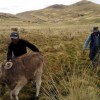
Parliamentary Forum to Set New Goals Against Hunger
Undertaking the challenge of pushing for new legislation to guarantee food security in their countries, legislators from Latin America and the Caribbean, together with guest lawmakers from Africa and Asia, will hold the Sixth Forum of the Parliamentary Front Against Hunger Nov. 15-17.
Opinion: Will We Find the Resources to Create a Better World?
The UN General Assembly adopted the ambitious Sustainable Development Goals (SDGs) at a global summit of world leaders in September. They agreed on 17 new universal goals, and 169 targets that will provide the framework for economic and political policies of UN Member States over the next 15 years to make the world a better place for humanity.
Kenya’s Market-Based Youth Project Changing Lives
Though the Kenyan government has demonstrated a commitment to lift its youth out of poverty, particularly those in the informal settlements, projects designed for youth continue to be crippled by rampant corruption.
Caribbean Agriculture Looks to Cope with Climate Change
Climate change represents a clear and growing threat to food security in the Caribbean with differing rainfall patterns, water scarcity, heat stress and increased climatic variability making it difficult for farmers to meet demand for crops and livestock.
Kurdish Highlanders Fear the Sky
You can find those popular Turkish chocolate and orange biscuits, and there are also shovels for the coming winter snow. There’s also no shortage of those popular watches boasting the face of Abdullah Ocalan, the imprisoned leader of the Kurdistan Workers Party (PKK).UN Targets “Hidden Source” for Development Funding
The United Nations has estimated a hefty funding requirement of over 3.5 trillion to 5.0 trillion dollars per year for the implementation of its ambitious post-2015 development agenda, including 17 Sustainable Development Goals (SDGs), approved by world leaders in September.
Urgently Needed: Studies Linking Land Degradation, Migration, Conflict and Political Instability
Some 135 million people could be displaced by 2045 as a result of land desertification, according to a recent UK ministry of defence report. This figure could rise to 200 million who are displaced by other climate change impacts like natural disasters by 2050, said British environment refugee specialist Norman Myers.
Climate Change Threatens Flavour of Argentine Wine
Purple garlic that is losing its color? More translucent wine? Climate change will also affect the flavours of our food in the absence of measures to mitigate the impacts of global warming, which are already being felt in crops that are basic to local economies, such as in the Argentine province of Mendoza.
World Trade Organization Rules Help to Support Better Public Health
Trade and the multilateral trading system can help in creating a more favourable global environment for public health policies and the implementation of a balanced and effective intellectual property system.
Open Data – Still Closed to Latin American Communities
Open data policies in Latin America have not yet enabled communities to exercise their right to access to information, consultation and participation with regard to mining or infrastructure projects that affect their surroundings and way of life.
Decent Work Crucial To Eliminating Poverty and Hunger
Over the eight years since the onset of the global financial crisis in 2008, the ranks of the unemployed have swollen to over 200 million worldwide. That number captures only a fraction of those who remain vulnerable and insecure, since more than four-fifths of the global workforce is outside the formal sector, with poor access to unemployment or other traditional social security benefits.
Opinion: Eliminating Malaria in the Americas: An Opportunity We Cannot Afford to Miss
An issue mostly associated with Africa and Asia, malaria may not initially come to mind when we think of the Americas.
Zimbabwe’s Mega Dam Project Could Flounder in the Face of Climate Change
Zimbabwe's planned Batoka Gorge power project on the Zambezi River is expected to generate 2,400 megawatts (MW) of electricity, upward from an initial 1,600 MW, but the worsening power cuts that are being blamed on low water levels have renewed concerns about the effects of climate change on mega dams.
Nicaragua’s Interoceanic Canal, a Nightmare for Environmentalists
The international scientific community’s fears about the damage that will be caused by Nicaragua’s future interoceanic canal have been reinforced by the environmental impact assessment, which warns of serious environmental threats posed by the megaproject.
IITA Promotes a Solution that Puts Smallholders’ Food, Nutrition and Income in a Bag
Sometimes the best solutions can appear to be so simple that it’s hard to imagine why they weren’t invented centuries ago.
How Climate Change Threatens Zambia’s Already Fragile Nutrition Record
It is slightly after 10 o’clock in the morning and 48-year-old Felix Muchimba of Siamuleya village in Pemba district has just finished having breakfast – a traditional drink called Chibwantu, made of maize meal and grit.
Central America Seeks Recognition of Its Vulnerability to Climate Change
For decades, the countries of Central America have borne the heavy impact of extreme climate phenomena like hurricanes and severe drought. Now, six of them are demanding that the entire planet recognise their climate vulnerability.
Opinion: Integrating Water, Sanitation and Health are Key to the Promise of the UN Global Goals
The 193 member states of the United Nations have adopted an ambitious 15-year sustainable development agenda, the 2030 Global Goals.
Nepal Appeals to U.N. to Help Lift Economic Blockade
A coalition of independent Nepali citizens – including diplomats, journalists, women’s rights leaders, medical doctors and former U.N. officials – is calling on the international community and the United Nations to take “effective steps” to help remove an “economic blockade” imposed on Nepal.« Previous Page — Next Page »


 2026 High-level Political Forum on Sustainable Development. Credit: UN Photo/Eskinder Debebe
In 2015, the United Nations and its Member States adopted the Sustainable Development Goals (SDGs) in an effort to make the world a more sustainable and peaceful place for future generations. Progress on the 17 SDGs has been uneven, and inequality persists across the globe. 10 years after adoption, the 2025 UN SDGs Report revealed that only 35% of the SDG targets are on track, with more than half moving too slowly, and 18% moving backwards from the 2015 baseline. Poverty remains one of the world’s most pressing issues, with hunger, violence, and inequality impeding the opportunities for all people to achieve success. In September 2024, the United Nations Summit of the Future introduced a new goal: to eradicate global poverty by 2030, ensure universal rights to basic services, and increase the overall standard of living in terms of industrialization, economic well-being, citizen health, and literacy. Furthermore, recent shifts in United States foreign aid policy – notably, major budget cuts to USAID and the termination of thousands of development programmes– have severely threatened vital lifelines of financial aid to impoverished communities around the world. Additionally, the United States’ withdrawal from the Paris Climate Agreement has undercut international efforts at sustainable development. With the upcoming 2030 deadline, the UN Secretary-General has called for urgent multilateralism across six priority areas: food systems, energy, digital connectivity, education, jobs and social protection, and climate and biodiversity. IPS sheds light on marginalized communities that struggle on a daily basis to survive and have their stories heard and respected.
Updated by Yilan Batista and Shuli Wong August 2026

The Week with IPS

NEXT STOP - SDGs
Tracking global progress towards a sustainable world
