Languages
Monday, November 23, 2026



News and Views from the Global South
Development & Aid

Poverty and Slavery Often Go Hand-in-Hand for Africa’s Children
“Poverty has become part of me,” says 13-year-old Aminata Kabangele from the Democratic Republic of Congo. “I have learned to live with the reality that nobody cares for me.”
Majority of Child Casualties in Yemen Caused by Saudi-Led Airstrikes
Of the 402 children killed in Yemen since the escalation of hostilities in March 2015, 73 percent were victims of Saudi coalition-led airstrikes, a United Nations official said Monday.
Alternative Destinations Emerge as Cuba Gets Ready for Tourism Boom
Along the road to the Viñales valley, travelled by thousands of tourists to Cuba, lies the home of self-taught artist Miguel Antonio Remedios, which he has turned into a sort of museum to show visitors a wooden home typical of this mountainous area in the west of the country.
U.N. Aid Agencies Launch Emergency Hotline for Displaced Iraqis
In the hopes of better responding to the needs of over three million displaced Iraqis, United Nations aid agencies today launched a national hotline to provide information on emergency humanitarian services like food distribution, healthcare and shelter.
Shifting Sands: How Rural Women in India Took Mining into their Own Hands
Thirty-seven-year-old Kode Sujatha stands in front of a hut with a palm-thatched roof, surrounded by a group of men shouting angrily and jostling one another for a spot at the front of the crowd.
Climate Change Shrinking Uganda’s Lakes and Fish
Climate change is reducing the size of several species of fish on lakes in Uganda and its neighbouring East African countries, with a negative impact on the livelihoods of millions people who depend on fishing for food and income.
China’s Economy Has Sounded the Alert; Will Latin America Listen?
For years, Latin America has exported its raw materials to China’s voracious factories, fuelling economic growth. But now that the Asian giant is putting a priority on domestic consumption over industrial production, how will this region react?
UAE Wins Hearts and Minds at World Exhibition in Milan
She only turned nine last June. But Mahra Mustafa has become a celebrity at the Expo Milan. She stars as Sara in ‘The Family Tree’, a short film on the UAE’s heritage being screened at the United Arab Emirates pavilion. Sara is in fact the face of young, dynamic and innovative Emirates.
U.S. Provides Cover for Use of Banned Weapons in Yemen
The United States is providing a thinly-veiled cover virtually legitimising the use of cluster bombs – banned by an international convention – by Saudi Arabia and its allies in their heavy fighting against Houthi rebels in Yemen.
Opinion: Mexico’s Gruesome War Against Migrants
“Pray for me.” Those are the last words Eva Nohemi Hernández Murillo told her mother, Elida Yolanda, through a patchy phone line on the evening of Aug. 22, 2010.
Q&A: MDG Victories Take Spotlight at South-South Awards
Next month, the South-South Awards will be taking place for the fifth time, honouring the achievements and contributions of heads of state and government, as well as representatives from the private sector and civil society in promoting sustainable development in the Global South.
U.N. Remains Helpless Watching Rising Deaths of Children in War Zones
The rising death toll of civilians, specifically women and children, in ongoing military conflicts is generating strong messages of condemnation from international institutions and human rights organisations – with the United Nations remaining helpless as killings keep multiplying.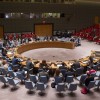
U.N. Official Says Human Suffering in Yemen ‘Almost Incomprehensible’
With a staggering four in five Yemenis now in need of immediate humanitarian aid, 1.5 million people displaced and a death toll that has surpassed 4,000 in just five months, a United Nations official told the Security Council Wednesday that the scale of human suffering is “almost incomprehensible”.
The Future Tastes Like Chocolate for Rural Salvadoran Women
Idalia Ramón and 10 other rural Salvadoran women take portions of the freshly ground chocolate paste, weigh it, and make chocolates in the shapes of stars, rectangles or bells before packaging them for sale.
U.N. Relief Agency Pledges to Open Schools ‘On Time’ for Half a Million Palestinian Refugees
Overcoming a serious funding shortfall, and caught between numerous regional conflicts, the United Nation’s humanitarian agency for Palestinian refugees announced on Aug. 19 that it would nevertheless open schools on time for the roughly half-a-million children who rely on the international community for their education.
Opinion: The Writing on the Western Wall
The writing on the Western Wall is evident to most Israelis: “דמוגרפיה היא גורל” or “demography is destiny”. Those unwilling to acknowledge the prophetic message are either deceiving themselves or simply ignoring it in order to avoid facing the implications of demography for Israel’s future.
Native Protest Camp in Argentine Capital Fights for Land and Visibility
The indigenous camp installed six months ago in the Argentine capital is virtually invisible to passersby who drive or walk quickly around it. The protesters are demanding the return of their land in the northeastern province of Formosa, which has not been fully demarcated and is caught in a web of conflicting economic interests.
Humanitarian Response in Afghanistan Falters in the Face of Intensifying Conflict
As the number of civilians impacted by the intensifying conflict in Afghanistan rises along with the fighting, humanitarian agencies are struggling to meet the needs of the wounded, hungry and displaced.Iran Deal a ‘Net-Plus’ for Nuclear Non-Proliferation Worldwide
As the U.S. Congress prepares to vote next month on the landmark Joint Comprehensive Plan of Action (JCPOA), which was agreed on July 14 between the world’s leading powers and Iran, and has been approved by the U.N. Security Council, eminent nuclear non-proliferation experts are mobilising international support for its immediate implementation.
Kudos for Bolivia’s Success in Reducing Coca Cultivation
The United Nations Office on Drugs and Crime (UNODC) has praised Bolivia for reducing coca bush cultivation for the fourth year in a row. According to the latest Coca Crop Monitoring Survey, released Tuesday in La Paz, coca cultivation declined by 11 per cent in 2014, compared to the previous year.
U.N. Marks Humanitarian Day Battling Its Worst Refugee Crisis
The United Nations is commemorating World Humanitarian Day with “inspiring” human interest stories of survival – even as the world body describes the current refugee crisis as the worst for almost a quarter of a century.« Previous Page — Next Page »


 2026 High-level Political Forum on Sustainable Development. Credit: UN Photo/Eskinder Debebe
In 2015, the United Nations and its Member States adopted the Sustainable Development Goals (SDGs) in an effort to make the world a more sustainable and peaceful place for future generations. Progress on the 17 SDGs has been uneven, and inequality persists across the globe. 10 years after adoption, the 2025 UN SDGs Report revealed that only 35% of the SDG targets are on track, with more than half moving too slowly, and 18% moving backwards from the 2015 baseline. Poverty remains one of the world’s most pressing issues, with hunger, violence, and inequality impeding the opportunities for all people to achieve success. In September 2024, the United Nations Summit of the Future introduced a new goal: to eradicate global poverty by 2030, ensure universal rights to basic services, and increase the overall standard of living in terms of industrialization, economic well-being, citizen health, and literacy. Furthermore, recent shifts in United States foreign aid policy – notably, major budget cuts to USAID and the termination of thousands of development programmes– have severely threatened vital lifelines of financial aid to impoverished communities around the world. Additionally, the United States’ withdrawal from the Paris Climate Agreement has undercut international efforts at sustainable development. With the upcoming 2030 deadline, the UN Secretary-General has called for urgent multilateralism across six priority areas: food systems, energy, digital connectivity, education, jobs and social protection, and climate and biodiversity. IPS sheds light on marginalized communities that struggle on a daily basis to survive and have their stories heard and respected.
Updated by Yilan Batista and Shuli Wong August 2026

The Week with IPS

NEXT STOP - SDGs
Tracking global progress towards a sustainable world
