Languages
Thursday, September 10, 2026



News and Views from the Global South
Energy

Resolving Key Nuclear Issue Turns on Iran-Russia Deal
U.S. and Iranian negotiators are working on a compromise approach to the issue of Iran’s uranium enrichment capabilities, which the Barack Obama administration has said in the past Iran was refusing to make concessions on.
Bougainville Voices Say ‘No’ to Mining
The viability of reopening the controversial Panguna copper mine in the remote mountains of Central Bougainville, an autonomous region in the east of Papua New Guinea, has been the focus of discussions led by local political leaders and foreign mining interests over the past four years.
Good Twins or Evil Twins? U.S., China Could Tip the Climate Balance
China and the United States are responsible for 35 percent of global carbon emissions but could do their part to keep climate change to less than two degrees C by adopting best energy efficiency standards, a new analysis shows.
“Yeil” – The New Energy Buzzword in Argentina
In Argentina they call it “yeil”, the hispanicised version of “shale”. But while these unconventional gas and oil reserves are seen by many as offering a means to development and a route towards energy self-sufficiency, others believe the term should fall into disuse because the global trend is towards clean, renewable sources of energy.
OPINION: Where Governments Fail, It’s Up to the People to Rise
Pomerania in northern Poland is famous for its unpolluted environment, fertile soils and historic heritage. So far, these valuable farmlands have been free from heavy industry but that situation might change as a shadow looms over the lives of Pomeranians.
How Long Before Another Soma Mine Disaster?
Six days a week, Tahir Cetin spends seven and a half hours hundreds of feet underground on a narrow ledge, mining coal near Soma, Turkey. He breathes in dust that is destroying his lungs, and digs into walls that could collapse on top of him. With one false step, he could fall to his death.
OPINION: The Front Line of Climate Change is Here and Now
The fate of my country rests in your hands: that was the message which Ian Fry, representing Tuvalu gave at the United Nations Climate Change Conference in Copenhagen five years ago. This is also the message that the Pacific Climate Warriors have come to Australia to bring.
Kazakhstan’s Nazarbayev Signals U-Turn on Alternative Energy
From small villages to big cities, wherever you go in Kazakhstan these days, billboards offer reminders that Astana is gearing up to host Expo 2017, the next World’s Fair. Kazakhstan helped secure the right to host the event with a pledge to emphasise green energy alternatives. But now it appears that Kazakhstan is red-lighting its own green transition.Global South Brings United Front to Green Climate Fund
The United Nations’ key mechanism for funding climate change-related mitigation and adaptation in developing countries is now ready to receive funds, following a series of agreements between rich and poor economies.
Añelo, from Forgotten Town to Capital of Argentina’s Shale Fuel Boom
This small town in southern Argentina is nearly a century old, but the unconventional fossil fuel boom is forcing it to basically start over, from scratch. The wave of outsiders drawn by the shale fuel fever has pushed the town to its limits, while the plan to turn it into a “sustainable city of the future” is still only on paper.
Climate Negotiators “Sleepwalking” in Bonn
The 410,000 people who took to the streets for climate action in New York City during the U.N. Climate Summit would have been outraged by the 90-minute delay and same-old political posturing at the first day of a crucial round of climate treaty negotiations in Bonn at the World Congress Center.
We Must Think of “Security” in New Ways
Recent events in the Arab world and elsewhere have underscored the point that traditional notions of security being dependent solely on military and related apparatus are outmoded.
Pacific Islanders Take on Australian Coal
The recent blockade of ships entering the world’s largest coal port in Newcastle, Australia, has brought much-needed attention to the negative impacts of the fossil fuel industry on global climate patterns. But it will take more than a single action to bring the change required to prevent catastrophic levels of climate change.
Pacific Climate Change Warriors Block World’s Largest Coal Port
Climate Change Warriors from 12 Pacific Island nations paddled canoes into the world’s largest coal port in Newcastle, Australia, Friday to bring attention to their grave fears about the consequences of climate change on their home countries.History of Key Document in IAEA Probe Suggests Israeli Forgery
Western diplomats have reportedly faulted Iran in recent weeks for failing to provide the International Atomic Energy Agency with information on experiments on high explosives intended to produce a nuclear weapon, according to an intelligence document the IAEA is investigating.
Bamboo Could Be a Savior for Climate Change, Biodiversity
Bamboo Avenue is a two-and-a-half mile stretch of road in Jamaica’s St. Elizabeth parish. It is lined with giant bamboo plants which tower above the road and cross in the middle to form a shady tunnel. The avenue was established in the 17th century by the owners of the Holland Estate to provide shade for travelers and to protect the road from erosion.
Kyrgyzstan Looks to Alternative Fuels Ahead of Looming Winter Shortages
Each winter in Kyrgyzstan the energy situation seems to worsen; blackouts last longer, and officials seem less able to do anything to improve conditions. This year is expected to be particularly difficult.
Ahead of Myanmar Trip, Obama Urged to Demand Extractives Transparency
Lawmakers here are urging President Barack Obama to put transparency in the extractives sector at the centre of an upcoming trip to Myanmar.
Drought Plagues Brazil’s Richest Metropolis
Agricultural losses are no longer the most visible effect of the drought plaguing Brazil’s most developed region. Now the energy crisis and the threat of water shortages in the city of São Paulo are painful reminders of just how dependent Brazilians are on regular rainfall.
World Bank Pushes Private Sector for Major Investments in Infrastructure
The World Bank has initiated a major call to action for private sector investors around infrastructure projects in developing countries.
2015 a Make-or-Break Year for Nuclear Disarmament
U.N. Secretary-General Ban Ki-moon last month singled out what he described as "one of the greatest ironies of modern science": while humans are searching for life on other planets, the world's nuclear powers are retaining and modernising their weapons to destroy life on planet earth.« Previous Page — Next Page »


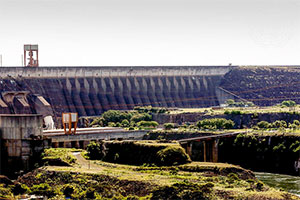 UN Power Plant, Paraguay. Credit: UN Photo/Evan Schneider
Energy has posed a great challenge for economies around the world. As global energy consumption skyrockets throughout the years, so does the need for sustainable solutions. The Sustainable Development Goals are essential in providing people with access to safe, affordable, and sustainable energy sources that minimize harm on the planet. Progress towards these goals opens the door for an advancement in modernization for communities on a global level and allows for a potential mitigation of tensions between nations.
The UN’s Summit of the Future in 2024 offered new initiatives that are being taken to achieve these goals, including a decreased reliance on fossil fuels, a switch to renewable energy sources, and improved climate financing.
IPS is well positioned to provide relevant, insightful, and compelling analysis of recent updates and measures being taken around the world to achieve a cleaner future.

The Week with IPS

NEXT STOP - SDGs
Tracking global progress towards a sustainable world
Tracking global progress towards a sustainable world
