
Monday, November 16, 2026



News and Views from the Global South
Environment
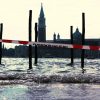
Climate Change-Related New Record-Breaking Events: It’s Time to Think Outside the Box
Recently, Italy declared a State of Emergency because of record-breaking flooding while on 11 November, it did not rain anywhere on the continent of Australia, also breaking a record.
IDB Modernises Crucial Social and Environmental Safeguards
The Inter-American Development Bank (IDB) is in the process of modernising the social and environmental safeguards that govern the financing of projects considered vital for the construction of sustainable infrastructure in the Latin American region.
Science & Policy Must Remain Partners in Mercury Challenge
It has been more than two years since the Minamata Convention on Mercury entered into force. The global treaty protects humans and the environment from the toxic metal, but countries are still stuck on how to measure the agreement’s effectiveness.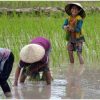
A 650 Million Dollar Pledge Aimed at Eradicating Extreme Hunger by 2030
When a coalition of international donors pledged more than $650 million to provide assistance to over 300 million smallholder farmers in developing countries, the primary aim was to help increase agricultural and livestock production besieged by droughts, floods and other natural disasters triggered by climate change-- mostly in sub-Saharan Africa and South Asia.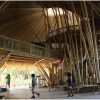
Green Steel
How Indonesian craftsmanship is undergoing a revival at the world’s first ‘bamboo university’. It’s fast-growing, flexible and strong. Standing underneath a bamboo canopy, it is easy to understand why people have been using this grass plant for years, in the construction of houses, bridges and scaffolding.
More Than just a Toilet: Fusing innovation & Partnerships for a Better World
Each year, World Toilet Day* raises awareness of the crucial role that sanitation plays in reducing disease and creating healthier communities. At Kohler, we’re committed to finding solutions for universal sanitation access by leveraging our design & innovation competencies and partnering with like-minded organizations to bring meaningful innovations to those communities most in need.
Winning the ‘No Food Loss’ Battle: The Case of Japan
Humankind since almost the time that there is recorded history has grappled with the question of ‘how many is too many?’ The response is expectedly complex as it varies across time and space. The pace of population growth was slow till about approximately 250 years or so. It is only since the middle of the eighteenth century that there has been a palpable acceleration in population growth.
Seeing Through the Smog: Can New Delhi Find a Way to Limit Air Pollution?
Ankita Gupta, a housewife from south Delhi, is anxious about whether she should send her 4-year-old daughter to kindergarten. Outside visibility is poor as smog — a combination of emissions from factories, vehicle exhausts, coal plants and chemicals reacting with sunlight — has settled over the city, surpassing dangerous levels.
Climate Change and Loss of Species: Our Greatest Challenges
Mottled and reddish, the Lake Oku puddle frog has made its tragic debut on the Red List, a rapidly expanding roll call of threatened species. It was once abundant in the Kilum-Ijim rainforest of Cameroon but has not been seen since 2010 and is now listed as critically endangered and possibly extinct.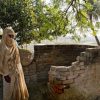
“Transformational Benefits” of Ending Outdoor Defecation
Ending the practice of defecating in the open, rather than in a toilet, will have “transformational benefits” for some of the world’s most vulnerable people, says the UN’s partner sanitation body, the WSSCC (Water Supply and Sanitation Collaborative Council).
The Ocean in Us: Ocean Action for Climate Ambition
In just under a month, countries around the world will gather for UNFCCC COP 25. The hashtag for this year’s “Blue COP” is yet another reminder to us all that it is “Time For Action”. We can no longer afford to wait as the effects of the climate crisis become ever more present. Vulnerable populations, whether from Small Island States, the rural heartland or the world’s megacities, are becoming ever more vulnerable, and the wellbeing of people and planet continues to face its most existential threat.
Los Angeles Joins a Global Movement to Protect Human Right to Water
On November 6, Los Angeles became the first major city in the United States to earn the designation of “Blue Community” – a bold move that will keep water protected from privatization.
World’s Sewage Workers ‘Underpaid, Sidelined and Risking their Lives’
People who empty out sewage tanks and scrub down latrines doubtless perform a vital, thankless and even undesirable task. A new report, however, shows that doing such jobs could also cost workers their lives.
The Global Economy of Pulses: Impressive Gains and the Way Forward
Pulses are highly nutritious and their consumption is associated with many health benefits. They are rich in proteins and minerals, high in fibre and have a low fat content. Pulses are produced by plants of the Leguminosae family. These plants have root nodules that absorb inert nitrogen from soil air and convert it into biologically useful ammonia, a process referred to as biological nitrogen fixation. Consequently, the pulse crops do not need any additional nitrogen as fertilizer and help reduce the requirement of fossil fuel-based chemical nitrogen fertilization for other crops. Expansion of pulse production, therefore, can play a vital role in mitigating the effects of climate change.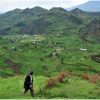
Will Artificial Intelligence Help Resolve the Food Crisis?
When UN Secretary-General Antonio Guterres made a global appeal for “zero hunger” on World Food Day last month, he provided some grim statistics rich in irony: more than 820 million people do not have enough to eat, he said, while two billion people are overweight or obese.
Rock Glaciers Supply Water to Highlands Communities in Argentina
In Argentina's Puna region, at 4,000 metres above sea level, the color green is rare in the arid landscape, which is dominated by different shades of brown and yellow. In this inhospitable environment, daily life has improved thanks to a system of piping water downhill from rock glaciers to local communities.
How can Taps, Toilets & Good Hygiene Help Ensure Sustainable & Resilient Agricultural Supply Chains?
Water underpins the global economy and agriculture is by far the world’s largest water consumer, accounting for 70% of freshwater withdrawals. Global water demands are projected to increase by 55% by 2050 and climate change will present further pressures on water accessibility.
Urgent Need to Replace Competition with Cooperation in the Aral Sea Basin
The water resources in Central Asia’s Aral Sea Basin support the lives and livelihoods of about 70 million people — a population greater than Thailand, France, or South Africa.
Italy’s Olive-Oil Industry Sees Simmering Threats from Climate Change and Nasty Bacteria
On a warm Saturday morning in late October, the silver-green leaves of the 200 productive olive trees on a rolling country property in Umbria, in central Italy, sparkled in the brilliant sun. Fausto Venturi, a local farmer who devotes autumn weekends to making olive oil, could not have been happier.
Burkina Faso: Climate Change Triggers Rural Exodus
Ibrahim Harouna and his neighbours sit under a tree at his uncle’s house, playing chess and chatting amid the simmering heat of Ouagadougou, the capital of Burkina Faso.
Europe’s Green Deal is Turning Red
Global temperatures are set to rise by a catastrophic 3°C by the end of the century unless we take major action. The next 10 years in particular are crucial.« Previous Page — Next Page »


Through our global network of local writers, we are continuing our award-winning coverage of global and local environmental challenges, with a focus on the people for whom the ecosphere matters in a direct way: rural dwellers who have little means to protect themselves against adverse conditions; communities that need to switch to sustainable development in order to survive; poor women and children, who are the most vulnerable in natural disasters. Sponsored by the United Nations Environment Program (UNEP), the United Nations Development Program (UNDP) and The World Bank (WB), IPS also maintains the award-winning Tierramérica, a specialised information service on environment and development.

The Week with IPS

Tracking global progress towards a sustainable world


