Languages
Sunday, November 22, 2026



News and Views from the Global South
Featured

Q&A: “The Battle Continues”
The Programme of Action adopted at the landmark 1994 International Conference on Population and Development (ICPD) included chapters that defined concrete actions covering some 44 dimensions of population and development, including the need to provide for women and girls during times of conflict, the urgency of investments in young people’s capabilities, and the importance of women’s political participation and representation.
Panama, a Country and a Canal with Development at Two Speeds
With the expansion of the canal, Panama hopes to see its share of global maritime trade rise threefold. And many Panamanians hope the mega-engineering project will reduce social inequalities in a country where development is moving ahead at two different speeds.
Thirsty Land, Hungry People
Gazing out over the parched earth of Sri Lanka’s Northern Province, one might think these farmlands have not seen water in years. In fact, this is not too far from the truth.
New Global Declaration “Insufficient” to Tackle Deforestation
Heads of state, civil society groups and the leaders of some of the world’s largest companies this week urged their peers to sign on to a landmark new global agreement aimed at halting deforestation by 2030, even as others are warning the accord is too lax.
Documents Detail Secret Talks Between Washington and Havana
In a new book cataloguing the recent history of clandestine exchanges between the U.S. and Cuba, the reliance on secret intermediaries belies the common perception that the two governments rarely communicated during the decades that followed the Cuban revolution in 1959.
OPINION: From Elephants to Blue Whales, Sri Lanka Leads the Way on Biodiversity
Sri Lanka will host the World Biodiversity Congress (WBC) Nov. 24-27. Given its long and active history of preserving biodiversity, it would be most appropriate for Sri Lanka to be the next host of this global event, which also marks the U.N.'s Decade on Biodiversity.
Latin America on a Dangerous Precipice
“We could be the last Latin American and Caribbean generation living together with hunger.”
Puerto Rico’s Green Crusaders Still Going Strong
The heart of Puerto Rico’s central mountain range is the site of an extraordinary story of struggle and triumph.
Vaca Muerta, Argentina’s New Development Frontier
Production here has skyrocketed so fast that for now the installations of the YPF oil company at the Loma Campana deposit in southwest Argentina are a jumble of interconnected shipping containers.
Zimbabwe’s Family Planning Dilemma
Pregnant at 15, Samantha Yakubu* is in a fix. The 16-year-old boy she claims was responsible for her pregnancy has refused to accept her version of events, insisting that he was “not the only one who slept with her”.
Boosting Incomes and Empowering Rural Women in Cuba
Leonor Pedroso’s sewing machine has dressed children in the Cuban town of Florida for 30 years. But it was only a few months ago that the seamstress was able to become formally self-employed.
From Subsistence to Profit, Swazi Farmers Get a Helping Hand
Men in blue overalls are offloading vegetables from trucks while their female counterparts dress and pack the fresh produce before storing it in a cold room.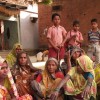
Lack of Accountability Fuels Gender-Based Violence in India
On a bright March morning, a 17-year old tribal girl woke as usual, and went to catch fish in the village river in the Chirang district of India’s northeastern Assam state.
Outgunned by Rich Polluters, Africa to Bring United Front to Climate Talks
As climate change interest groups raise their voices across Africa to call for action at the COP20 climate meeting in December and the crucial COP21 in Paris in 2015, many worry that the continent may never have fair representation at the talks.
Blistering Drought Leaves the Poorest High and Dry
The last time there was mud on his village roads was about a year ago, says Murugesu Mohanabavan, a farmer from the village of Karachchi, situated about 300 km north of Sri Lanka’s capital, Colombo.
‘Youth Exodus’ Reveals Lack of Opportunities
The small South Pacific island state of Samoa, located northeast of Fiji, attracts tourists with its beaches, natural beauty and relaxed pace of life, but similar to other small nations with constrained economies, it is experiencing an exodus of young people, who are unable to find jobs.
Militarising the Ebola Crisis
Six months into West Africa’s Ebola crisis, the international community is finally heeding calls for substantial intervention in the region.
Arms Trade Treaty Gains Momentum with 50th Ratification
With state support moving at an unprecedented pace, the Arms Trade Treaty will enter into force on Dec. 24, 2014, only 18 months after it was opened for signature.Iraq Looking for an ‘Independent’ Sunni Defense Minister
Iraqi President Fouad Massoum said this past week that the government was looking for an independent Sunni Muslim to fill the post of defense minister in an effort to improve chances of reunifying the country and defeating the group that calls itself the Islamic State (IS).Zero Nuclear Weapons: A Never-Ending Journey Ahead
When the United Nations commemorated its first ever "international day for the total elimination of nuclear weapons," the lingering question in the minds of most anti-nuclear activists was: are we anywhere closer to abolishing the deadly weapons or are we moving further and further away from their complete destruction?
Championing Ocean Conservation Or Paying Lip Service to the Seas?
President Barack Obama this week extended the no-fishing areas around three remote pacific islands, eliciting praise from some, and disappointment from those who fear the move did not go far enough towards helping depleted species of fish recover.« Previous Page — Next Page »


The Week with IPS

NEXT STOP - SDGs
Tracking global progress towards a sustainable world
Tracking global progress towards a sustainable world
