Languages
Wednesday, November 18, 2026



News and Views from the Global South
Gender
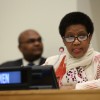
CSW 59 Wraps up as Delegates Look Towards 2016
The Commission on the Status of Women, one of the biggest events on the calendar for United Nations headquarters in New York City, is over for another year.
Opinion: ‘We Owe It to More Than Half of the Global Population to Do a Better Job’
Undoubtedly, we are at a crucial time in the advancement of gender equality.
Palestinian Women Victims on Many Fronts
Israel’s siege of Gaza, aided and abetted by the Egyptians in the south, has aggravated the plight of Gazan women, and the Jewish state’s devastating military assault on the coastal territory over July and August 2014 exacerbated the situation.
Women in the Philippines at the Forefront of the Health Food Movement
When Tinay Alterado’s team from ARUGAAN, an organisation of women healthcare advocates, visited Eastern Visayas, a region of the Philippines devastated by Typhoon Haiyan in November 2013, they noticed that the relief and rescue sites were flooded with donated milk formula, which nursing mothers were feeding to their babies in vast quantities.
Nobel Peace Laureate Calls for Global Human Compassion to Combat Child Slavery
Nobel Peace Laureate Kailash Satyarthi has called for globalised human compassion to combat the global and persistent problems of child labour and child slavery.
Opinion: Rape in Conflict: Speaking Out for What’s Right
Earlier this month, President Barack Obama delivered an impassioned speech marking the 50th Anniversary of the civil rights march from Selma to Montgomery, Alabama and the bloody attack on civil rights marchers by police.
Women Turn Drought into a Lesson on Sustainability
When a group of women in the remote village of Sadhuraks in Pakistan’s Thar Desert, some 800 km from the port city of Karachi, were asked if they would want to be born a woman in their next life, the answer from each was a resounding ‘no’.
Contradictions Beset U.N. Response to Sexual Abuse by Peacekeepers
An internal United Nations expert report released Monday by the non-governmental organisation AIDS-Free World reveals serious contradictions in the U.N.’s reporting of sexual exploitation and abuse by U.N. peacekeepers.Women Often Forgotten In Cases Of Forced Disappearance
Governments must do more to address the impacts of forced disappearances of women, according to an international justice report released Monday.
Sendai Conference Stresses Importance of Women’s Leadership
Women play a critical role in reducing disaster risk and planning and decision-making during and after disasters strike, according to senior United Nations, government and civil society representatives.
Four Ways Women Bring Lasting Peace to the Table
2015 marks anniversaries for two significant commitments made to increasing women’s participation at peace tables.
Opinion: Gender Equality, the Last Big Poverty Challenge
It is estimated that women account for two-thirds of the 1.4 billion people currently living in extreme poverty. They also make up 60 per cent of the world’s 572 million working poor.
Mixed Prospects for LGBT Rights in Central and Eastern Europe
Lesbian, gay, bisexual and transgender (LGBT) groups in Central and Eastern Europe, which still faced mixed prospects as they fight for rights and acceptance, are now taking some heart from the “failure” of a referendum in Slovakia, a member of the European Union.
Empower Rural Women for Their Dignity and Future
Rural women make major contributions to rural economies by producing and processing food, feeding and caring for families, generating income and contributing to the overall well-being of their households – but, in many countries, they face discrimination in access to agricultural assets, education, healthcare and employment, among others, preventing them from fully enjoying their basic rights.
Meet the 10 Women Who Will Stop at Nothing
On Apr. 6, 2013, Nadia Sharmeen, a crime reporter, was assigned to cover a rally organised by Hefazat-e-Islam, an association of fundamentalist Islamic groups in Bangladesh whose demands included a call to revoke the proposed National Women Development Policy.Women Walk for Peace in the Korean Peninsula
A group of international women peacemakers announced on Wednesday at the United Nations their intention to walk across the two mile De-Militarized Zone (DMZ), in a call for peace and reunification of Korea.U.N. Audience Shocked by Sexual Health, Abortion Statistics
Audible gasps echoed through the United Nations' Trusteeship Council chamber on Tuesday, with audiences told the grim impacts of unsafe reproductive practices on women worldwide.U.S. Honours 10 “Extraordinary Women” for Courage and Leadership
Speaking at a ceremony to honour 10 “extraordinary women” from Asia, Africa, Europe and Latin America for their exceptional courage and leadership in advocating peace, justice, human rights and gender empowerment, U.S. Deputy Secretary of State Heather Higginbottom cited the former president of Malawi Dr. Joyce Banda, recognised at the United Nations as a relentless advocate for women’s rights.Equality Is a Matter of Human Rights
Gender equality in political, economic and social arenas is a matter of human rights, said Ambassador Anwarul Chowdhury on Monday to civil society organisations, ambassadors and activists in New York.U.N. Says Maternal Mortality Rate Has Nearly Halved since 1990
The global rate of maternal deaths is reducing faster than any time in history, according to a new report presented to the United Nations on Tuesday.
An Italian and Tanzanian Partnership
20 years on from Beijing, gender inequality is still a priority at United Nations.« Previous Page — Next Page »


Women make up half the world's population, but don't nearly share half of the world's wealth, well-being and opportunity. Two-thirds of the world poor are women, disproportionally exposing women to precarious living conditions, disease and unmitigated natural disasters. The media, meanwhile, remains a male-dominated sector in much of the world, contributing to women's voices lacking a crucial amplifier to put their concerns on political agendas and unleash the development potential of their ingenuity. Rather than then stereotypical victims of local and global forces, women are also organizer, innovators, conservators and community builders. These are some of their stories.

The Week with IPS

NEXT STOP - SDGs
Tracking global progress towards a sustainable world
Tracking global progress towards a sustainable world
