Languages
Saturday, November 21, 2026



News and Views from the Global South
Health
HEALTH: Money Needed for ART Funding
Fixed targets for universal access to AIDS treatment and funding to make it achievable are what HIV and AIDS organisations want from the upcoming United Nations General Assembly Special Session due to be held in New York next month.JAPAN: Respect for Authority Gives Way to Anger
More than a hundred young nursing mothers living in Fukushima and nearby areas have signed up to get themselves checked for radiation contamination, but they would rather do it on their own, with no help from the Japanese government.
HEALTH: Water, Sanitation Could Erase Cholera and Guinea Worm
The World Health Assembly could adopt landmark resolutions asking governments to improve water and sanitation to eradicate cholera and guinea worm, the latter of which exists in just four countries in Africa. While safe drinking water and toilets are the most cost-effective public health measures, they have not been a priority for most developing countries.
KENYA: Small Profit Margin Hinders Access to Subsidised Anti-malarial Drugs
On the streets of Nairobi James Odhiambo goes from one pharmacy to the next in search of anti-malarial drugs marked with the Global Fund’s logo of a green leaf. He is looking for this specific brand because he understands that it is more than ten times cheaper than the same drug produced by different manufacturers.Parliamentarians Ask G8 to Focus on Women
Ahead of this month's G8 summit in France, parliamentarians from 35 countries have issued a strong call for leaders of the world's major economies to focus on the role of women and girls in development.DR CONGO: Measles Claims Lives as Public, Private Resources Stretched Thin
More than 3,000 cases of measles have been recorded in the past three months in two districts of Maniema Province, in the eastern part of the Democratic Republic of Congo.
EU Trade Deal with India Stalemated by Threat to Affordable Drugs
More than four years after the EU started negotiating a trade agreement with India, the process has been pushed to a stalemate by the EU’s stubborn insistence in maintaining the so-called data exclusivity clause, despite fierce opposition by Indian government negotiators and Indian and EU non- governmental organisations (NGOs).Yemen Faces Older Birth Pangs As Well
An estimated 2,555 women in Yemen die annually during childbirth because they do not have access to proper health facilities or experienced medical professionals.
DEVELOPMENT: Chinese Step In, Efficiently
For Jany Chen from Shanghai, concern often-raised in Europe and North America about the Chinese invasion of Africa is a lot of wasteful talk that deserves to be flushed down the toilet. Efficiently.HEALTH: Rich and Poor Suffer Both Infectious and Noncommunicable Diseases
The world is experiencing a change in the geographic distribution of diseases. Traditionally, infectious diseases, which claim the lives of so many children, affected poor countries, and noncommunicable diseases like diabetes, cardiac ailments and cancer plagued rich countries.MEXICO: Little Oversight of Radiation Sources
In spite of the potential risks posed by unwanted or uncontrolled radioactive materials, Mexico lacks comprehensive mechanisms to keep track of these "orphan" sources, originally used in medicine or industry, and to prevent them going astray.
Egypt Seeks End to Foreign Wheat Dependence
Egypt is stepping up its wheat production in a bid to stem the country’s rising dependence on foreign imports that escalated during the 30-year rule of former President Hosni Mubarak, who was ousted in February.
Stray Dog Issue Hounds Animal Welfare in India
Moves to enact a new law on animal welfare in India have upset public health advocates, who fear it will interfere with efforts to control rabies-carrying stray dogs.
NAMIBIA: Feature Film Explores Realities of Safer Sex
A new film explores the real complexities of relationships for young people in Namibia, and the effects of gender inequality and culture on the choices people make about their sexual lives.BENIN: Skills Upgrade for Midwives Saves Lives
Training of midwives in the active management of the third stage of labour targets one of the most common causes of maternal deaths: bleeding after delivery.Seed Proteins May Help Plants Weather Drought
British researchers are working on techniques to improve seeds chances of surviving drought by tapping the potential of little-known proteins that regulate water intake.HEALTH: ‘Lifestyle Diseases’ Cause Two-Thirds of Deaths
Health experts from around the world have acknowledged rising numbers of ‘lifestyle’ or non-communicable diseases (NCDs) in different countries, admitted inadequate funds are the biggest obstacle in health delivery, and called on the global community to consolidate efforts to effectively tackle the problem.INDIA: Unnecessary C-Sections Violate Women’s Rights
It was smooth sailing for 30-year-old Susan George throughout her pregnancy, until the day she went to give birth at the government hospital. Doctors told her they had to do a caesarean section because they could not wait for a normal delivery.
PHILIPPINES: Women Clamour for Contraceptives
In a small women's clinic in the congested community of San Andres Bukid in the Philippine capital, a mother of 11 is availing herself of family planning services for the first time in her life.
AFRICA: More Skilled Attendants Needed to Reduce Maternal Mortality
Sub-Saharan African countries have claimed nine of the ten bottom places in a ranking of maternal health around the world. "The Mothers' Index", a new survey of motherhood by Save the Children, analyses health, education and economic conditions for women and children in 164 countries.CHINA: Click Your Kidney Away
In China, where a growing demand for organ transplants coupled with a dramatic shortage of donors has fuelled a rampant black market trade, selling your organs for cash is a mouse click away.« Previous Page — Next Page »


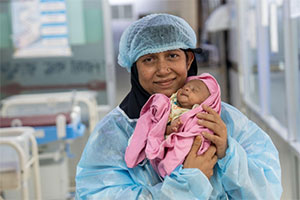 Bangladesh: Sarid, born one month early, receives specialized newborn care and grows stronger every day. Credit: UNICEF/UNI944397/Mojumder
Since the onset of the 2000s, global life expectancy has seen an overall rise, attributed to significant technological and scientific innovations in healthcare. Due to an increased understanding of different conditions as well as a rise in cooperation among healthcare experts around the world, there have been major strides made in ensuring that as few people die from chronic illnesses as possible. Despite the belief that healthcare is a fundamental human right, people from low- or middle-class backgrounds, marginalized groups, and underdeveloped countries have far more limited access to basic healthcare services.
The COVID-19 pandemic showed how marginalized communities are disproportionately affected by health crises, proving that we have much work to do in ensuring that no one dies of terminal conditions. While the global response to the coronavirus saw significant strides in immunization and vaccine development, the global outbreak of mpox in 2022 and its upsurge in parts of Africa in 2024 must remind us to remain vigilant.
Other major disease outbreaks in recent years have been linked to the destruction of infrastructure during warfare. Notably, in 2024, the Gaza Strip witnessed a return of the poliovirus since its eradication in the region 25 years ago. Israel’s blockade on Gaza has resulted in the collapse of the region’s sewage plants and desalination plants, and also destroyed healthcare capacities. The UN stated that this lack of clean water and sanitation would lead to an outbreak of cholera and other deadly infectious diseases. The 2026 OCHA Humanitarian Situation Report confirmed that the over two years of conflict in Gaza has produced a catastrophic health emergency, with millions remaining dependent on relief aid amid tight restrictions and no functioning public health system.
IPS is committed to providing full and comprehensive coverage on healthcare challenges around the world. IPS seeks to address the multifaceted causes of such challenges, including unprecedented pandemics, conflict-driven disease outbreaks, as well as socioeconomic barriers to equal healthcare access. IPS is also dedicated to reporting on innovations in the healthcare industry.

The Week with IPS

NEXT STOP - SDGs
Tracking global progress towards a sustainable world
Tracking global progress towards a sustainable world
