Languages
Wednesday, November 11, 2026



News and Views from the Global South
Labour

Fashion Backward: Cambodian Government Silences Garment Workers
“Cambodian garment workers have two handcuffs and one weapon [against them]. One handcuff is a short-term contract [10 hours a day, six days a week]. Even if they get sick, if they get pregnant they feel they have to get an abortion so they don’t lose their jobs.
Hoodwinked, Jobless, and Back
Ashik Rehman, 47, worked as a labourer in the southern Indian state of Kerala. He left for Saudi Arabia two years ago, hoping to earn enough to buy a house in his native place. Now he is back and staring at a bleak future.
Hospitality, Agriculture Firms Vulnerable to Human Trafficking
Shareholders are calling on 15 U.S.-based multinational corporations to ensure that their global supply chains are not facilitating human rights abuses, particularly labour and sex trafficking.
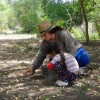
Seedpods Worth More than Gold in Argentina’s Arid North
Tired of the drought driving away their men and killing their livestock, the women of Guanaco Sombriana, a town in northern Argentina, have found a new source of income by using the seedpods of native trees that up to now merely provided shade in this arid landscape.
Cuba’s Reforms Don’t Believe in Tears
The landscape is changing in Cuba’s cities and towns, with political slogans giving way to lighted signs advertising the best of local and international cuisine and air-conditioned lodgings – signs of an emerging private sector that was inconceivable until recently.
Palestinians Face a Route to Nowhere
The full moon sets; another dawn rises over Route 443. For over 40,000 Israeli residents and settlers commuting daily between Jerusalem and the Tel Aviv metropolitan area, it isn’t yet rush hour.
Every Eucalyptus Felled Equals Gallons of Water
Sabina Shey Nkabiy, a farmer in Cameroon's North West Region, moves around these days with a million-dollar smile on her face. The mother of six, who used to trek 10 kilometres a day to farm, now harvests food in her backyard.
GMO Test Trials Prove Divisive in Ghana
A battle over genetically modified organisms (GMOs) is building in Ghana after the government recently completed regulations that could allow modified cowpeas and other selected crops to be grown following confined field trials (CFT).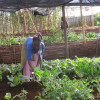
Ethiopia Swamped by Tidal Wave of Returned Migrants
The return of 120,000 young undocumented migrant workers from Saudi Arabia to Ethiopia has sparked fears that the influx will worsen the country’s high youth unemployment and put pressure on access to increasingly scarce land.
Automation, Drones and Robots Lead to Guaranteeing Incomes for Humans
The debate over structural unemployment, automation and jobless economic growth began in the 1960s as car factories replaced workers with robots.
Dam the Fish
“I prefer the dam to the fish,” says middle-aged farmer Ton Noun, when asked his opinion on a proposed 400 megawatt dam on Sesan river near his home in northeastern Cambodia. Then he chuckles and asks, “What fish?”
Zero Garbage Plan Tied to Fate of Ousted Bogotá Mayor
The ousted left-wing mayor of the Colombian capital, Gustavo Petro, is a casualty of the battle over the introduction of a Zero Garbage programme, which had included thousands of informal recyclers in the waste disposal business.
Reaching Quietly for the ‘Solidarity Basket’
In the early morning hours, as hundreds of people grab their breakfast at a busy bakery in Beogradska Street in the Serbian capital, a very special basket quickly fills up with croissants, rolls and breads. It is the ‘solidarity basket’.
In Minimum Wage Debate, A Battle Over Inequality and Job Loss
In the midst of a nationwide movement for policymakers to raise minimum wages for millions of workers in the United States, experts here continue to debate the advantages and drawbacks of raising the federal rate.
Staff Accuses U.N. of Violating Human Rights
The United Nations will commemorate Human Rights Day next week amidst charges the world body is unilaterally proposing drastic changes to working conditions and salaries of staffers without due consultation - and in violation of their basic rights.
U.N.’s Post-2015 Agenda Needs a Triple Play
As the international community fleshes out a new set of Sustainable Development Goals (SDGs) to be unveiled next year, civil society activists and U.N. officials agree their success will hinge on policies that address the nexus of poverty, hunger and environmental degradation.Off-Radar Gold Mine Sustains Kyrgyz Mountain Village
A generation after independence from the Soviet Union, most villages in Kyrgyzstan are ramshackle, broken places, scenes of hopelessness and despair. Able young people leave – for Bishkek, the capital, or for menial jobs in Russia. But thanks to a secret gold mine, one little mountain hamlet is different.
Wage Hike in Haiti Doesn’t Address Factory Abuses
Haiti’s minimum wage will nudge up 12 percent on Jan. 1, from 4.65 to 5.23 dollars (or 200 to 225 gourdes) per day. Calculated hourly, it will go from 58 to 65 cents, before taxes.
Saving Children From Loggers
Logging is the largest industry in the Solomon Islands, an archipelago located northwest of Fiji, where 80 percent of the islands are covered in tropical rainforest. But, although timber accounts for 60 percent of this South Pacific nation’s export earnings, most local communities have experienced no beneficial development.
Skateboarding Can Be Empowering
An array of colourful quarter pipes, bank ramps and a fun box come to life as a clutch of Cambodian youngsters do balancing tricks, kick-flips and kick turns. The all-girl session at a skating facility near the Russian Market here is facilitated by 20-year-old Kov Chansangva, popularly known as Tin.
In Haiti, Planting Trees Is No Simple Matter
Reforestation and soil conservation programmes costing many thousands of dollars in this rural community have resulted in hundreds of small ledges built of straw or sacks of earth. In certain areas, the earthworks seem to be lasting, but in others, they are disintegrating.« Previous Page — Next Page »





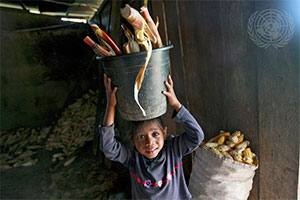 Timorese Girl with Fresh-Picked Corn. Credit: UN Photo/Martine Perret
A global common denominator is the need for a decent job. The economic realities of each country determine just how difficult it is to find one. Despite the labour movement's achievements, serious challenges persist: gender discrimination, child labour, worker migration, the digital divide and AI automation, evaporating pensions, unsafe workplaces, corporate pressure against union organising, negative impacts of trade agreements, and the precariousness of informal employment. The 2025 UN SDG Report identifies jobs and social protections as one of the six priority areas requiring urgent action, with progress either stalled or reversing in many developing nations.
In recent years, the fight to protect labour equality has taken on new dimensions with the rise of Environmental, Social and Governance standards. With the Social aspect aiming to promote equality and human rights, ESG principles have strengthened labour advocacy within corporate and governmental regulatory landscapes. In particular, ESG has become much more institutionalized in emerging economies such as Brazil and China. IPS follows the world’s workers as they confront these challenges - their setbacks and their successes.

The Week with IPS

NEXT STOP - SDGs
Tracking global progress towards a sustainable world
Tracking global progress towards a sustainable world
