Languages
Saturday, November 28, 2026



News and Views from the Global South
Latin America & the Caribbean

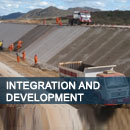
At the Crucial Nexus of Water and Energy
Global institutions are still in the learning phase when it comes to successfully managing water and energy in an integrated manner as part of the quest for sustainable development.
Cuba-United States – Something Is Moving
In ‘Hard Choices’, her new book about her experiences as Secretary of State during U.S. President Barack Obama’s first term (2008-2012), Hillary Clinton writes something of prime importance about Cuba – she says that late in her term in office she urged Obama to reconsider the U.S. embargo against Cuba.
Salvadoran Peasant Farmers Clash With U.S. Over Seeds
Under a searing sun, surrounded by a sea of young maize plants, Gladys Cortez expresses her fears that her employment in the cooperative that produces seed for the Salvadoran government may be at risk, if United States companies achieve participation in seed procurement.
FATCA Just a Band Aid for Latin American Tax Evasion
The U.S. Foreign Account Tax Compliance Act is unlikely to contribute much to combating persistent tax evasion in Latin America, which will require more national and multilateral instruments, experts say.
Floods Displace Lives and Dreams in Paraguay
The worst floods in the history of Paraguay have forced 300,000 people to flee their homes. Asunción, the most affected area, and other urban and rural areas were flooded by the rain-swollen Paraguay and Paraná rivers, foreshadowing what might happen when the El Niño phenomenon kicks in.
Problems Inspire Ingenious Solutions in Peruvian Amazon Town
He may look like a rapper, but 33-year-old José Antonio Bardález is the mayor of Jepelacio, in the Peruvian Amazon. His ingenious innovations in the municipality include transforming waste management into a source of income and making spring water a source of drinking water.
For the Caribbean, a United Front Is Key to Weathering Climate Change
As the costs of climate change continue to mount, officials with the Commonwealth grouping say it is vital that Small Island Developing States (SIDS) stick together on issues such as per capita income classification.
Costa Rica Enforces Green Justice
Biologist Juan Sánchez drives the leader of two off-road vehicles along a dirt road in southeastern Costa Rica. Officials and experts are on their way to inspect a homestead whose owner has destroyed part of a mangrove swamp.
Inequality Blocks Path to “Gold” in Latin America
Inequality, poor infrastructure and declining trade are some of the problems that Latin America needs to overcome if the region truly wishes to achieve a “golden age”, according to Peru’s President Ollanta Humala.
Obama Proposes “Aggressive Deterrence” for Child Migrants
Facing what some have dubbed a refugee crisis, President Barack Obama is asking for new powers that would significantly speed up the deportation process for tens of thousands of unaccompanied children recently arrived at the southern U.S. border.
Tiny Barbuda Grapples with Rising Seas
The 1,800 residents of the tiny Caribbean island of Barbuda are learning to adapt as climate change proves to be a force to reckon with, disrupting not just the lives of the living but also the resting places of those who died centuries ago.
No Limits to Shale Gas Chemicals in Mexico
The new legal framework for Mexico’s oil industry has not placed controls on the use of harmful chemicals in the extraction of unconventional fossil fuels, and environmentalists and experts fear their consumption will increase in an industry that is opening up to private capital.
Mexico Rape Victims Face Prison Time for Self-Defence
“I just want all this to be over,” Yakiri Rubí Rubio, a young Mexican woman facing trial for killing the man who raped her in December 2013, laments to IPS.


Adapting to a Dry Season That Never Seems to End
The Caribbean region’s bid to become food secure is in peril as farmers struggle to produce staple crops under harsh drought conditions brought about by climate change.
Bolivia Charts Its Own Path on Coca
This week, the U.N. reported that coca cultivation in Bolivia fell nine percent last year, and a massive 26 percent in the past three years.
Chile Vows to Dispel Lingering Shadow of Dictatorship
Chile has made a commitment to the international community to improve human rights in the country and erase the lingering shadow of the dictatorship on civil liberties.
Red Card for Exploitation of Children at Brazil’s World Cup
The FIFA World Cup being played in Brazil has sounded a warning for organisations fighting exploitation of children and adolescents, during an event that has attracted 3.7 million tourists to the 12 host cities.
With its Own Satellite, Bolivia Hopes to Put Rural Areas on the Grid
Maria Eugenia Calle, a local official in this Andean agricultural community, recently saw the Internet for the first time.
Gay Fiestas Highlight Divisions in Cuba’s LGBTI Community
Two men kiss each other while two women dance together without making other clients feel uncomfortable at the prívate club Humboldt 67, one of the venues seeking to cash in on an untapped market by fulfilling the unmet demand for bas, restaurants and other recreational spaces for the LGBTI community in the Cuban capital.
Q&A: “Fukushima Accident Still Ongoing After Three Years”
It has been three years since the nuclear accident in Fukushima, Japan. But the consequences are still ongoing due to continuous leaks of radioactivity into the environment, says independent nuclear energy consultant Mycle Schneider.« Previous Page — Next Page » *#*

The Week with IPS

NEXT STOP - SDGs
Tracking global progress towards a sustainable world

