Languages
Friday, November 27, 2026



News and Views from the Global South
Human Rights
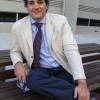
Q&A: “Latin America Could Eradicate Hunger by 2025”
The hunger suffered by 49 million people in Latin America could be eradicated by 2025, according to Spanish agricultural engineer Ricardo Rapallo.
BOOKS: “Original Sins” Fuelled U.S.-Iran Enmity
I have never read a book quite like this. "Becoming Enemies" is the latest product of the indispensable National Security Archive, the Washington non-profit that has given new meaning to the Freedom of Information Act.
Guyana Seeks to Shield Gold Miners from Mercury Ban
As regional delegates meet to discuss a legally binding ban on the use of mercury this week, Guyanese officials are arguing that an exception should be made for the South American country's lucrative gold mining sector until an acceptable alternative is found.Building More Democratic Families in Argentina
A wide-ranging reform of Argentina's civil code is looking to replace traditional concepts of parental authority and control with one of parental responsibility, while expressly prohibiting corporal punishment for children and adolescents.‘The Children Could Die’ in Eastern DRC Fighting
Humanitarian agencies working in the eastern part of the Democratic Republic of Congo have been overwhelmed following a massive displacement triggered by fighting between the Congolese army (FARDC) and rebel movement M23 in North Kivu.Egypt’s Morsi to Meet Judges over New Powers
Egyptian President Mohamed Morsi is set to meet senior judges on Monday to try to ease a crisis over his new powers which has set off protests reminiscent of the revolution last year that brought him to power.Execution Met With Silence in Pakistan
Wednesday, Nov. 21, dawned like any other in the sleepy town of Faridkot, located some 150 kilometres from the Punjab capital of Lahore in Pakistan. But as the town’s 3000 residents went about their daily routines the air grew thick with apprehension, for a reason none wanted to mention.East European War on Drugs Fails
When the Global Commission on Drug Policy, which advocates an end to what it says has been a failed ‘war on drugs’, held its latest working meeting in Warsaw last month, the choice of venue was apt.
The Secular Fret in New Tunisia
A year has passed since the provisional government assumed power in Tunisia. Following in the wake of the revolutionary changes brought on by the Arab Spring, the moderate Islamic Ennahda party won the majority and formed a coalition with the two secular parties Congress for the Republic (CPR) and Ettakatol in October last year.
Coastal Erosion Reaches Alarming Levels in Vietnam
For the last decade, many families in this southwestern Vietnamese province have been uprooted at least once every two years – but this is not due to economic or political upheaval.
Opposition to U.S. Bases Reaches Turning Point
Okinawa, the largest of a group of 60 sub-tropical islands forming Japan’s southernmost prefecture, has an equable climate and preferential treatment for United States servicemen under the Mutual Cooperation Security Treaty between the U.S. and Japan.
End of Assault Opens Opportunities for Gaza
As the ceasefire between Israel and Hamas seems to be holding, many are hoping that one of the agreement’s main points – the easing of restrictions on people and goods coming in and out of the Gaza Strip – signals a new era for the besieged Palestinian territory.
Q&A: Honouring the Silent Courage of Afghan Women
Violence against women is internationally recognised as a threat to democracy, a burden on national economies, and a serious human rights violation.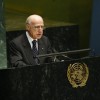
Acquittal in The Hague Sparks Controversy
Stojan Kovacevic spent last weekend going about his usual routine in his tiny dwelling in the village of Grocka, near Belgrade: cleaning the kitchen and bedroom, going to the local green market and watching TV.
War Tourism Skips Reality
The tour guide’s voice echoes around the dark, musty room, three stories underground. Fifty visitors – among them mothers holding infants, youths snapping pictures on mobile phones and grandparents leaning against the walls – are crammed into the narrow stairwell that leads down into the chamber, listening attentively to his every word.
Briefly President, Now Pharaoh
When Mohamed Mursi was sworn in as president in June there were concerns that the first democratically elected president in Egyptian history would be subservient to the military council that had ruled the country since dictator Hosni Mubarak was toppled in early 2011.
Security Council Vow on Women Lives Mostly on Paper
When the U.N. Security Council (UNSC) adopted a landmark resolution numbered 1325 back in 2000, it was supposed to integrate gender into its core mandate: the establishment and maintenance of international peace and security.
Nepal Unprepared for Imminent Earthquakes
Nepal now ranks 11th on a list of the world’s most earthquake-prone countries, yet it remains one of the least disaster-prepared nations globally.
Gaza Assault Shows a New Egypt
The reaction of post-revolution Egypt to Israel's weeklong onslaught on the next-door Gaza Strip – brought to a halt temporarily at least by a Wednesday night ceasefire – has contrasted sharply with the former regime's callous approach to the besieged coastal enclave.
Bombed, Wounded, and Celebrating
The ceasefire has brought extremities in Gaza. In the morning the coastal territory woke up bashed and bloody from one of Israel’s most intensive nights of bombardment since a week’s tit for tat violence broke out between Hamas and Israel. By late morning the coastal strip was ghostly quiet, gripped with fear as people stayed indoors awaiting the inevitable retaliation from Israel for a bus bombing carried out in Tel Aviv by Palestinian extremists. But as night fell thousands of Gazans took to the streets in joyful celebration in what they see as victory over Israel.
Chile in the Vanguard of Monitoring AIDS Therapy
In Chile, not only do all people diagnosed with HIV/AIDS receive treatment, but the country also has advanced mechanisms for monitoring outcomes of the antiretroviral therapy.« Previous Page — Next Page »


One world, one humanity, now one court to defend its rights. Another step towards universal human rights, but not remotely a step far enough. The United Nations adopted the Universal Declaration of Human Rights more than half a century ago, but that has done little to stop violations the world over, just as the Geneva Convention has not protected prisoners of war enough. Democracy itself and the freedom it presupposes has not been protective enough. This is the century to move from politicisation of human rights towards humanising political ways. IPS keeps an eye on that difficult path.

The Week with IPS

NEXT STOP - SDGs
Tracking global progress towards a sustainable world
