Languages
Wednesday, October 21, 2026



News and Views from the Global South

Africa Climate Wire seeks to give voice to the groups and communities most vulnerable to the impacts of climate change through stories that investigate the governance of climate change adaptation, national response strategies and finance for adaptation in Africa.

Africa’s Rural Women Must Count in Water Management
More women’s voices are being heard at international platforms to address the post-2015 water agenda, as witnessed at the recently concluded international U.N International Water Conference held from Jan. 15 to 17 in Zaragoza, Spain.
Renewables Can Benefit Water, Energy and Food Nexus
With global energy needs projected to increase by 35 percent by 2035, a new report says meeting this demand could increase water withdrawals in the energy sector unless more cost effective renewable energy sources are deployed in power, water and food production.
Africa Needs to Move Forward on Renewable Energy
Diversification of Africa’s electricity sources by embarking on renewable energy solutions – such as solar, wind, geothermal and hydro power – is being heralded as a solution to the continent’s energy poverty.
Africa Must Prioritise Water in Its Development Agenda
Although African countries have been lauded for their efforts towards ensuring that people have access to safe drinking water in keeping with Millennium Development Goals (MDGs), they have nonetheless come under scrutiny for failure to prioritise water in their development agendas.
Renewable Energy: The Untold Story of an African Revolution
Africa is experiencing a revolution towards cleaner energy through renewable energy but the story has hardly been told to the world, says Achim Steiner, Executive Director of the United Nations Environment Programme (UNEP).
Africa Sets Demands for Post-2015 Climate Agreement
The post-2015 global climate change agreement should be flexible and fully resourced or else condemn Africa to another cycle of poverty resulting from the adverse effects of climate change.
Africa Laments as Kyoto Protocol Hangs in Limbo
African countries fought hard for the Kyoto Protocol not to die on African soil at the 2011 Climate Change Conference in South Africa, but they say it is now languishing in limbo because developed countries are taking what they called “baby steps" towards ratification of the Doha Amendment that gave it a new lease of life.
Uganda Still Grapples with Inadequate Funds to Tackle Climate Change
Until last month, Allen Nambozo's only source of income was the cabbages, carrots and bananas she grew along the slopes of Uganda’s Mount Elgon in the eastern district of Bulambuli.
Climate Smart Agriculture Could Ease Malawi’s Food Insecurity
 Climate smart agriculture practiced by some farmers in Malawi has improved harvests. However, the organizations supporting the practice among smallholder farmers who have witnessed reduced harvests due to climate change are not working together, and there is no uniform policy. This has compromised what could otherwise improve food security. Pilirani Tambala reports from Lilongwe.

Fossil Fuels Won’t Benefit Africa in Absence of Sound Environmental Policies
Recent discoveries of sizeable natural gas reserves and barrels of oil in a number of African countries — including Uganda, Tanzania and Kenya — have economists hopeful that the continent can boost and diversify its largely agriculture-based economy.
OPINION: Renewable Energies – a Double-Edged Sword
The United Nations Framework Convention on Climate Change has set a target of reducing emissions of greenhouse gases such as CO2. One way countries can meet their obligations is to switch energy production from the burning of fossil fuels to “renewables”, generally understood to include wind, wave, tidal, hydro, solar and geothermal power and biomass.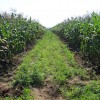
Sustaining Africa’s Development by Leveraging on Climate Change
By leveraging knowledge about climate change, through adopting improved agriculture technologies and using water and energy more effectively, Africa can accelerate its march towards sustainable development.
Ethiopia Moves in Right Direction with Climate Change Response But Challenges Remain
Ethiopia is widely regarded as an African success story when it comes to economic growth. According to the International Monetary Fund, the country’s economy is growing by seven percent annually. But there are concerns that climate change could jeopardise this growth.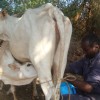
Warmer Days a Catastrophe in the Making for Kenya’s Pastoralists
Seif Hassan is a pastoralist from Garissa, Northern Kenya, some 380 kilometres outside of the capital, Nairobi. He sells his animals at the Garissa livestock market where, during a good season, pastoralists can sell up to 5,000 animals per week and “it is a cash-making business.”
Ethiopia Shows Developing World How to Make a Green Economy Prosper
Ethiopia has experienced its fair share of environmental damage and degradation but nowadays it is increasingly setting an example on how to combat climate change while also achieving economic growth.
Measuring How Climate Change Affects Africa’s Food Security
For the past 40 years Josephine Kakiyi, 55, has been cultivating maize, beans and vegetables on her small plot of land in the remote area of Kwa Vonza, in Kitui County, eastern Kenya.
Outgunned by Rich Polluters, Africa to Bring United Front to Climate Talks
As climate change interest groups raise their voices across Africa to call for action at the COP20 climate meeting in December and the crucial COP21 in Paris in 2015, many worry that the continent may never have fair representation at the talks.
Côte d’Ivoire Chokes on its Plastic Shopping Bags
In the middle of downtown Abidjan, Côte d’Ivoire, the aisles of a thriving supermarket are full of customers. But as they line up to pay for their items, there is one line to a cashier’s till that remains empty. It’s the “green cash register”, where the cashier does not provide plastic bags as this supermarket tries to implement a green policy.
Experts Warn of Dire Consequences as Lake Victoria’s Water Levels Drop Further
Over the years, Cassius Ntege, a fisherman from Kasenyi landing site on the Ugandan side of Lake Victoria, has observed the waters of the lake receding. And as one of the many who depend on the lake for their livelihoods, he has had to endure the disastrous consequences of the depleting lake.
Africa Seeks Commitment to Adaptation in Climate Deal
It is a critical time for international climate change negotiations. By December 2015, world leaders are due to decide on an international climate change agreement covering all countries that will take effect in 2020.
As Uganda Heats Up, Pests and Disease Flourish to Attack its Top Export Crop
When Abudu Zikusoka was a small boy his father would bring people to their home in Ndesse village in Central Uganda’s Mukono district. He would watch as they packed the family’s harvested coffee into sacks and then loaded it onto their bicycles.« Previous Page — Next Page »





 This publication explores African CSO engagement in the UNFCCC Conference of Parties (COPs) process.
Africa Climate Governance Factsheets
The following resources provide an overview of the climate governance, climate finance, gender and climate change and policy coherence issues as they relate to Africa in the climate negotiation processes.
The following resources provide an overview of the climate governance, climate finance, gender and climate change and policy coherence issues as they relate to Africa in the climate negotiation processes.
 Climate Change Governance for Africa
 Policy coherence in tackling climate change in Africa
 Climate Finance
 Gender and climate
 Heinrich Boll Foundation Workshop Report: ENSURING CLIMATE FINANCE EFFECTIVENESS IN AFRICA
Project supported by

This page includes independent news coverage, which is part of a project funded in partnership by the Heinrich Böll Stiftung. The contents of this news coverage are the sole responsibility of IPS and should not be taken to reflect the views of Heinrich Böll Stiftung.
