Languages
Friday, October 9, 2026



News and Views from the Global South
Middle East & North Africa
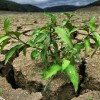
Mideast: Drought to Turn People into Eternal Migrants, Prey to Extremism?
Worldwide, land degradation, severe droughts and advancing desertification are set to force populations to flee their homes and migrate. In the specific case of the Middle East and North of Africa (MENA), such an obliged choice implies the additional risk to turn peoples into easy prey to extremist, terrorist groups.
Child Labor in the Arab Region Does Not Belong to the 21st Century
Today marks the 2017 World Day against Child Labor to reaffirm the goal to eliminate all forms of child labor. This year’s annual theme highlights a subject that is often neglected, namely the importance of addressing child labor in conflict areas and in disaster settings.
Crisis in the Gulf: Escalation or negotiation?
Turkey’s parliament is this week fast tracking the dispatch of up to 3,000 troops to Qatar, home to the country’s military base in the Middle East. Certain to stiffen Qatar’s resolve to resist Saudi and UAE-led pressure to force it to change policies, the Turkish move comes amid hints that the kingdom and its allies may seek to undermine the rule of Qatari emir Sheikh Tamim bin Hamad Al Thani.
What Future for 700 Million Arab and Asian Youth?
With a combined population of around 400 million inhabitants, 22 Arab countries are home to nearly 300 million youth. Meantime, there are 400 million youth living in Asia and the Pacific. In both regions, these 700 million young people aged 15–24 years account for up to 60 per cent of world’s youth population. What future for them?.
In Volatile Times, the U.A.E. calls for Tolerance
With terror attacks on the increase worldwide, there are more people today who believe that it has something to do with the religion of Islam.
Civilian Casualties Mount in Battle to Re-take Mosul
East of Mosul, many of the lands liberated from ISIS stand empty. Driving through the Nineveh plains, traditional homelands of Iraq’s minority communities of Yezidis, Christians, Shabak and Turkmen, you pass one ghost town after another, peopled only by members of the armed militias known in Iraq as the Hashd al-Shaabi, or ‘popular mobilization’.
Aggression against children in the Arab region needs to come to an end
On 20 February 1997, the United Nations General Assembly adopted Resolution 51/77 to promote the rights of children. This Resolution was considered a milestone in promoting and advancing the right of children in conflict and wars.
The Worsening Humanitarian Crisis in Syria
The cruel conflict in Syria continues to tear families apart, inflicts brutal suffering on the innocent, and leaves them pleading for protection and justice. I readily acknowledge that there have been reports of a significant drop in violence in some areas of the country, but such steps forward continue to be counter-weighted by the reality of a conflict that continues to devastate the civilian population.
The ‘Water-Employment-Migration’ Explosive Nexus
Water--everybody talks about it, warns against its growing scarcity, excessive waste, the impact of climate change, the frequent severe droughts and so on. Now, a global action network with over 3,000 partner organisations in 183 countries comes to unveil the dangerous nexus between water, employment and migration, in particular in the Mediterranean region.
Valuing Water Beyond the Money
Amid the worst drought in a century, South Africans are kick-starting a global consultative process to agree on the values of water in a bid to ensure more equitable use of the finite resource.
Mideast: Growing Urbanisation Worsens Water Scarcity, Food Imports
Conflict and insecurity remain the key barriers to development progress in the Middle East and North Africa. In Iraq, Libya, Syria, and Yemen, about half the population—around 40 million people—require humanitarian assistance. Across the region, countries depend heavily on food imports. As their populations urbanise and grow, the need for imports will increase.
Agony of Mother Earth (II) World’s Forests Depleted for Fuel
Humankind is the biggest ever predator of natural resources. Just take the case of forests, the real lungs of Mother Earth, and learn that every 60 seconds humans cut down 15 hectares of trees primarily for food or energy production. And that as much as 45,000 hectares of rainforest are cleared for every million kilos of beef exported from South America.
An Untold Economic Success Story in Syria
Hidden almost literally under the rubble of the civil war in Syria is an economic success story that is rarely told. Hanan Odah is a thirty-year-old Palestine refugee living in Jaramana refugee camp in Damascus. She supports her multiply displaced family of three from a thriving micro-enterprise venture. Her husband was killed in the conflict, but she refused to submit to despair and dependency on her parents.
Agony of Mother Earth (I) The Unstoppable Destruction of Forests
The world’s forests are being degraded and lost at a staggering rate of 3.3 million hectares per year. While their steady destruction in many Asian countries continues apace, deforestation of the world's largest tropical forest - the Amazon - increased 29 per cent from last year’s numbers. And some of the most precious ecosystems in Africa are threatened by oil, gas and mineral exploration and exploitation.
Refugee Journalists, the Challenge of Reporting from Exile
Abdulwahab Tahhan is a journalist and a refugee. From his exile in London, he documents the war that is devastating his homeland of Syria, monitoring airstrikes and assessing civilian casualties for the non-profit Airwars.
Climate-Smart Agriculture – From Tanzania to Vietnam
As part of efforts to move towards "climate-smart" agriculture, several countries have shared In a meeting in Rome new experiences on how to produce food in ways that help farmers cope with the impacts of climate change and to reduce greenhouse gas emissions in agriculture.
20 Million People Could ‘Starve to Death’ in Next Six Months
Urgent action is needed to save the lives of people facing famine in North Eastern Nigeria, Somalia, South Sudan and Yemen, the UN leading food and agriculture agency’s chief on April 28 warned. "If nothing is done, some 20 million people could starve to death in the next six months."
Building resilient rural livelihoods is key to helping Yemen
People in Yemen are currently suffering from the world’s largest humanitarian crisis. More than 17 million people around Yemen’s rugged landscape are acutely food insecure, and the figure is likely to increase as the ongoing conflict continues to erode the ability to grow, import, distribute and pay for food. More than 7 million people are on the verge of famine, while the rest are marginally meeting the minimum day-to-day nutritional needs thanks to external humanitarian and livelihoods support. Large-scale famine is a real risk that will cast an awful shadow for generations to come.
Middle East, Engulfed by a ‘Perfect Storm’
A perfect storm has engulfed the Middle East, and continues to threaten international peace and security.
Civil Society: “Everyday Things Are Getting Worse” for Children in Yemen
Persistent attacks on health care in Yemen is severely impacting children’s well-being, civil society detailed at the launch of a report.
Yemen, World’s Largest Humanitarian Crisis
With 18.8 million people –nearly 7 in 10 inhabitants-- in need of humanitarian aid, including 10.3 million requiring immediate assistance, Yemen is now the largest single-nation humanitarian crisis in the world, the United Nations informs while warning that the two-year war is rapidly pushing the country towards “social, economic and institutional collapse.“« Previous Page — Next Page »





The Week with IPS

NEXT STOP - SDGs
Tracking global progress towards a sustainable world
Tracking global progress towards a sustainable world
