Languages
Saturday, November 21, 2026



News and Views from the Global South
Regional Categories

A Milestone Anniversary Reiterates The Culture of Peace is a Movement, not a Revolution
Today, on 13 September 2021, the UN Declaration and Programme of Action adopted by the General Assembly in 1999 will be turning 22. You would recall that the 20th anniversary of The Culture of Peace of its adoption by the world’s highest multilateral body in 2019 was observed by the United Nations in an appropriate and befitting manner, as called for by the Assembly. It was an occasion for reiteration and recommitment by us all to create the culture of peace in our world, beginning with each one of us.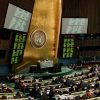
The Islamic Emirate, led by an Insurgent Group, Aims at Capturing a Coveted Seat at the UN
When the high-level segment of the 76th session of the UN General Assembly opens September 21, the Islamic Emirate of Afghanistan is unlikely to occupy a much-coveted seat in the world body.
CommonSensing Project Builds Climate Resilience for Small Island Nations
The UK Space Agency’s International Partnership Programme (IPP) CommonSensing is led by the United Nations Institute for Training and Research (UNITAR) through the United Nations Satellite Centre (UNOSAT), which is working with selected partners including the Commonwealth Secretariat, to improve resilience to the effects of climate change in Fiji, the Solomon Islands and Vanuatu.
South-South & Triangular Cooperation to Help Achieve UN’s Development Goals
The 2021 high-level commemoration of the United Nations Day for South-South Cooperation, organized ahead of the opening of the seventy-sixth session of the United Nations General Assembly, provided an opportunity to discuss Southern solidarity in support of a more inclusive, resilient and sustainable future while effectively responding to the global COVID-19 crisis across the global South.
Latin America’s Central Banks Push Climate Crisis to the Back Burner
Despite the impact that their policies have with regard to the climate emergency, Latin America's central banks continue to avoid applying guidelines in measures that affect the operation of credit institutions, which distances them from compliance with the Paris Agreement on climate change.
Caribbean Under Threat: Report Reveals Enormous Challenges for the Region
Less than halfway into the 2021 Atlantic Hurricane Season, Jamaica and its Caribbean neighbours were already tallying the costs of infrastructural damage and crop losses from the passage of three tropical storms - Elsa, Grace and Ida. And after a record-breaking 2020 season, the region is on tenterhooks as the season peaks.
A Tale of Two Internationally Trained Medical Doctors in Canada
Wagma Saad, is an Internationally Trained Medical Doctor (ITMD) from Kabul Medical University, Afghanistan, currently living in Canada with her family. Saad graduated in 2016, an education that didn’t come easily to her. With numerous restrictions, blocks and challenges placed at every step, fighting numerous social and political battles, she chased her passion for science and medicine, and after seven years at medical school, she finally got to call herself a doctor.
Twenty Years After September 11, 2001: Institutions on Decline, But Religion Rising?
Described as the “worst terrorist attack ever in the United States”, September 11, 2001 is a moment which has led to multiple transformations, cascading around our world.
Afghanistan’s Girls Need our Unwavering Support in Education
The Taliban takeover of government in Kabul is just days old, and the eyes of Afghans and the world are cautiously watching and hopeful to see them stand by their word and ensure that girls’ education be promoted and protected.
The Forbidden Love
 Abandoned by family and friends, transgender people in Bangladesh are subject to extensive daily abuse. The existing and continuously growing transphobia and homophobia in society are obstacles in the lives of this group. The people featured here from the LGBTQ+ community share a wide variety of narratives.

In a Watershed Year for Climate Change, the Commonwealth Secretary-General calls for Urgent, Decisive and Sustained Climate Action
This November, five years after signing the Paris Agreement and pledging to limit global warming to 2 degrees Celsius above pre-industrial levels, with a further target of below 1.5 degrees Celsius, world leaders will meet in Glasgow, UK amid COVID-19 pandemic shocks, rising hunger and an Intergovernmental Panel on Climate Change report that warns of more extreme temperature, droughts, forest fires and ice sheet loss due to human activity.
A Regional Agreement for Healthy Eco-Systems in Latin America & the Caribbean
In August 31st 2021, five Nations including Costa Rica - the country where the Escazú Agreement was adopted - announced publicly working towards a proposal for UN Human Rights Council to recognize globally the right to a clean, safe, healthy and sustainable environment at its 48th session in September.
Climate Crisis Drives Up Cost of Electricity and Brings Big Changes in Brazil
As most of the world seeks to modify its energy mix to mitigate climate change, Brazil has also been forced to do so to adapt to the climate crisis whose effects are being felt in the country due to the scarcity of rainfall.
The ARC Model: Proactive Disaster Risk Financing for a More Resilient Africa
The world faces multiple crises: climate change, extreme weather events, food security and biodiversity. For African nations, these issues are compounded by the COVID-19 pandemic and epidemic outbreaks that include Rift Valley Fever and Malaria. With 35 African Union Member States as signatories to its establishment Treaty, the African Risk Capacity (ARC) Group – comprising of ARC Agency and ARC Limited - works with Governments to help improve their capacities to better plan, prepare, and respond to extreme weather disasters and natural disasters.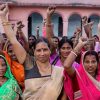
“Time Is A-Wasting”: Making the Case for CEDAW Ratification by the United States
The U.S. is one of only a handful of countries that has yet to ratify the Convention on the Elimination of Discrimination against Women (CEDAW), rendering it “strange bedfellows” with Sudan, Somalia, Iran, Tonga, and Palau.
End Vaccine Apartheid
Vaccine costs have pushed many developing countries to the end of the COVID-19 vaccination queue, with most low-income ones not even lining up. Worse, less vaccinated poor nations cannot afford fiscal efforts to provide relief or stimulate recovery, let alone achieve Agenda 2030.
The Main Contradiction of the Modern Era
The main contradiction of the modern era, and indeed of all human history, is not between capitalism and socialism, and not even between authoritarianism and democracy, but between individualism and collectivism, between public and personal interests. Countries that are getting ahead in the economic race allow themselves the luxury of individualism, prioritizing human rights, which ultimately undermines their political and economic power and causes their decline and the rise of more collectivist civilizations. It is literally the story that is as old, as the world itself…
Civil Society Must Build on Protest Movements – Podcast
 2020 was a year of tremendous upheaval. The murder of George Floyd, followed by global Black Lives Matter protests, Covid-19 and the stark light that the pandemic shone on inequality within countries and between the global north and south, protests and brutal repression after elections in Belarus, ongoing demonstrations for climate action led by youth around the world, to name just a few.

Afghanistan: A Swedish Officer’s Point of View
Like most of us, I rely on news media to find an explanation to tragedies I watch on TV. Neverthelss, some of my opinions about the Afghan tragedy have furthermore been influenced by talks I once had with my friend Bernth Dagerklint. We had for some years been working as teachers at a high school, though this was not Bernth’s main occupation. Most of the time, he served as an officer during international, armed campaigns supported by the Swedish government. He had been to former Yugoslavia, the West Bank and not the least in Afghanistan, where he since 2003 on several occasions worked as ”instructor” for Afghan officers.
Afghanistan – Another Viet Nam?
There are several points of similarity between the war in Afghanistan and the war in Viet Nam. The Taliban, like the North Vietnamese and the Viet Cong, proved to be formidable tacticians and fighters. They managed to contain a far better equipped opponent and mount effective counteroffensives; access sufficient domestic and foreign funding to pay their fighters and support their families; build a formidable intelligence network; and acquire necessary technical capabilities in areas such as repair and maintenance of small arms.
Afghanistan – a Turning Point?
Headlines in the press, live TV and internet coverage of the chaos at Kabul airport following the American withdrawal from Afghanistan has generated an impression around the world of an American foreign policy debacle, belittling the supremacy of American military power.« Previous Page — Next Page »


The Week with IPS

NEXT STOP - SDGs
Tracking global progress towards a sustainable world
Tracking global progress towards a sustainable world
