Languages
Sunday, November 15, 2026



News and Views from the Global South
Africa
TRADE: Climate Change Will Impede North-South Trade
Climate change is increasingly playing a role in North-South trade, as carbon emissions are being used as an excuse to protect markets, with poorer countries likely to lose out.
South Sudan’s Most Vulnerable
At first sight, the village of Rokwe on the outskirts of Juba looks like any other village in South Sudan. The sun shines bright on the grass roofs of the mud huts and sounds from a church choir practising can be heard in the distance. Only the scenery at the local health centre gives away that this is no ordinary place.Concern over ICC Funding
International justice advocates are worried that donors will deprive the International Criminal Court (ICC) of sufficient funding next year, hindering the court’s ability to fulfil an expanding mandate that will stretch from Kenya to Libya and potentially Ivory Coast.
Re-Greening Africa in the Footsteps of Wangari Maathai
Africa needs to remain focused and continue following the late Professor Wangari Maathai’s initiatives for environmental sustainability in order to address climate change across the continent, environmentalists say.
SOUTH AFRICA: In Need of a Unified Climate Change Policy
The implementation of a unified climate change policy across all of South Africa’s government departments will not be easy as the divisions currently work largely as separate entities, says Greenpeace Africa.DR CONGO: Hard to Save All Women Suffering from Fistula
"Every quarter, more than a hundred women with fistulas - including many younger than 20 years old - are admitted for surgery in Maniema province," says nurse Julie Mawazo. "The number of affected women who don't have the means or awareness to come in must be far greater."
BURKINA FASO: Bonuses Help Reforestation Take Root
This year Fatimata Koama and her associates received more than half a million CFA francs as a reward for planting - and looking after - 1,200 trees in their small corner of Burkina Faso.
WEST AFRICA: Joint Action Against Piracy
There have already been more than thirty pirate attacks on ships along the West African coast so far this year. Regional governments will meet in Cotonou, Benin in October to discuss coordinating efforts to stem piracy.
Q&A: “We Expect the Polluters to Pay”
Africa will have to present a strong position at the United Nations climate change conference later this year to ensure the continent will receive the financing to mitigate and adapt to climate change.AFRICA: Informal Cross-Border Traders Foster Entrepreneurship
Informal cross-border traders embody the spirit of African entrepreneurship. Driven by a lack of formal employment opportunities offering regular wages and hours, and succeeding in challenging conditions through sheer determination and a savvy business sense, this army of informal traders make up a crucial, though often overlooked part of the continent's economy.
ZAMBIA: New President, New Governance Yardstick
The election of Michael Chilufya Sata as Zambia's new president shows that Zambians are more interested in issues of accountability and transparency than mere service delivery, say analysts.
DR CONGO: Maintaining Victims’ Faith in Justice
Sometime in the next two months, activists and survivors of horrific violence in the eastern Democratic Republic of Congo will find out if Callixte Mbarushimana will stand trial for war crimes and crimes against humanity.
GHANA: The Abandoned Offspring of Oil
Kobina's legs are dappled with scars. He gets them flitting across the beach in Sekondi, in southwest Ghana, slipping in the soot-black mud and clambering over pirogues slippery with fish guts, only to sell a sachet of water or a freshly peeled orange to fishermen working on the shore.
SOUTH SUDAN: Children Snatched Out of their Homes
In villages across South Sudan children are being snatched out of their homes in the dead of night, never to see their families again.
DR CONGO: No Water, No Management, No Power
Frequent power cuts have led to the firing of the board of the Democratic Republic of Congo's national electricity company. But it is not clear if sub-par generation from the Inga hydroelectric power stations supplying the capital Kinshasa is due to poor management or to unusually low water levels in the Congo River.
ZAMBIA: Largely Peaceful Elections
Only two incidents of violence, triggered by the late start of voting and the suspicion of electoral fraud, were reported as Zambians went to the polls to elect a new president and government on Tuesday.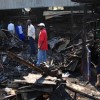
MALAWI: Markets Torched Ahead of Cancelled Protests
Soot and ash filled the air the day after a fire gutted Malawi's Blantyre Market. Men and women merchants wore solemn expressions as they shovelled piles of debris from the site on Tuesday.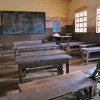
Adding Up the Cost of Education in Sierra Leone
A formal strike of teachers has been averted and pupils in Sierra Leone returned to school on Tuesday, almost a week after the term was meant to officially start.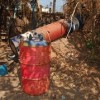
WEST AFRICA: Households Turning to Cow Dung for Energy
There are dusty barrels carefully positioned outside many of the family compounds in the Léona neighbourhood of Kaolack, a city of 20,000 in western Senegal: signs of success for a project to introduce the use of biogas as a source of fuel. Amadou Faye, whose family herds cows, goats and sheep as well as growing groundnuts on the side, is among the early adopters.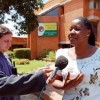
ZAMBIA-ELECTIONS: Perpetrators of Violence Warned: ‘Expect No Mercy’
As Zambians go to the polls on Tuesday to elect a new government and president they do so amid fears of election violence.Accessible Micro-Loans Help Poor Women in Rural South Africa
While women still lag grossly behind men in terms of bringing home the bacon, a new entrepreneurship organisation, Financial Independence Through Entrepreneurship (FITE), is working to swing the balance of economic power in South Africa by providing micro-loans to hard-up women.« Previous Page — Next Page »


The Week with IPS

NEXT STOP - SDGs
Tracking global progress towards a sustainable world
Tracking global progress towards a sustainable world
