Languages
Tuesday, October 20, 2026



News and Views from the Global South
Europe
Hunger Strike Is Over, but Kurdish Unrest Is Not
There was a sigh of relief in Ankara as Abdullah Ocalan, leader of the outlawed Kurdish Workers Party (PKK), on Sunday put an end to the 68-day hunger strike of 682 Kurdish prisoners and nine members of the Turkish Parliament.
How Austerity Plans Failed the European Union
The austerity programmes being rolled out in virtually every member state of the European Union (EU) - particularly in Greece, Portugal, Spain and Italy - have failed to reach their stated objective of consolidating public finances in order to solve sovereign debt crises.
Unsafe Abortions Threaten Thousands in Eastern Europe
Pressure from the Catholic Church, social stigma, a lack of information about sexuality and reproductive health and limited access to reproductive healthcare services are putting the lives of hundreds of thousands of women across Eastern Europe at risk.
Soup Kitchens Overwhelmed in Crisis-Ridden Spain
A huge pot of rice steams on the stove at the soup kitchen run by Emaús in the municipality of Torremolinos, on the outskirts of this southern Spanish city. This morning, like every other, Pepi, Adriana and Diego are cooking for over a hundred people who can no longer afford to feed themselves.
Faces of the Crisis in a Protesting Europe*
Out-of-work engineers, family businesses that are falling apart, people working in precarious conditions in an ailing labour market – it’s a description of Spain, but it could just as easily be Portugal, Greece or Italy…
Missing Themes in the U.S. Election
The media did their best to make the U.S. presidential election look important, the altar on which democracy is built. But there has been a problem ever since the Supreme Court legalised unlimited campaign spending (six billion dollars this year), thereby authorising one more freedom of expression, called "commercial speech" even though much of this speech is libellous, often neither true nor relevant.
Creditors’ Stalemate Brings Greece to Knife Edge
Ignoring the thousands of protestors gathered outside the Greek parliament on Wednesday, the government voted in public spending cuts amounting to 17 billion dollars in an economy already on its knees from a lacerated budget.
Bankers, Swindlers
For anyone who might not have realised it yet, the current crisis is demonstrating beyond a shadow of a doubt that the financial markets are the lead players in the current economic situation in Europe. Power has passed from the politicians to speculators and crooked bankers. This is a fundamental change.Serbia Sinks Into Depression
Renato Grbic is a simple Belgrade fisherman, who grew up on the shores of the Danube River in Belgrade, but he performs an additional job that he is not paid for.
Migrants in Poland Find a Voice At Last
It took hunger strikes and a case like Layla Naimi’s to push authorities in Poland to amend laws dealing with irregular migrants.
Q&A: Press Ethics Under Scrutiny in the UK
Upheaval over a new system of press regulation, which envisages stronger government intervention in the media, is posing a growing threat to Britain's age-old press freedom and to that same freedom worldwide.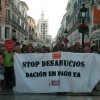
Defying Foreclosures in Spain
Shouting slogans against bank foreclosures, dozens of protesters in this southern Spanish city gathered Wednesday to prevent the eviction of a Moroccan family who couldn’t afford to meet their mortgage payments.
Migrant Women Trapped in Sex Trade
When French police broke up a Nigerian human trafficking ring that allegedly forced young migrant women into prostitution, the arrests cast a sharp light on the plight of what the authorities called “modern-day slaves”, here and throughout Europe.
Cooperatives Cushion the Blows of Hunger
“One in eight people goes to sleep hungry every day,” according to the ‘State of Food Insecurity in the World 2012’, a document released annually by the Food and Agriculture Organisation (FAO).EU Crisis’ Ripple Effects in Latin America
The crisis in Europe may provide an opportunity for Latin America and the Caribbean to recast the bi-regional relationship based on higher education and investments with a social and environmental focus, according to the ministerial Council of the Latin American and Caribbean Economic System.
Local Money Sets Its Own Stamp
Bristol, the eighth most populous town in the UK, has launched a local currency - the Bristol Pound. That makes it one of the largest localities to embrace a complementary currency among more than 2,500 worldwide.
Most EU Nuclear Power Plants ‘Unsafe’
The so-called ‘stress tests’ on nuclear power plants in the European Union (EU) have confirmed environmental and energy activists’ worst fears: most European nuclear facilities do not meet minimum security standards.
Purveyors of Death Flourish in Spain During Crisis
At the height of the economic and financial crisis, the Spanish government is promoting the export of weapons, creating concern among civil society organisations that say commercial interests are prevailing over the law and human rights.Death Penalty Campaigners Worry About the Steps Back
Ten years of campaigning by the World Coalition against the Death Penalty have brought fruit: the number of countries that have abolished capital punishment in law or practice has gone up to 140. But some countries have resumed executions this year.KYRGYZSTAN: Mining Sector in Nationalists’ Crosshairs
When nationalist MP Kamchybek Tashiev led his supporters over a fence surrounding parliament in early October, both foreign and local executives working in Kyrgyzstan’s mining industry braced for the worst.
Greek State on Life Support
Like a person on life support whose vital functions are failing, the Greek economy is slowly but surely shutting down as radiation from the so-called ‘austerity plan’ erodes public institutions.« Previous Page — Next Page »





The Week with IPS

NEXT STOP - SDGs
Tracking global progress towards a sustainable world
Tracking global progress towards a sustainable world
