Languages
Saturday, November 21, 2026



News and Views from the Global South
Latin America & the Caribbean

Luxury Homes Block Up Delta near Buenos Aires
Gated residential communities on the Paraná Delta have sprawled out of control in recent years, and are plugging up the local ecosystem and preventing the natural runoff of water that cushions the impact of floods in a vast area near the Argentine capital.
Tension Surrounds Start of Venezuela’s Post-Chávez Era
The political polarisation in Venezuela became even more marked as the country emerged from Sunday’s elections basically divided in half, between two sectors that are antagonistic and reluctant to try to understand each other.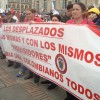
Agriculture Still the Cinderella of Colombia
Wearing a dusty hat and a smile that lights up his face, the septuagenarian José Alicapa does not shrink from the overwhelming bustle of the Colombian capital, which he reached after a 13-hour bus drive from the western province in Caldas.
Elections in the Shadow of Chávez
Venezuelans will cast their ballots this Sunday to elect a successor to late president Hugo Chávez. The choice is between his political heir Nicolás Maduro – the front-runner in the polls - and the leader of the revitalised opposition, Henrique Capriles.
In Haiti, April Showers Don’t Always Bring Flowers
In Haiti, a simple spring shower that would barely be noticed in most countries can cause devastating floods, due to the severe deforestation and erosion that impedes the absorption of rain.
Gender Violence, Theft Land Women in Cuban Prisons
The life histories of Cuban women in prison for murdering their violent husbands or boyfriends show the need for reforms of the criminal code to take account of gender reasons as mitigating factors in sentencing.
Climate Change Drives Spread of Invasive Plants in Cuba
Botanist Ramona Oviedo has spent decades combing the countryside in Cuba to study and curb the spread of invasive plant species, a serious problem that has been aggravated by climate change.
Women Miners Blast Through Barriers in Chile
Women are playing an increasingly important role in Chile’s mining industry, where little more than a decade ago they were not even allowed in the mines because of prejudice and superstitions.
Mexicans Develop Drones for Peace
Unmanned aerial vehicles (UAVs), better known as drones, have earned a bad reputation due to their controversial use by the United States in its “war on terrorism”, yet they have almost unlimited potential as tools for scientific research.
Uruguay – Second Country in Latin America to Adopt Gay Marriage
Activists in Uruguay hope the passage of the “Equal Marriage Law” Wednesday will help bring about recognition that society is heterogeneous.Chilean Court Suspends Pascua Lama Mine
Environmental groups and indigenous Diaguita communities of the Huasco Valley in northern Chile celebrated a court decision Wednesday that will bring to a complete halt work on the Pascua Lama gold, silver and copper mine belonging to Canada’s Barrick gold.Impunity, Machismo Fuel Femicides in El Salvador
Several brutal, high-profile murders of women in the last few weeks in El Salvador are just the latest reminder that this is one of the countries in the world with the highest number of femicides, the term used to describe the killing of women because they are female.
Prolonging the Life of the World’s Biggest Copper Mine
El Teniente, the world’s largest underground copper mine, has already been in operation since 1905, but the state-owned National Copper Corporation of Chile (CODELCO) wants to keep it running for another 50 years.Push for Reform of Inter-American Commission Could Rebound on Ecuador
Ecuador's attempt to introduce institutional changes in the Inter-American Commission on Human Rights has been frustrated for now. Quito is seeking allies to create parallel regional mechanisms, but the risks of losing at this game are high, according to experts and users of the regional justice system.
Neruda’s Death Helps Tear Veil Off Chilean Dictatorship
The investigation in Chile of the possibility that Nobel Prize-winning poet Pablo Neruda was murdered by the 1973-1990 dictatorship is seen as a major stride forward in the search for truth and justice for human rights crimes that remain unpunished 40 years after the coup d’etat.
“21st Century Agriculture, 19th Century Logistics” in Brazil
Edson Godinho, a truck driver with 35 years' experience, was lucky this time. When he reached the southeastern port of Santos in early April, the line of waiting trucks was much shorter than it had been earlier, so he only had to wait 12 hours to unload his soybeans.
Troops May Join Mexico’s Fight Against Hunger
The Mexican government is considering using the armed forces, which face serious human rights accusations from their involvement in the war on drugs, to collect socioeconomic data from the low-income households that will benefit from the National Crusade Against Hunger.
U.S. Aid to Post-Earthquake Haiti a “Black Box”
Following the devastating 2010 earthquake in Haiti, more than a billion dollars of U.S. aid money has gone to that country with little transparency or accountability on how the money is being used, according to new data released by a watchdog group here.
Incomplete Justice in Killings of Amazon Activists
Peasants and human rights defenders in Brazil are indignant over the acquittal of the man accused of ordering the May 2011 murders of two prominent Amazon activists, José Cláudio Ribeiro da Silva and his wife Maria do Espírito Santo.
Solar Energy and Briquettes Make Headway in Haiti
While Jean Reniteau mulls over the idea of using solar panels to light his house, Frantz Fanfan is wondering how to expand production of biomass briquettes to replace the use of charcoal in the cooking stoves of most of the Haitian people, who lack electricity.
New Brazilian Research Centre Focuses on Health Risks of Smoking
Brazil has taken another step to combat the harmful habit of smoking with the creation of the Centre for Studies on Tobacco and Health (CETAB).« Previous Page — Next Page »


The Week with IPS

NEXT STOP - SDGs
Tracking global progress towards a sustainable world
Tracking global progress towards a sustainable world

