Languages
Thursday, October 15, 2026



News and Views from the Global South
Climate Change

UNIDO Comes a Long Way
The United Nations Industrial Development Organisation (UNIDO) has come a long way since 1997, when it faced the risk of closure in the aftermath of the end of the Cold War.
There’s CO2 Under Those Hills
“If they go ahead and dig those wells, all my work will be destroyed, all my life, everything,” says Franca Tognarelli, looking at the hills and vineyards around her house in Certaldo, Val d’Elsa, in the heart of Tuscany.
OPINION: The Front Line of Climate Change is Here and Now
The fate of my country rests in your hands: that was the message which Ian Fry, representing Tuvalu gave at the United Nations Climate Change Conference in Copenhagen five years ago. This is also the message that the Pacific Climate Warriors have come to Australia to bring.
Family Farmers – Forward to the Future
"Who is more concerned than the rural family with regards to preservation of natural resources for future generations?"
A Billion Tons of Food Wasted Yearly While Millions Still Go Hungry
In his parody of the Michael Jackson hit “Beat It”, the American satirist and singer Weird Al Yankovic has a parent urging his son to eat the food on his plate, warning that “other kids are starving in Japan”.
OPINION: Put People Power Back at Centre of Citizen Action
A few weeks ago, I co-signed perhaps the most important open letter of my career. It was an open provocation to my fellow activists and colleagues, to the members of our organisation, and to all those who, like me, earn their living in the civil society sector.
OPINION: Planet Racing Towards Catastrophe and Politics Just Looking On
If ever there was a need to prove that we are faced with a total lack of global governance, the U.N. Climate Summit, extraordinarily called by U.N. Secretary-General Ban Ki-moon on Sep. 23, makes a very good case.
The Time Has Come for Agroecology
"It is time for a new agricultural model that ensures that enough quality food is produced where it is most needed, that preserves nature and that delivers ecosystem services of local and global relevance" – in a word, it is time for agroecology.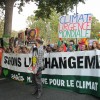
French Add Voice to Global Climate Action
As if to highlight the reality of climate change, the rain came pouring down here as demonstrators prepared to rally for political action to combat global warming.
Pushing for Cities to Take Lead on Climate Change
If former New York mayor Michael Bloomberg had used the Vélib’ - Paris’ public bicycle sharing system - to arrive at the headquarters of the Organisation for Economic Cooperation and Development here Wednesday, he might have sent a stronger message about the need for cities to be “empowered to take the lead in combating climate change”.Human Rights and Gender Equality Vague in Post-2015 Agenda
With the United Nations’ post-2015 development agenda currently under discussion, civil society actors in Europe are calling for a firmer stance on human rights and gender equality, including control of assets by women.
Will Climate Change Denialism Help the Russian Economy?
The recent call from Russian Prime Minister Dmitry Medvedev for “tightening belts” has convinced even optimists that something is deeply wrong with the Russian economy.
Organic Farming Taking Off in Poland … Slowly
Polish farmer Slawek Dobrodziej has probably the world’s strangest triathlon training regime: he swims across the lake at the back of his house, then runs across his some 11 hectares of land to check the state of the crops, and at the end of the day bikes close to 40 kilometres to and back from a nearby town for some shopping.
Churches at the Frontline of Climate Action
Johannes Kapelle has been playing the organ in the Protestant church of Proschim since he was 14. The 78-year-old is actively involved in his community, produces his own solar power and has raised three children with his wife on their farm in Proschim, a small village of 360 inhabitants in Lusatia, Germany.
Drought and Misuse Behind Lebanon’s Water Scarcity
In front of Osman Bin Affan Mosque, in a central but narrow street of Beirut, several tank trucks are being filled with large amounts of water. The mosque has its own well, which allows it to pump water directly from the aquifers that cross the Lebanese underground. Once filled, the trucks will start going through the city to supply hundreds of homes and shops.
If You Cut One, Plant Two
Olga Mugisa, 11-years-old, takes to the microphone in front of her peers, the Ugandan flag proudly draped behind her and green plants framing the stage. She has an important message to share with her fellow students: “If you cut one, plant two.”
OPINION: Why Asia-Europe Relations Matter in the 21st Century
Hopes are high that the 10th Asia-Europe Meeting – or ASEM summit – to be held in Milan on October 16-17 will confirm the credibility and relevance of Asia-Europe relations in the 21st century.
Inequality Blocks Path to “Gold” in Latin America
Inequality, poor infrastructure and declining trade are some of the problems that Latin America needs to overcome if the region truly wishes to achieve a “golden age”, according to Peru’s President Ollanta Humala.
Higher Food Prices Can Help to End Hunger, Malnutrition and Food Waste
The choice of foods displayed on supermarket shelves can be quite bewildering. This abundance encourages us to take it for granted that we will always be able to buy the food we want at affordable prices.
Siberian Global Warming Meets Lukewarm Reaction in Russia
People in Siberia must prepare to face frequent repeats of recent devastating floods as well as other natural disasters, scientists and ecologists are warning, amid growing evidence of the effects of global warming on one of the world’s most ecologically diverse regions.
India Ready for ‘Robust’ Stand on Climate Change
 As hundreds of legislators descend on Mexico City for the second GLOBE Summit, slated to run from Jun. 6-8, many rising nations are taking stock of their national policies in relation to climate change and global warming.
« Previous Page — Next Page »





The Week with IPS

NEXT STOP - SDGs
Tracking global progress towards a sustainable world
Tracking global progress towards a sustainable world

