Languages
Friday, October 9, 2026



News and Views from the Global South
HIV/AIDS

Major New U.S. AIDS Plan Disallows Funding for Family Planning
At perhaps a critical turning point in the global fight against HIV/AIDS, the U.S. government, the single largest funder in that fight, on Thursday unveiled a major new strategy for pushing towards achieving an “AIDS-free generation”, the stated U.S. goal.Evolving HIV Strains Worry Indian Scientists
While India has drastically reduced the spread of HIV over the past decade, new strains of the virus that cause acquired immunodeficiency syndrome (AIDS) are troubling medical scientists in this country.
The Price of Ignoring the Sexuality of Kenya’s HIV-Positive Youth
It all started with a fight, one that would change his life forever.

Older, Wiser and Living with HIV/AIDS
When HIV/AIDS first emerged in the 1980s, the stereotypical image of a person living with the disease in the United States was a young or middle-aged white homosexual male.
Chile in the Vanguard of Monitoring AIDS Therapy
In Chile, not only do all people diagnosed with HIV/AIDS receive treatment, but the country also has advanced mechanisms for monitoring outcomes of the antiretroviral therapy.
Lead Funder on AIDS, Malaria, TB Gets a Reboot
After weathering the departure of its executive director amidst a misallocation scandal earlier this year, the world's largest funder of programmes to address HIV/AIDS, tuberculosis and malaria is poised to announce a new leader Thursday.
Will India Still Supply Cheap Drugs to the World?
India may be famous for the Taj Mahal, its religious ceremonies, Bollywood films and one of the highest economic growth rates in recent years. But more importantly, India has had a positive global impact through its supply of vast quantities of low-cost, good-quality generic medicines, which have saved or prolonged millions of lives.
Maldives Talks Condoms
For an orthodox Islamic country, the Maldives has made remarkable progress in halting the spread of HIV in the Indian Ocean archipelago through bold awareness programmes and the distribution of condoms.Fresh Research on HIV Urges New Approach to Gay Men
Unlike the flattening or even declining rates of HIV infection among nearly all other communities, the epidemic among gay men globally is rapidly expanding.Using Cameroon’s Community Grapevine to Prevent Mother-to-Child Transmission
For nearly two years, not a single child with HIV has been born at the public hospital in the Cité-Verte district of Yaoundé, the capital of Cameroon. Dr Emilien Fouda, the hospital's director, says this proud record is the result of combined effort by his staff and community support groups.Caribbean Sees Progress on HIV/AIDS, Fears Funding Cuts
Ian McKnight, executive director of the Caribbean Vulnerable Communities Coalition (CVCC), used one word - “tokenistic” - to sum up his perspective on the 19th International AIDS Conference that ended here over the weekend.AIDS Meet Ends with Talk of Cure, But Realities of Scourge Persist
As the International AIDS Conference ended in Washington on Friday, organisers unveiled groundbreaking new research on the promise of early anti-retroviral (ARV) drug therapy.
Protesters: Free Trade Deals, Drug Patents Derail AIDS Fight
As the nineteenth International AIDS Conference continued in Washington Tuesday, thousands of protesters marched on the White House with a set of demands to end the epidemic.
U.S. Aims for AIDS-Free Generation Amid Funding Cuts
As more than 20,000 health workers, scholars and activists from around the world gather here this week for a major biannual AIDS conference, observers are warning that U.S. government proposals to cut HIV/AIDS-related funding could undermine the significant potential to deal a decisive blow to the disease in the near future.U.S.: Police Treat Condoms as Contraband, Rights Group Says
How many condoms is it legal to carry around in your pocket? That’s the question sex workers in the United States are asking after being routinely targeted by police for having prophylactics – not in itself a crime.
Caribbean Moves to Protect Rights of HIV-Positive Workers
Thirty years into the HIV and AIDS epidemic, Caribbean countries are slowly putting necessary legislation in place to ensure the rights of workers despite their HIV/AIDS and chronic disease status.International Conference Sheds Light on U.S. AIDS Crisis
Thirty-one years after the start of the HIV/AIDS epidemic in the United States, the country’s infection rates have not gone down in a decade, warned advocates speaking here on Tuesday ahead of a major international conference.
Q&A: Sustainable Development Key to Reducing Drug Use
"Drugs and crime threaten one of our most important goals - to ensure sustainable development around the world," United Nations Secretary-General Ban Ki-moon stated on Jun. 26, during a General Assembly debate on drugs and crime as a threat to development.
Bringing People “Back to Life” in Uganda’s Slums
As soon as Sanyu Nagia sits down outside Barbara Namirimu’s home, she asks to see her patient’s bag of medicine. It is too heavy for the ill Namirimu to carry, so her mother, Efrance Namakula, brings it out and hands it over.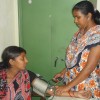
Bangladesh Braces for HIV Epidemic
Bangladesh has shown low HIV prevalence rates so far but may be silently moving towards an epidemic, say experts pointing to underreporting and poor monitoring for the virus in the general population.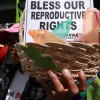
Conference Reaffirms Reproductive Rights
While much of the world is facing a global financial crisis, made worse by government cuts in social spending, members of parliament meeting here Wednesday agreed the economic crunch is no reason for governments to relax their commitment to women’s reproductive rights and health, made 18 years ago.« Previous Page — Next Page »





The Week with IPS

NEXT STOP - SDGs
Tracking global progress towards a sustainable world
Tracking global progress towards a sustainable world
