
Friday, May 22, 2026



News and Views from the Global South
Inequality

Will Myanmar’s ‘Triple Transition’ Help Eradicate Crushing Poverty?
 Myanmar is never out of the news for long. This has been the case since a popular uprising challenged military rule in 1988. For over two decades, the country was featured in mainstream media primarily as one unable to cope with its own internal contradictions, a nation crippled by military rule.
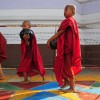
Will Myanmar’s ‘Triple Transition’ Help Eradicate Crushing Poverty?
Myanmar is never out of the news for long. This has been the case since a popular uprising challenged military rule in 1988. For over two decades, the country was featured in mainstream media primarily as one unable to cope with its own internal contradictions, a nation crippled by violence.
AIDS Is No. 1 Killer of African Teenagers
Two years ago, Shola* was kicked out of the family house in Abeokuta, in southwestern Nigeria, after testing HIV-positive at age 13. He was living with his father, his stepmother and their seven children.
Inequality in Mexico Is All About Wages
Sandra G. works Monday through Saturday in a beauty salon on the south side of Mexico City, where she earns slightly more than the minimum wage, which in this country is just five dollars a day.
Braving Dust storms, Women Plant Seeds of Hope
In the world’s largest refugee complex – the sprawling Dadaab settlement in Kenya’s North Eastern Province – women listen attentively during a business management workshop held at a hospital in one of its newest camps, Ifo 2.
Kenya on the Right Economic Path But Challenges Abound
Each year on Dec. 10, Lucy Mwende and her two children hop aboard a night bus and travel to the white sandy beaches and warm waters of Kenya’s Indian Ocean, some 441 km from the capital, Nairobi.
Filipinos Take to the Streets One Year After Typhoon Haiyan
People covered their bodies with mud to protest against government ineptitude and abandonment; others lighted paper lanterns and candles and released white doves and balloons to remember the dead, offer thanks and pray for more strength to move on; while many trooped to a vast grave site with white crosses to lay flowers for those who died, and to cry one more time.
More Economic Equality Brings Greater Political Polarisation in Brazil
“If I had to choose today I would stay back home, I wouldn’t come to look for work here,” said Josefa Gomes, who 30 years ago moved from Serra Redonda, a small town in Brazil’s semiarid northeast, to the city of Rio de Janeiro, 2,400 km away.
Inside Pakistan’s Untapped Fishing Industry
If you want to know what ‘sea traffic’ looks like, just go down to the Karachi Harbour. Built in 1959, the dockyard houses close to 2,000 big and small boats anchored in the grey sludge at the edge of Pakistan’s southern port city, which opens into the Arabian Sea.
Middle-Income Kenya Still in Need of Aid
Coffee farmer Gabriel Kimwaki from Nyeri County, in central Kenya, is considering “giving up farming altogether”.
Inside Pakistan’s Untapped Fishing Industry
If you want to know what ‘sea traffic’ looks like, just go down to the Karachi Harbour. Built in 1959, the dockyard houses close to 2,000 big and small boats anchored in the grey sludge at the edge of Pakistan’s southern port city, which opens into the Arabian Sea.

OPINION: One Mexico, or Many?
Mexico can charm, irritate, wound, inspire and confuse the casual visitor as well as the informed researcher. But no one is ever left indifferent by it. Mexico leaves an indelible mark.
Child Poverty in Spain Seen Through the Eyes of Encarni
“I would like to have a big house, and I wish my family didn’t have to go out and ask for food or clothes,” Encarni, who just turned 12, tells IPS in the small apartment she shares with five other family members in a poor neighbourhood in the southern Spanish city of Málaga.
They Say the Land is ‘Uninhabited’ but Indigenous Communities Disagree
Disregarding the rights of indigenous people to their traditional lands is costing companies millions of dollars each year, and costing communities themselves their lives.
Bangladeshi ‘Char Dwellers’ in Search of Higher Ground
Jahanara Begum, a 35-year-old housewife, is surrounded by thatched-roof homes, all of which are partially submerged by floodwater.
The Invisible Reality of Spain’s Homeless
“It’s easy to end up on the street. It’s not because you led a bad life; you lose your job and you can’t afford to pay rent,” says David Cerezo while he waits for lunch to be served by a humanitarian organisation in this city in southern Spain.
Zimbabwe’s Rich Fuel Inequality Through Illicit Financial Flows
Zimbabwe has lost 12 billion dollars in illicit financial flows over the last three decades and experts say this illegal practice is perpetuating social inequalities and poverty in this southern African nation.
OPINION: Water Shutoffs and Unintended Consequences – Lessons from Detroit
United Nations Special Rapporteur on the Human Right to Safe Drinking Water and Sanitation Catarina de Albuquerque and Special Rapporteur on Adequate Housing Leilani Farha were in Detroit, Michigan Oct. 17-20.
Asia: So Close and Yet So Far From Polio Eradication
The goal is an ambitious one – to deliver a polio-free world by 2018. Towards this end, the multi-sector Global Polio Eradication Initiative (GPEI) is bringing out the big guns, sparing no expense to ensure that “every last child” is immunised against the crippling disease.
Kashmir Flood Carries Away Humble Dreams
Rafiqa Kazim and her husband Kazim Ali had a simple dream – to live a modest life, educate their four children and repay the bank-loan that the couple took out to sustain their small business.
Halting Progress: Ending Violence against Women
As Juan Evo Morales Ayma, popularly known as 'Evo', celebrates his victory for a third term as Bolivia’s president on a platform of “anti-imperialism” and radical socio-economic policies, he can also claim credit for ushering in far-reaching social reforms such as the Bolivian “Law against Political Harassment and Violence against Women” enacted in 2012.« Previous Page — Next Page »


As the international community takes stock of the progress over a decade and a half of Millennium Development Goals, rising inequality is the black cloud that hovers over achievements worth celebrating, when the world debates a development agenda beyond 2015. While inequality between countries has declined, many nations have seen a rise in the rift between rich and poor within their borders. Not infrequently, inequality is compounded by a lack of sound governance that allows for corruption, tax evasion and illicit money flows. A handful of countries, however, have managed to combine growth with a historic decline in inequality. IPS tracks the achievements of development, while closely examining obstacles to equal growth and forces driving progressive change.

This page includes independent IPS news coverage supported by the Norwegian Ministry of Foreign Affairs, to put the issue of inequality higher up the news agenda during the run-up to the 2015 MDG deadline and the process to forge a new development consensus
