Languages
Sunday, September 27, 2026



News and Views from the Global South
Millennium Development Goals (MDGs)
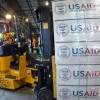
U.S. Reforming “Outdated” Overseas Food Aid
U.S. lawmakers are in the final stages of approving reforms to a half-century-old system of providing overseas food assistance that critics say is outdated, inefficient and sometimes harmful to local economies in developing countries.
CELAC Summit Targets Inequality
Heads of state and government at the Second Summit of the Community of Latin American and Caribbean States (CELAC) made a joint commitment to reduce poverty, hunger and inequality, and declared their region a “zone of peace”.
Education Is Key to Bachelet’s Chile
For 14-year-old Isadora Riquelme and thousands of other Chilean teenagers, the chance of getting the university education they want depends on the reforms that Michelle Bachelet has promised to undertake when she takes office as president again in March.
Nowhere to Come In From the Cold
As the temperature dips to zero degrees Celsius, a chill has set into the lives of people like 44-year-old Rasool Khan at the Jalozai camp for internally displaced persons (IDPs) in Pakistan. Huddled in tiny tents, with just a plastic sheet over their heads and no heat, they pass sleepless nights in the bitter cold.USAID Vows Inclusion in Fight Against Extreme Poverty
The United States' main foreign aid funder, USAID, released a mission statement Wednesday that includes new focus on ending extreme poverty while also promising to be more inclusive in incorporating civil society and other input in its decision-making.
U.S. Sanctions Closing Doors to Iranian Students
Even as the United States and European Union begin to lift some sanctions on Iran, U.S. law continues to prohibit some businesses that provide non-controversial services, such as online education, from operating in Iran and other countries.
A Tale of Two Worlds
As violence rips through South Sudan and ongoing conflict plagues the Central African Republic and Syria, developing countries stand at a difficult crossroads – struggling to grow economically and politically, yet fielding deep inequalities within their own borders.Pacific Nations Need Help Away From Aid
Long-term dependence on development aid in Pacific Island nations, many of which have been independent for 30-40 years, continues to cause concern.
Brazil’s Prison Violence Worsens in Maranhão
Nearly every day, violence breaks out in a Brazilian prison. In January the focus has been on the northeastern state of Maranhão, where orders issued from behind bars wreaked havoc in the streets of its capital city, illustrating the scope of national prison anarchy.
Human Trafficking Survivors Urge U.S. to Take Action
Advocacy groups and some legislators are calling on the U.S. government to mandate an increase in corporate supply chain transparency, with the aim of cutting down on the estimated 14,000 to 17,000 people trafficked into the United States each year and the tens of millions enslaved globally.
Moroccan Women Porters – Heroism and Hardship on the Border
Before sunrise, a Moroccan woman waits her turn at the pedestrian border control separating her country from the Spanish city of Melilla. Hours later she crosses over, takes up an 80-kilo bundle of merchandise and carries it back to her country, for a payment of less than six dollars.
Argentine Activists Win First Round Against Monsanto Plant
Residents of a town in Argentina have won the first victory in their fight against biotech giant Monsanto, but they are still at battle stations, aware that winning the war is still a long way off.
OP-ED: The Arab World Has Changed, So Should Washington
As the Egyptian revolution against Hosni Mubarak celebrates its third anniversary, the military junta under General Abdel Fattah al-Sisi is resurrecting dictatorship under the veneer of “constitutional” legitimacy and on the pretense of fighting “terrorism.”
Decriminalisation Comes to Davos
In the exclusive, rarified air of Davos, Thursday’s attendees at the World Economic Forum shared in a whiff of decriminalisation at a panel on drug policy in the Swiss alpine city that included former U.N. Secretary-General Kofi Annan, Colombian President Juan Manuel Santos, Texas Governor Rick Perry and the head of Human Rights Watch, Ken Roth.

South Sudan’s Ceasefire Brings Hope For Half a Million Displaced
The overwhelming job of providing relief to the more than half a million displaced and wounded in South Sudan may have gotten a little easier with the signing of a ceasefire agreement last night in Addis Ababa, which is set to go into effect today.
Kenya’s Scorched Earth Removal of Forest’s Indigenous
Kenyan government security forces are forcefully evicting thousands of people, including the indigenous Sengwer tribe, from the Embobut forest in western Kenya by burning homes and possessions in an effort to promote forest conservation, safeguard urban water access and “remove squatters”.
Impoverished Cambodians For Sale
Many Cambodian women arrive in South Korea or China for marriage, only to find themselves being chosen as mistresses, say labour rights activists. While young Cambodian men, who travel to Thailand to work on fishing boats, often fall prey to drug abuse.
World Bank Arm Admits Wrongs in Honduras Loan
In an unusual statement, the World Bank’s private-sector arm has threatened to cancel a controversial investment in a Honduran palm oil company that has been implicated in serious human rights abuses, including numerous killings, over the past five years.
Digital Age Demands Educational Transformation, World Forum Says
The challenges of the digital age call for schools to develop an alternative model of education, with teachers who incorporate new technology and employ a more critical pedagogy, participants said at the Fórum Mundial de Educaçao (World Education Forum) in this southern Brazilian city.U.S. Agency Accused of Safeguards Failure in Liberia Investment
Hundreds of Liberians have filed a complaint accusing a U.S. government agency of failure to carry out due diligence or ensure that safeguards were followed for investments made to a failed biomass project in Liberia.
Saving Cameroonians from Ill Health
The Cameroonian government has begun a crackdown on illegal medical facilities and plans to shut down more than 524 medical training centres and 600 private clinics operating unlawfully in this Central African nation.
« Previous Page — Next Page »


The Week with IPS

NEXT STOP - SDGs
Tracking global progress towards a sustainable world
Tracking global progress towards a sustainable world
