Languages
Monday, October 5, 2026



News and Views from the Global South
Myanmar

Singapore Arts Fest Pushes Boundaries Beyond Tradition
As Singapore mourns the passing of Lee Kuan Yew, the late former prime minister’s vision of a dynamic and vibrant state is being reflected in a major arts festival in France.
Human Rights in Asia and the Pacific: A “Regressive” Trend, Says Amnesty International
The cradle of some of the world’s most ancient civilizations, home to four out of the planet’s six billion people, and a battleground for the earth’s remaining resources, Asia and the Pacific are poised to play a defining role in international affairs in the coming decade.
Will Myanmar’s ‘Triple Transition’ Help Eradicate Crushing Poverty?
 Myanmar is never out of the news for long. This has been the case since a popular uprising challenged military rule in 1988. For over two decades, the country was featured in mainstream media primarily as one unable to cope with its own internal contradictions, a nation crippled by military rule.

Will Myanmar’s ‘Triple Transition’ Help Eradicate Crushing Poverty?
Myanmar is never out of the news for long. This has been the case since a popular uprising challenged military rule in 1988. For over two decades, the country was featured in mainstream media primarily as one unable to cope with its own internal contradictions, a nation crippled by violence.
Ahead of Myanmar Trip, Obama Urged to Demand Extractives Transparency
Lawmakers here are urging President Barack Obama to put transparency in the extractives sector at the centre of an upcoming trip to Myanmar.
U.S. Waives Sanctions on Myanmar Timber
Civil society groups are split over a decision by the U.S. government to waive sanctions on Myanmar’s timber sector for one year.
Deadline Looms for Due Diligence Reporting on U.S. Investments in Myanmar
U.S. companies newly operating in Myanmar have until the end of the month to file official reports detailing the actions they’ve taken to ensure that their investments comply with safeguards around land, human rights and other concerns.
Foreign Aid Funding Luxury Hotels in Myanmar
New investments from the International Finance Corporation (IFC), the World Bank’s private-sector investment arm, may perpetuate economic inequality rather than alleviate poverty in Myanmar, critics here are warning.
Myanmar Wakes Up to Climate Change
Between 2008 and 2013, when Myanmar remained largely closed off to the rest of the world, it suffered a terrible toll at the hands of nature that remained largely unknown.
Myanmar Media Still Not Fully Free
Kyaw Kyaw Aung is just 22, but already has dark memories of days when information, sometimes of the mundane kind, could land you in a dark cell for a very long time in Myanmar, a Southeast Asian nation that was under military rule for decades.
The Lady’s Allure Is Challenged
For over a quarter of a century Uhla Min has lived under the spell of “The Lady”, the popular nickname for Nobel Peace Laureate Aung Sung Suu Kyi.
Myanmar Ethnic Strife Spills Over to Malaysia
Two Myanmar Buddhist politicians who were visiting Malaysia narrowly escaped a late night assassination attempt outside a leading shopping mall in Kuala Lumpur this month. The incident has raised fears of an overseas spillover of the religious violence that has engulfed their state of Rakhine in recent years.

The Road to Myanmar Is Inviting but Potholed
Myanmar is flinging open the gates to foreign investment, seen as key to the southeast Asian country's future after decades of stagnation under military rule. From Coca-Cola and Unilever to Samsung and Fujitsu, the key brands of international companies can be seen hogging billboards.
Natural Disasters Add to Myanmar’s Troubles
As Myanmar nurses a fragile democracy after long years of military rule, a new danger has reared its head. Climate change, say experts, has the potential to spur migration and exacerbate conflict in the country.
After Persecution, Rohingyas Face Erasure
An exiled leader of the Rohingyas, a persecuted Muslim minority in Myanmar, is raising the alarm from his London office about the fate of his community. He fears “ethnocide to remove all references to the Rohingyas” if the first census in 30 years goes ahead in the Southeast Asian nation.Censorship Threatens to Re-emerge in Myanmar
One year after the government officially struck down laws obstructing free press in Myanmar, a parliamentary bill could allow previous censorship practices to re-surge.
Hard to Stay, Harder to Return
After working in Thailand legally for four years, many Myanmar migrant workers are facing an uncertain future in the coming weeks as their visas expire. Tired of the lack of security, they want the Myanmar government to improve the current labour agreement with Thailand.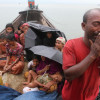
Rohingya Activist Held in Myanmar after Facebook Post
An activist has been arrested in Myanmar after posting photos on Facebook from violent clashes between displaced Muslims and security forces in the country’s restive state of Rakhine, police and an activist have said.Linking Fair and SQUAR in Myanmar
What’s less than two months old, has hit the headlines globally, and has more than 79,000 ‘likes’ and over 16,000 people talking about it?
Labour Violations Under Tight Wraps in Thailand
Next time you visit Walmart and throw that packet of frozen shrimp in your shopping cart, pause a moment.
Q&A: “The U.N. Is Too Slow to Respond to Crisis”
As the situation in Myanmar deteriorates, thousands of Rohingyas have fled the country in search of a safe haven.« Previous Page — Next Page »


The Week with IPS

NEXT STOP - SDGs
Tracking global progress towards a sustainable world
Tracking global progress towards a sustainable world
