Languages
Friday, November 6, 2026



News and Views from the Global South
Poverty & MDGs

Small Farmers Buffeted by Climate Change
The U.N. Food and Agriculture Organisation (FAO) has long warned that a quarter of the world’s farmland is “highly degraded".
In Swaziland, Seeds Beat Drought
The overcast sky is a sign that it might rain, and Happy Shongwe, a smallholder farmer from rural Maphungwane in eastern Swaziland, is not exactly happy.
No Quick Fixes to Sorcery-Related Violence
Following worldwide outrage over a spate of brutal sorcery-related murders in Papua New Guinea, the government has rolled out a new hard-line approach to spiralling crime in this southwest Pacific island state.
Sowing a Healthier Future
“If there was enough political will to defeat hunger, we would defeat it right now - immediately,” says Enrique Yeves, chief of corporate communications at the U.N. Food and Agriculture Organisation (FAO).
TerraViva Comes to FAO
Dear Reader: TerraViva, a special publication of the IPS news agency, the leader in coverage of development issues, civil society and the emerging South, is once again circulating, this time in the meeting rooms and hallways of the FAO building.
Former War Zone Craves Democracy
For the first time since Sri Lanka’s 30-year-long civil conflict drew to a bloody finish in May 2009, casting an eerie hush over the Northern Province that had grown accustomed to the sounds of war, there is a buzz in the air generated by the prospect of provincial elections that hold the promise of radical change.
Keeping Food Security Central to U.N.’s Post-2015 Agenda
As the United Nations prepares to launch an ambitious post-2015 development agenda, the message from one of its Rome-based agencies is unequivocal: the eradication of hunger and malnutrition should remain a high priority when the current Millennium Development Goals (MDGs) end in 2015.
Indian Farmers Flex Collective Muscles
Chelmet Padmamma, 42, of Babanagar village in southern India’s drought-prone Medak district, is a happy woman: the rain has come earlier this year, thrice soaking the three-acre farm that she co-owns with four other women from her village.
Q&A: Of Riots and Rice in Africa
Thanks to food riots in several African cities fuelled by high rice prices between 2007 and 2008, sub-Saharan Africa is growing and eating more rice after governments were forced into ambitious production programmes.
Zimbabwean Farmers Adrift Amid Power Struggles
For the past five years, farmer Melusi Mhlanga has spent nearly 200 dollars each season for inputs, but the maize yields have not matched his investment.
The “Secret Treasure” of Food Waste
Twenty-nine-year-old Andrzej W. and his partner lived for almost a year off of food found in the trash bin of the upscale supermarket Piotr i Pawel in Muranow, a neighbourhood near the centre of the Polish capital Warsaw. And they ate in style.
Kenyans Mobilise Against Taxing the Poor
On a side street in Nairobi’s bustling neighbourhood of Shauri Moyo, Faisal Ngila shouts to street vendors, motorbike taxi drivers and pedestrians. “Do you know taxes are increasing in Kenya?” he asks, handing out flyers urging Kenyans to say “no to Unga (maize flour) tax” by dialling a phone number that will register their signature on a petition.
India Goes Bananas Over GM Crops
India’s environmental and food security activists who have so far succeeded in stalling attempts to introduce genetically modified (GM) food crops into this largely farming country now find themselves up against a bill in parliament that could criminalise such opposition.
Q&A: Impact Assessment Key in Rural Development Projects
The Latin American Centre for Rural Development (RIMISP) is promoting a method for assessing strategies, results, reach and impact of IFAD-funded agricultural projects targeting vulnerable groups in the region.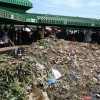
Is the 2030 Goal for Hunger Eradication Realistic?
With less than three years before a 2015 deadline, the developing world is largely expected to miss one of the U.N.'s key Millennium Development Goals (MDGs): halving the number of people living in extreme poverty and hunger.
OP-ED: In South Sudan, Ending Child Marriage Will Require a Comprehensive Approach
Akech B. loved to study and dreamed of becoming a nurse. But when she was 14, her uncle who was raising her forced her to leave school to marry a man Akech described as old and gray-haired. The man paid 75 cows as dowry for Akech. He was already married to another woman with whom he had several children.
Putting Uganda’s Working Kids Back in School
Children around the world may complain about attending school and doing their homework, but not 14-year-old Raya*. For two years she was forced by her illiterate parents to spend every day, rain or shine, selling sugar cane from the family garden to customers on the streets of Entebbe, about 35 km outside the Ugandan capital, Kampala.
‘Happy Prostitutes’ AIDS Campaign Sparks Debate
Happiness, the subject of endless philosophical discussions, has now become the focus of controversy in an HIV/AIDS prevention campaign aimed at prostitutes in Brazil. The campaign chief has been booted out and a further question has been raised: What are the limits of popular participation in the definition of public policies?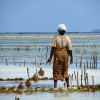
Zanzibar’s Encroaching Ocean Means Less Water
Khadija Komboani’s nearest well is filled with salt water thanks to the rising sea around Tanzania’s Indian Ocean island of Zanzibar.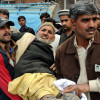
Globe Less Peaceful Than Five Years Ago – Report
The world - especially the Greater Middle East – has become less peaceful than it was five years ago, according to the 2013 edition of the annual Global Peace Index (GPI) released here Tuesday by the Institute for Economics & Peace (IEP).
Q&A: U.N. Looks to High Seas to Alleviate Food Crisis
The Food and Agriculture Organisation (FAO) is convinced there is sufficient global capacity to produce enough food to adequately feed the world's seven billion people.« Previous Page — Next Page »





