Languages
Sunday, November 8, 2026



News and Views from the Global South
Poverty & MDGs

Girls Fight to Stay in School
 Balancing her school bag on one shoulder and holding her three-year-old son by the hand, Farida Haque (19) ignores her in-laws’ complaints and her husband’s frown as she heads each morning for the tiny school in her remote village of Allah Bachayo, located in the Thatta district of Pakistan’s Sindh Province.
Q&A: Fighting to Save Africa’s Richest Rainforest
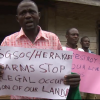
Protests against a controversial palm oil plantation in the Korup National Park, Africa’s oldest and richest rainforest in terms of floral and faunal diversity, in Mundemba, southwest Cameroon will continue despite the arrests and intimidation of local environmental campaigners.
Community Water Management Stuck in Legal Limbo*
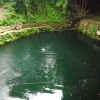
Community-based water supply systems, which serve thousands of rural communities in Mexico, are seeking official recognition under the new federal legal framework currently under development.
Bolivia’s Ayoreo Indians, Devoured by the City
No one knows exactly when they will show up, but when they do, it’s impossible not to notice them. In one of the busiest street markets in this bustling city in eastern Bolivia, a handful of members of the Ayoreo indigenous community periodically take over a portion of the sidewalk.
Q&A: Documentary Tackles Child Abuse in Cuba
“Child abuse merits a different, in-depth approach. The objective of this film is to make the problem visible and promote debate and reflection,” says Eric Corvalán, director of a documentary that required “breaking through walls.”
Big Landowners Block Rural Development Law in Guatemala
An “integral rural development law” to promote access to land, employment and other rights for small farmers is bogged down in the Guatemalan Congress due to opposition from large landowners, who see it as an attempt at land reform.
Deforestation Wreaks Havoc in Guatemala’s Caribbean Region
"Many tourists come to this area for bird watching, but the terrible deforestation is leading to the disappearance of so much of our flora and fauna. The cleared land is used for cattle ranching,” said Haroldo Figueroa, who works as a guide in nature reserves along Guatemala’s Caribbean coast.
Ceasefire Means ‘Nothing’ to Gaza Fishers
Shortly after Israel and Hamas signed a ceasefire agreement on Nov. 21, the Israeli navy abducted 30 Palestinian fishers from Gaza's waters, destroyed and sank a Palestinian fishing vessel, and confiscated nine fishing boats in the space of four days.
MDGs a Distant Dream for Nepali Children
Currently classified as one of the world’s Least Developed Countries (LDCs), Nepal has one of the highest malnutrition rates globally, with over 41 percent of children suffering from chronic under-nourishment, particularly in rural areas.

Remittances Soothe the Scourge of Militancy
Fifty-nine-year-old Sherdil Shah, a resident of South Waziristan – a hotbed of militancy in northern Pakistan’s Federally Administered Tribal Areas (FATA) – used to run a modest grain shop that fetched enough money to keep his family of 10 well-fed and looked after.
Bicycling to Work in Rio de Janeiro
The cyclists riding in the bicycle lanes along the beachfront avenue of this Brazilian city pass the car drivers stuck in rush hour traffic.
Case to Abolish Gambian Death Penalty Falls on Toothless Court
The court of justice for the West African economic community is expected to hear a civil society case calling for the abolition of the death penalty in the Gambia this December, four months after the execution of nine prisoners shocked the world.
Despite Crises, Migration Still a Political Hot Potato
The United Nations will commemorate its annual International Migrants Day next week amidst reports of a rising tide of anti-migrant sentiments – primarily in Europe.
Brazil’s Economic Model Offers Ray of Hope
As governments struggle to find ways out of the persistent global financial crisis, Brazil’s development model offers an alternative path to recovery and growth, according to some economists and politicians.
War Widows Struggle in a ‘Man’s World’
Sita Tamang’s husband went missing sometime in 2004, two years before Nepal’s civil war came to an end. A native of Dharan, a town about 600 kilometres southeast of Kathmandu, Tamang waited seven years after his disappearance before she tried to claim compensation offered by the government after a 2006 peace deal ended this country’s bloodshed.
Saving Tanzania’s Poorest Children
Half asleep, Anuary lies exhausted on his bed in Amana Hospital in Dar es Salaam, Tanzania’s capital. His mother, Mariam Saidi, sits on the edge of his mattress, staring blankly out of the window. Every now and then, she turns to wipe her 18-month-old son’s forehead.
Bolivia’s Tapiete People – a Culture in the Hands of 38 Families
Three and a half hours away from the nearest town along a dirt road, 38 families are struggling to preserve their land, customs and language in Bolivia’s Gran Chaco region. They are the Tapiete Indians, who refuse to disappear.
Favelas – the Football in the Run-Up to Brazil’s World Cup
Opinions are divided in Morro da Providência, Brazil's oldest favela, over construction works for the 2014 FIFA World Cup and the 2016 Olympics. While some residents are optimistic about the improvements that lie ahead, others point out that hundreds of dwellings will be demolished.
Native Communities in Peru Take Charge of Environmental Monitoring
At the end of every month, with the skill of an environmental engineer, Wilson Sandi prepares a work plan that will be used by Achuar indigenous people, like him, to document the scars left by 40 years of oil drilling in the Peruvian Amazon region of Loreto.
No Basic Services for Oil Country
South Sudan may have received slightly more than 10 billion dollars in oil revenue from 2005 to January 2012, when oil production shut down, according to both government officials and the World Bank. But development experts have urged the government to begin investing in the country and its people, as basic social services remain scarce.
Q&A: The Challenges of Women’s Empowerment and Equality
Today, approximately 125 countries have laws that penalise domestic violence - a great advance from a decade ago. Yet 603 million women around the world still live in countries where domestic violence is not a crime, and up to seven in ten women are targeted for physical or sexual violence, or both.« Previous Page — Next Page »





