Languages
Sunday, November 8, 2026



News and Views from the Global South
Poverty & MDGs
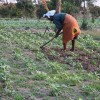
Small Farmers in West Africa Need Support – Despite Good Rains
Despite an abundance of rain, promising good harvests for the current growing season, small-scale farmers and non-governmental organisations are calling for support to smallholders to be maintained with a view to eradicating food insecurity in Africa’s Sahel region.
Q&A: “The Children Take on an Artist’s Lovely Identity, from a Young Age”
Venezuela’s youth symphony orchestras that have enamoured audiences on several continents are a social programme aimed at fighting poverty and marginalisation, more than an artistic endeavour, says the founder of the initiative, José Antonio Abreu.
Donors Must Seize 2013 Opportunity in Sahel, U.N. Urges
Reporting that the worst of the food crisis in the Sahel region of Africa appears to have been averted, the United Nations’ top official on the area, David Gressley, warned on Wednesday that the potential passing of the immediate emergency should not divert international attention from what needs to be done in 2013, which he calls a critical year for building resilience in the region.
Social Inclusion the Key to Venezuela’s Elections
Whoever wins Venezuela's presidential elections on Sunday Oct. 7 will do so as a result of the idea of social inclusion, which has become dominant in an electorate whose social and political features have changed radically in the last decade.
Pakistani Workers Slaving Brick by Brick
One does not always need a time machine to travel into the past – a visit to a typical brick kiln in Pakistan’s Punjab province is enough to evoke a time when human beings were traded like animals and slavery was rampant.
Reducing Poverty in South Africa by Cutting Time in Traffic
In South Africa, Bus Rapid Transit systems, which were pioneered to great effect in Latin American countries such as Colombia and Brazil, are being promoted as potentially effective ways of delivering improved public transport services to the urban poor. But experts question whether systems such as these can alleviate poverty to any meaningful extent.
Less Than Half of International Foreign Aid Is Transparent
As a major international deadline on foreign assistance transparency draws closer, a new index shows that while donors are becoming more open with their data, still less than half of foreign aid information is openly available.
Task Force to Kick Start Cairo Population Goals
Gathered at the Ford Foundation in New York Monday, international luminaries, family planning experts and women's rights activists repeatedly expressed a common sentiment: “I cannot believe that we are still having this discussion today."
Haiti’s Two-Million-Dollar Ghost Town
Just months after the Jan. 12, 2010, earthquake killed over 200,000 Haitians and drove another 1.3 million into squalid camps, the Building Back Better Communities (BBBC) project got the green light from the Interim Haiti Reconstruction Commission (IHRC), headed by former U.S. president Bill Clinton and then-Haitian prime minister Jean Max Bellerive.
HAITI: Housing Exposition Exposes Waste, Cynicism
The smells and scenes that greet a visitor to this eerily empty collection of over 60 brightly painted homes and buildings verge on the obscene.
Self-Financing that Works for the Poor
"We were used to losing, so a group of us said to ourselves: let's lose something here," said Carmen Caravallo, describing the start of a "bankomunal", a self-managed microfinance fund based on investment, in her rural community in eastern Venezuela.
Concrete Jungles Growing in Senegal
In the midst of the building frenzy in Senegal, the construction of buildings that cost less than 60,000 dollars, and thus do not require a building permit, is going unchecked by authorities, resulting in the haphazard and unsafe construction of a majority of homes.
For Development, Jobs May Outweigh Growth, World Bank Says
The World Bank warned Monday that over the next decade and a half, the world will need to create 600 million new jobs, particularly in Asia and Sub-Saharan Africa, just to maintain current employment rates.
Haitian Government Faces Mounting Popular Anger
Several thousand marchers demonstrated against Haitian President Michel Martelly on Sunday, the anniversary of a bloody coup d’état that toppled president Jean-Bertrand Aristide 21 years ago.
Mexico, the End of the ‘American Dream’ for Child Migrants
For many undocumented child migrants from Central America, Mexico is the end of the road in their endeavour to reach the United States, driven by economic reasons, gang violence and domestic violence.
Climate Change Takes a Bite Out of Global Food Supply
Humanity's ability to feed itself is in serious doubt as climate change takes hold on land in the form of droughts and extreme weather, as well as on the world's oceans.U.S. Accused of “Discouraging” Financial Transaction Tax
On Friday, 62 civil-society organisations charged the U.S. State Department with spreading “misinformation” regarding the feasibility of levying a small tax on stock sales and other financial transactions, revenues from which could be used for national and international public goods.
Q&A: “Women and Girls Must Be Front and Centre”
With the global population on track to reach a staggering nine billion people by 2050, according to U.N. figures, a stronger action plan is needed to address the challenges of ending poverty, ensuring a well-functioning health system and access to education, as well as guaranteeing social inclusion for all.
Delivering Promises to Africa’s Smallholder Farmers
Investment in rural infrastructure and support for Africa's millions of small-scale farmers have increased in the past decade. But as these farmers begin to see increased yields, the question of better access to markets comes to the fore.
Multilateralism is at a Crossroads
Multilateralism is at a crossroads. This is a crucial matter for environmental and sustainability issues, as we have seen in the Rio+20 Summit, and for trade and other economic matters. The G20 Summit in Los Cabos, Mexico, focused precisely on improving our collective response to the current economic turbulence, which is at the heart of developments in the European Union (EU) as well.
Breast Milk Banks, From Brazil to the World
Cíntia Rose Regis, 23, not only breastfeeds her 16-month-old daughter Zelda but has also been donating 600 ml a week of breast milk to a mothers’ milk bank in Brazil over the last year.« Previous Page — Next Page »





