Languages
Monday, October 5, 2026



News and Views from the Global South
Southern Africa
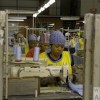
LESOTHO: Government to Turn its Back on Textile Industry
Lesotho’s textile sector – the country’s largest employer - is regarded by many as the only way out of the poverty trap in a tiny kingdom where more than half of the population lives on less than 1.25 dollars a day. But what many do not know is that the government and the World Bank have unofficially turned their backs on the sector and will soon cut important subsidies.IBSA: Coverage of Economic Body Vital for Development
As the India Brazil and South Africa Summit of heads of state and government starts Tuesday, editors from the respective countries have resolved to provide better coverage of the economic body.
ZIMBABWE: Minister Trying to Create a “Paper Tiger” Human Rights Commission
Zimbabwe’s justice minister is frantically trying to fend off probes into allegations of human rights abuses perpetrated by President Robert Mugabe’s regime since the country’s independence in 1980.Africa Ravaged by Continued Denial of Market Access
The poorest countries in Africa are not merely the victims of natural calamities. They are also ravaged by the continued denial of market access as promised in the Doha trade negotiations, say African trade diplomats.
NAMIBIA: German Extermination Marginalised Ethnic Groups
Over 100 years after the attempted extermination of Namibia’s indigenous men, women and children, 20 of the 300 skulls that had been stolen for racial research have finally returned home from Germany.
AFRICA: “Ideal for the Development of a Real Economy”
Foreign direct investment in Africa over the last decade has contributed to marked economic growth for the continent but it has not translated into development for its people, say pan-African leaders.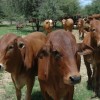
TRADE: Europe Puts Foot Down on EPAs
Botswana and Namibia are set to lose preferential access to the European Union, which wants African, Caribbean and Pacific countries to sign controversial free trade agreements within two years or face potential loss of market access to the 27-member EU bloc.
Q&A: Carving Out a New Aid Order at Busan
Busan represents the possibility of an aid revolution – a time in history where an encompassing, inclusive aid framework may be possible. This is according to Tony Tujan, director of IBON International, a capacity development non- governmental organisation.
AFRICA: More Dangerous to Be a Woman than a Soldier
African women who bear the brunt of the continent’s conflicts now demand to play a defining role in peacekeeping.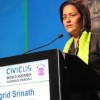
Q&A: Africa’s Legislated Civil Society Crackdown
Assassinations, intimidation and disappearances were the manifestations of civil society repression in Africa, but this may be changing as the crackdown on civil society is becoming more formally accepted and increasingly "by the book", according to Ingrid Srinath, secretary general of the global civil society network, CIVICUS.
TRADE: Climate Change Will Impede North-South Trade
Climate change is increasingly playing a role in North-South trade, as carbon emissions are being used as an excuse to protect markets, with poorer countries likely to lose out.
SOUTH AFRICA: In Need of a Unified Climate Change Policy
The implementation of a unified climate change policy across all of South Africa’s government departments will not be easy as the divisions currently work largely as separate entities, says Greenpeace Africa.DR CONGO: Hard to Save All Women Suffering from Fistula
"Every quarter, more than a hundred women with fistulas - including many younger than 20 years old - are admitted for surgery in Maniema province," says nurse Julie Mawazo. "The number of affected women who don't have the means or awareness to come in must be far greater."
Q&A: “We Expect the Polluters to Pay”
Africa will have to present a strong position at the United Nations climate change conference later this year to ensure the continent will receive the financing to mitigate and adapt to climate change.
ZAMBIA: New President, New Governance Yardstick
The election of Michael Chilufya Sata as Zambia's new president shows that Zambians are more interested in issues of accountability and transparency than mere service delivery, say analysts.
DR CONGO: Maintaining Victims’ Faith in Justice
Sometime in the next two months, activists and survivors of horrific violence in the eastern Democratic Republic of Congo will find out if Callixte Mbarushimana will stand trial for war crimes and crimes against humanity.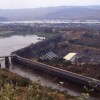
DR CONGO: No Water, No Management, No Power
Frequent power cuts have led to the firing of the board of the Democratic Republic of Congo's national electricity company. But it is not clear if sub-par generation from the Inga hydroelectric power stations supplying the capital Kinshasa is due to poor management or to unusually low water levels in the Congo River.
ZAMBIA: Largely Peaceful Elections
Only two incidents of violence, triggered by the late start of voting and the suspicion of electoral fraud, were reported as Zambians went to the polls to elect a new president and government on Tuesday.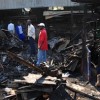
MALAWI: Markets Torched Ahead of Cancelled Protests
Soot and ash filled the air the day after a fire gutted Malawi's Blantyre Market. Men and women merchants wore solemn expressions as they shovelled piles of debris from the site on Tuesday.
ZAMBIA-ELECTIONS: Perpetrators of Violence Warned: ‘Expect No Mercy’
As Zambians go to the polls on Tuesday to elect a new government and president they do so amid fears of election violence.
SOUTH AFRICA: “Secrecy Bill” Step Backwards for Africa
Critics call it "the Secrecy Bill". And it comes at a time when several African countries are adopting promising new legislation on access to information. But campaigners say South Africa's draft Protection of Information Bill represents a step backwards.« Previous Page — Next Page »


The Week with IPS

NEXT STOP - SDGs
Tracking global progress towards a sustainable world
Tracking global progress towards a sustainable world
