Languages
Monday, October 26, 2026



News and Views from the Global South
West Africa

Q&A: “We Expect the Polluters to Pay”
Africa will have to present a strong position at the United Nations climate change conference later this year to ensure the continent will receive the financing to mitigate and adapt to climate change.
GHANA: The Abandoned Offspring of Oil
Kobina's legs are dappled with scars. He gets them flitting across the beach in Sekondi, in southwest Ghana, slipping in the soot-black mud and clambering over pirogues slippery with fish guts, only to sell a sachet of water or a freshly peeled orange to fishermen working on the shore.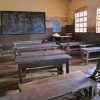
Adding Up the Cost of Education in Sierra Leone
A formal strike of teachers has been averted and pupils in Sierra Leone returned to school on Tuesday, almost a week after the term was meant to officially start.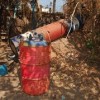
WEST AFRICA: Households Turning to Cow Dung for Energy
There are dusty barrels carefully positioned outside many of the family compounds in the Léona neighbourhood of Kaolack, a city of 20,000 in western Senegal: signs of success for a project to introduce the use of biogas as a source of fuel. Amadou Faye, whose family herds cows, goats and sheep as well as growing groundnuts on the side, is among the early adopters.
SOUTH AFRICA: “Secrecy Bill” Step Backwards for Africa
Critics call it "the Secrecy Bill". And it comes at a time when several African countries are adopting promising new legislation on access to information. But campaigners say South Africa's draft Protection of Information Bill represents a step backwards.
COTE D’IVOIRE: Suspended Exports Dent Scrap Metal Dealers’ Prospects
Between now and 2012, the Côte d'Ivoire government plans to establish a scrap metal processing industry that will supply finished products to domestic and regional markets. It is unwelcome news for the country's existing scrap dealers.
SIERRA LEONE: Child Rights Exist Only on Paper
The six-year-old girl pulls her T-shirt up to show the dozens of pale lines across her back. They are fresh scars from the lashing she received from her caregiver after she lost 500 Leones, the equivalent of about 10 cents.
AFRICA: Slow Progress in Reducing Maternal Mortality
Agnes Kalunda’s doctor feared that because of her slight frame there was a high chance of her developing complications during delivery.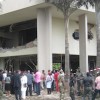
NIGERIA: Lax Security Reason for U.N. Bombing
Security experts say that unless something is done to regulate the high level of illicit transactions and proliferation of commercial explosives in Nigeria, scenes like the United Nations suicide bombing will become more frequent.
MAURITANIA: Fresh Attempt at Irrigated Agriculture
In a bid to reduce food insecurity, the Mauritanian government is turning to several new approaches to agriculture, including expanded irrigation schemes, popularising new crops and harnessing the energy of recent graduates.BURKINA FASO: Justice Campaigners Welcome Police Convictions for Fatal Beating
The conviction of three policemen for the February death of high school student Justin Zongo should be another building block in the struggle against impunity in Burkina Faso, say student leaders and human rights defenders.GHANA: Struggle to Prevent Import of Counterfeit Drugs
Counterfeit medicines have flooded the market in Ghana and have even made their way into government hospitals as the country’s drug regulator struggles to control the importation of drugs.
GHANA: Guidelines for Unregulated Microfinance Sector
When Andrew Poku's mother passed away he needed help to pay for her funeral. So the 35-year-old teacher from Accra turned to one of the country's several loan companies for a 670-dollar loan.NIGERIA: Refined Oil Shortage Continues for Africa’s Largest Producer
"We are suffering in the midst of plenty." That was how Nelson Ilemchi summed up his plight as he spent an entire day queuing to buy kerosene. Since January Africa’s largest producer of crude oil has been experiencing a protracted nationwide scarcity of the refined product.
HEALTH: Battling Hepatitis in West Africa
West African health experts are calling for governments to take the prevalence of hepatitis B and C more seriously, and to act to reduce the cost of treatment as part of more effective control of the disease.HEALTH-MALI: Community Also Has a Role in Preventing TB
Tuberculosis remains a leading cause of death in Mali despite the availability of free treatment. The resurgence of the illness, linked to poverty and HIV infection, could be reduced by changing behaviour, doctors say.COTE D’IVOIRE: Help For Small Businesses Key to Relaunching Economy
The Ivorian government has begun compensating small and medium-sized businesses for damages suffered during the post-election crisis, in order to relaunch the economy.
BURKINA FASO: In Dogged Pursuit of L’Affaire Sankara
Opposition members of parliament in Burkina Faso have called on France to open its archives to look for evidence of involvement of the French secret services in the 1987 death of Thomas Sankara.Displaced Ivorians ‘Too Afraid to Return’
More than half a million people remain displaced by Ivory Coast's post-election conflict and many are too afraid to return home for fear of ethnic reprisals, Amnesty International says in a report.SENEGAL: Fish Farming Breathes New Life Into Rural Economy
July signals the start of three months of intense activity for residents of the seven villages around the small dam at Sébi Ponty. The dam was stocked with tilapia in 2006, and aquaculture is proving to be a vital economic activity for youth in the area./CORRECTED REPEAT*/: Burkina Faso Losing Thousands of Hectares of Forests Each Year
The Burkina Faso authorities have sounded the alarm over the increased rate of degradation of forests in this Sahelian country.« Previous Page — Next Page »





The Week with IPS

NEXT STOP - SDGs
Tracking global progress towards a sustainable world
Tracking global progress towards a sustainable world
