Languages
Saturday, April 27, 2024



News and Views from the Global South
Press Freedom & Enforced Disappearances: Two Sides of the Same Coin in Sri Lanka
When Sri Lankan journalist Richard de Zoysa was abducted from his home in Colombo on the night of February 18th, 1990, his family knew there would be dark days ahead. The population was still reeling from one of the bloodiest episodes in the island nation’s history – a government counterinsurgency campaign to crush a Marxist rebellion in southern Sri Lanka, which left between 30,000 and 60,000 people dead at the hands of government death squads.
Investigators Dismiss Mexican Government’s Official Story on Missing Students
A group of independent investigators has roundly dismissed the Mexican government’s claims that the 43 students who went missing in the southwestern city of Iguala last fall were burned to ashes in a garbage dump, reigniting an international outcry against the disappearance and heaping pressure on the government to provide answers to families of the victims.Killing of Aid Workers Threatens Humanitarian Response in Yemen
With 21 million Yemeni civilians caught in the grips of a conflict that has been escalating since March, the killing of two local aid workers Wednesday could worsen their misery, as a major humanitarian organisation considers the future of its operations in parts of the war-torn country.U.N. Officials Warn of Dengue Outbreak in War-Torn Yemen
An outbreak of dengue fever in Yemen’s most populated governorate has prompted urgent calls from the World Health Organisation (WHO) for a “humanitarian corridor” to facilitate the flow of medicines to over three million civilians trapped in the war-torn area.
U.S.-Made Cluster Munitions Causing Civilian Deaths in Yemen
New research released today by a leading human rights watchdog has found evidence of seven attacks involving cluster munitions in Yemen’s northwestern Hajja governorate.
Deliberate Targeting of Water Sources Worsens Misery for Millions of Syrians
Imagine having to venture out into a conflict zone in search of water because rebel groups and government forces have targeted the pipelines. Imagine walking miles in the blazing summer heat, then waiting hours at a public tap to fill up your containers. Now imagine realizing the jugs are too heavy to carry back home.
Majority of Child Casualties in Yemen Caused by Saudi-Led Airstrikes
Of the 402 children killed in Yemen since the escalation of hostilities in March 2015, 73 percent were victims of Saudi coalition-led airstrikes, a United Nations official said Monday.
U.N. Aid Agencies Launch Emergency Hotline for Displaced Iraqis
In the hopes of better responding to the needs of over three million displaced Iraqis, United Nations aid agencies today launched a national hotline to provide information on emergency humanitarian services like food distribution, healthcare and shelter.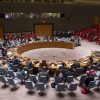
U.N. Official Says Human Suffering in Yemen ‘Almost Incomprehensible’
With a staggering four in five Yemenis now in need of immediate humanitarian aid, 1.5 million people displaced and a death toll that has surpassed 4,000 in just five months, a United Nations official told the Security Council Wednesday that the scale of human suffering is “almost incomprehensible”.
U.N. Relief Agency Pledges to Open Schools ‘On Time’ for Half a Million Palestinian Refugees
Overcoming a serious funding shortfall, and caught between numerous regional conflicts, the United Nation’s humanitarian agency for Palestinian refugees announced on Aug. 19 that it would nevertheless open schools on time for the roughly half-a-million children who rely on the international community for their education.
Humanitarian Response in Afghanistan Falters in the Face of Intensifying Conflict
As the number of civilians impacted by the intensifying conflict in Afghanistan rises along with the fighting, humanitarian agencies are struggling to meet the needs of the wounded, hungry and displaced.Impressive Relief Effort Alleviating Hardship in Flood-Affected Myanmar
With the rainy season still far from over, flood-affected communities in the Sagaing Region and other parts of northern and western Myanmar are preparing for more hardships, while the government continues what the United Nations has called an “incredible” relief effort.
Settlement Expansion Largely Responsible for Violence in Occupied West Bank
Just weeks after an 18-month-old baby was killed in an arson attack in the Palestinian village of Duma, located south of Nablus city in the Occupied West Bank, a United Nations special committee has blasted Israel’s policy of settlement expansion, saying it is the root cause of violence towards Palestinians.
Clean Water Another Victim of Syria’s War
Caught in the grips of a summer heat-wave, in a season that is seeing record-high temperatures worldwide, residents of the war-torn city of Aleppo in northern Syria are facing off against yet another enemy: thirst.
First Six Months of 2015 “Hottest on Record” Since 1880
According to new data released by the U.S. National Oceanic and Atmospheric Administration (NOAA) Tuesday, globally averaged temperatures over ocean and land surfaces between January and June of 2015 were the hottest on record since 1880.
Fear Stalks Students in Northern Pakistan
It has been seven months since a group of gunmen raided the Army Public School in Pakistan’s northern Khyber Pakhtunkhwa (KP) province, killing 145 people, including 132 students.
Syrians: ‘Biggest Refugee Population From a Single Conflict in a Generation’
Barely 10 months ago, the United Nations Refugee Agency (UNHCR) said the refugee population from Syria had reached the three million mark. Today, the latest data from the field show that the number has passed four million.
“Why Hire a Lawyer When You Can Buy a Judge?”
A woman is stopped at a checkpoint; she gives birth, and dies. Another is sold in a slave market. A boy is killed by a tank. A young man drowns at sea, trying to reach a haven safe from oppression and poverty.
Will the New BRICS Bank Break with Traditional Development Models, or Replicate Them?
Just days ahead of a summit of the BRICS group of emerging economies (Brazil, Russia, India, China and South Africa) in which the five countries are expected to formally launch their New Development Bank (NDB), 40 NGOs and civil society groups have penned an open letter to their respective governments urging transparency and accountability in the proposed banking process.
Putting the “Integrity of the Earth’s Ecosystems” at the Centre of the Sustainable Development Agenda
By 2050, we will be a world of nine billion people. Not only does this mean there’ll be two million more mouths to feed than there are at present, it also means these mouths will be consuming more – in the next 20 years, for instance, an estimated three billion people will enter the middle class, in addition to the 1.8 billion estimated to be within that income bracket today.
Child Labour: A Hidden Atrocity of the Syrian Crisis
In a conflict that has claimed over 220,000 lives and injured a further 840,000 people as of January 2015, it is sometimes hard to see beyond the death toll.Next Page »







The Week with IPS

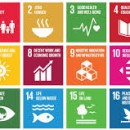
NEXT STOP - SDGs
Tracking global progress towards a sustainable world
Tracking global progress towards a sustainable world
