Languages
Friday, April 24, 2026



News and Views from the Global South
Argentina

Clean Energies Seek to Overcome Obstacles in Argentina
The multitude of solar panels stands out along a dirt road in an unpopulated area. Although located just an hour's drive from Buenos Aires, the new solar park in the municipality of Escobar is in a place of silence and solitude, symbolic of the difficulties faced by renewable energies in making inroads in Argentina.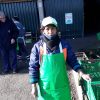
Recovering Edible Food from Waste Provides Environmental and Social Solutions in Argentina
For 30 years, Tomasa Chávez visited the Central Market of Buenos Aires and rummaged through the tons of fruits and vegetables that the stallholders discarded, in search of food. Today she continues to do so, but there is a difference: since 2021 she has been one of the workers hired to recover food as part of a formal program launched by the Central Market.
Transgender People Gain Their Place in Argentine Society
"At the age of 35, with a document that says who I really am, I went back to school and finished my studies, which I had left at 14 because I could no longer bear the bullying and mistreatment," said Florencia Guimaraes, a transgender woman whose life was changed by Argentina's Gender Identity Law.
Employee-run Companies, Part of the Landscape of an Argentina in Crisis
"All we ever wanted was to keep working. And although we have not gotten to where we would like to be, we know that we can," says Edith Pereira, a short energetic woman, as she walks through the corridors of Farmacoop, in the south of the Argentine capital. She proudly says it is "the first pharmaceutical laboratory in the world recovered by its workers."
One Hundred Years On, Argentine State Acknowledges Indigenous Massacre in Trial
It’s a strange trial, with no defendants. The purpose is not to hand down a conviction, but to bring visibility to an atrocious event that occurred almost a hundred years ago in northern Argentina and was concealed by the State for decades with singular success: the massacre by security forces of hundreds of indigenous people who were protesting labor mistreatment and discrimination.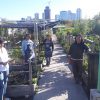
Women in Argentina Cultivate Dignity in Cooperative Vegetable Garden
The space consists of just 300 square meters full of green where there is an agro-ecological vegetable garden and nursery, which are the work and dream of 14 women. Behind it can be seen the imposing silhouettes of the high rises that are a symbol of the most modern and sought-after part of Argentina's capital city.
Turning Agro-industrial Waste into Energy in Argentina
Three giant concrete cylinders with inflated membrane roofs are a strange sight in the industrial park of Zárate, a world of factories 90 kilometers from Buenos Aires that heavy trucks drive in and out of all day long. They are the heart of a plant that is about to start producing energy from agro-industrial waste, for the first time in Argentina.
Young Argentine Women Forge a Future in Cooperative Factory
"We started making shampoos and soaps in the kitchen of a friend’s house in 2017. We were five or six girls without jobs, looking for a collective solution, and today we are here," says Letsy Villca, standing between the white walls of the spacious laboratory of Maleza Cosmética Natural, a cooperative that brings together 44 women in their early twenties in the Argentine capital.
Argentina Seeks a Way Out (Again) of its Economic and Social Labyrinth
Accustomed for decades to recurring economic crises, and hit hard in recent years by a steady loss of purchasing power, Argentines were informed on Friday Jan. 28 of a last-minute agreement with the IMF which, in the words of center-left President Alberto Fernández, takes "the noose off their necks".
Energy Inequality in Latin America Exacerbated by Pandemic, High Prices
The effects of the covid-19 pandemic and high energy prices have had an impact on the consumption of polluting fuels in Latin America and the Caribbean, exacerbating energy poverty in the region.
Obtaining Water, a Daily Battle in Argentina’s El Impenetrable Region
Next to the brick or adobe houses of El Impenetrable, a wild area of forest and grasslands in northern Argentina, loom huge plastic barrels where rainwater collected from the corrugated iron roofs of the houses is stored. However, the barrels are empty, because it has hardly rained for two years, local residents complain.
Argentina’s Small Farming Communities Reach Consumers Online
"The biggest problem for family farmers has always been to market and sell what they produce, at a fair price," says Natalia Manini, a member of the Union of Landless Rural Workers (UST), a small farmers organisation in Argentina that has been taking steps to forge direct ties with consumers.
Argentina Takes Controversial Step Backwards in Biofuel Production
Argentina, historically an agricultural powerhouse, has become a major producer of biofuels in recent years. However, this South American country is now moving backwards in the use of this oil substitute in transportation, a decision in which economics weighed heavily and environmental concerns have been ignored.
World Bank Looks to Trains in Argentina’s Climate Battle
Argentina will receive a 347 million dollar loan from the World Bank to upgrade one of the most important suburban railway lines in the city of Buenos Aires. The operation is part of the multilateral lender’s new policy, which deepens its commitment to the fight against climate change.
Biogas in Argentina: Turning an Environmental Problem into a Solution
"Until five years ago, we didn't know about the circular economy, but today our waste generates environmentally neutral products that also offer a return,” says José Luis Barrinat, manager of a cooperative that brings together some 550 small farmers in Monje, Argentina.
In Argentina’s Chaco Region, the Forest Is Also a Source of Electricity
The forest is the main resource in the Chaco, a vast plain shared by Argentina, Bolivia and Paraguay. And how to use it sustainably is the most difficult question. Two recently inaugurated power plants fired by forest biomass provide a possible answer, although they are not free of controversy.
Solar Power from Argentina’s Puna Highlands Reaches Entire Country
The unprecedented growth of renewable energies in Argentina over the last three years has borne its greatest fruit: the Cauchari solar park, with nearly one million photovoltaic panels and 300 MW of installed power, which was connected to the national power grid on Sept. 26.
Semiarid Regions of Latin America Cooperate to Adapt to Climate
After centuries of poverty, marginalisation from national development policies and a lack of support for positive local practices and projects, the semiarid regions of Latin America are preparing to forge their own agricultural paths by sharing knowledge, in a new and unprecedented initiative.
Solar Power Fills Gaps in Underserviced Rural Argentina
Rice farmers in the Argentine province of Entre Rios often look like mechanics. "They're always full of grease, because they haul diesel fuel around all the time, for their water pumps," says local farmer Arturo Deymonnaz. He, however, doesn't have that problem, because he uses solar energy to grow his rice.
Young People Bring Solar Energy to Schools in the Argentine Capital
"The idea came to a group of schoolmates and me in 2014, but we never thought it could become a reality," says Sebastián Ieraci, 23, as he points to a multitude of photovoltaic solar panels shining on the roof of the Antonio Devoto High School in the Argentine capital.
Lithium and Clean Energy in Argentina: Development or Mirage?
The intense white brightness of the salt flats interrupts the arid monotony of the Puna in northwest Argentina, resembling postcards from the moon. Beneath its surface are concealed the world's largest reserves of lithium, the key mineral in the transition to clean energy, the mining of which has triggered controversy.« Previous Page — Next Page »


The Week with IPS

NEXT STOP - SDGs
Tracking global progress towards a sustainable world
Tracking global progress towards a sustainable world
