Languages
Sunday, November 8, 2026



News and Views from the Global South
Active Citizens

Four Years Later, USAID Funds in Haiti Still Unaccounted For
As the fourth anniversary of the devastating earthquake in Haiti approaches on Jan. 12, development analysts are decrying an ongoing lack of transparency in U.S. foreign aid to the country, even as those assistance streams are drying up.
Impunity Stinks in Havana’s Quibú River
The stench hits as you walk through the door of one of the pleasant houses along the Quibú river in the Cuban capital’s Náutico neighbourhood. “The garbage piles up, it stinks, and there are even rats,” said María Angélica Suárez, a local resident who is tired of living this way.
Gaza Loses an Underground Lifeline
The border between Egypt and the Gaza Strip used to buzz with activity until a few months back as traders brought in an array of Egyptian goods – from food supplies to raw material - through hundreds of tunnels.
Small-scale Organic Farming Gets a Boost in Peru
A new institution set up in Peru will strengthen small-scale organic farming, providing support to some 43,000 exporters of ecological products and another 350,000 who supply the domestic market with environmentally-friendly products.
Fashion Backward: Cambodian Government Silences Garment Workers
“Cambodian garment workers have two handcuffs and one weapon [against them]. One handcuff is a short-term contract [10 hours a day, six days a week]. Even if they get sick, if they get pregnant they feel they have to get an abortion so they don’t lose their jobs.
Military Prepares a General’s Constitution
A draft constitution set to go before a public referendum next week gives the military more privileges, enshrining its place as Egypt’s most powerful institution and placing it above the state.
Shadows of Dictatorship Hang Over Argentina’s Army Chief
The ratification as Argentina’s army chief of an officer accused of involvement in crimes against humanity during the 1976-1983 dictatorship has revived the debate about the thin line between the moral and judicial responsibility of those let off the hook by an amnesty law for merely “following orders”.Islamic Party Parts With Islamists
In the city of Metlaoui in the Governorate of Gafsa, a mining region in the parched south of Tunisia, the streets are dust, filled with ruts, the skin of the men in the cracked lanes leathery brown from the heavy weather.
Hoodwinked, Jobless, and Back
Ashik Rehman, 47, worked as a labourer in the southern Indian state of Kerala. He left for Saudi Arabia two years ago, hoping to earn enough to buy a house in his native place. Now he is back and staring at a bleak future.
Despite Legal Attacks, Conflict Minerals Ban Gets Stronger
Major manufacturing and business groups on Tuesday urged a court here to roll back a new U.S. regulation that would soon require major manufacturers to ensure that their global supply chains are free of minerals used to fund violence in the Great Lakes region of central Africa.
Sawhoyamaxa Battle for Their Land in Paraguay
The Sawhoyamaxa indigenous community in Paraguay have spent over 20 years fighting to get back their land, which they were pushed off by cattle ranchers.
Afghans Want Justice Before Elections
Will we get justice? That is the question many Afghans are asking as their war-ravaged country heads for presidential polls in April. For, the list of candidates includes several warlords who have been accused of heinous crimes and who are yet to be brought to justice.
Best Wishes for a Less Destitute New Year
Over the past year more than 50,000 Palestinian refugees have fled violence, chaos and destitution in Syria to seek sanctuary in Lebanon. The vast majority have found themselves living in dire poverty, and trapped in chronically insecure existence.
Women Farmers in Chile to Teach the Region Agroecology
An organisation that brings together some 10,000 peasant and indigenous women from Chile is launching an agroecology institute for women campesinos, or small farmers, in South America.
Pakistan’s Polio Campaign Runs Into Taliban Wall
The Taliban are proving to be a huge stumbling block for Pakistan as the South Asian nation - one of only three remaining polio endemic countries in the world – tries to fight the crippling disease.
Hospitality, Agriculture Firms Vulnerable to Human Trafficking
Shareholders are calling on 15 U.S.-based multinational corporations to ensure that their global supply chains are not facilitating human rights abuses, particularly labour and sex trafficking.
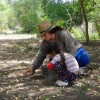
Seedpods Worth More than Gold in Argentina’s Arid North
Tired of the drought driving away their men and killing their livestock, the women of Guanaco Sombriana, a town in northern Argentina, have found a new source of income by using the seedpods of native trees that up to now merely provided shade in this arid landscape.
Libyan Highlanders Enforce Rule of Law
Everybody in this mountain village is seemingly familiar with the new regulations. “People other than militiamen or policemen will be fined 500 dinars [around 300 euros] for carrying guns,” local resident Younis Walid tells IPS.
Democracy Gets an Electronic Boost
Elections in Pakistan have long been marred by allegations of fraud, but now one of its provinces is hoping to give democracy a boost with the help of technology. Khyber Pakhtunkhwa in the north of the country has given a thumbs up to the biometric voting machine.
Mexican Communities On Guard Against Thirst for Oil
The Terra 123 oil and gas well in the southeastern Mexican state of Tabasco was in flames since late October, just 1.5 km from a community of 1,500 Oxiacaque indigenous villagers, who were never evacuated.
Pakistani NGOs Fear New Year Constraints
A new policy by the Pakistani government to regulate foreign-funded non-governmental organisations (NGOs) has come in for sharp criticism from the social sector, with many saying it could stifle rights-based groups and affect crucial services provided to the needy.
« Previous Page — Next Page »





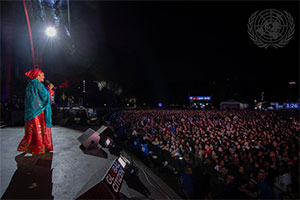 Global Citizen Festival in New York. Credit: UN Photo/Eskinder Debebe
Active citizens are committed to social change because they know that it is achievable. However, major political challenges face active citizens across the world. For example, in authoritarian regimes in Latin America where the hegemonic party has been in power for decades on end, protestors and human rights activists face enormous repression and struggle to materialize their advocacy into concrete results. The same can be said for Africans, where a shift towards elected government in recent decades has yet to translate into an effective voice in decision-making. Now, the Strengthening Citizen Demand for Good Governance, which uses evidence-based approaches – funded by DFID's Governance and Transparency Fund – seeks to raise their voices.
In 2025, the CIVICUS Monitor’s People Power Under Attack report revealed that civic freedoms are severely limited in 122 of 198 countries and territories, and only 7.2% of the global population now lives in countries where civic space is open. Through partnership with the Overseas Development Institute (ODI) and CIVICUS, IPS reporters across the continent will seek to define the extent and limits of state capability, government accountability and the responsiveness of leaders to the needs of citizens.

The Week with IPS

NEXT STOP - SDGs
Tracking global progress towards a sustainable world
Tracking global progress towards a sustainable world
