Languages
Sunday, November 8, 2026



News and Views from the Global South
Active Citizens

Presidential Hopefuls in Chile Speak Out Against Wilderness Dam
Diversifying the energy mix and the spectre of energy shortages in Chile are central issues in the campaign for the primary elections this Sunday Jun. 30, when presidential candidates will be nominated for the Nov. 17 elections.
Locals Risk Their Lives Fighting Mining in Mexico
"They brutally repressed us. The mining company buys off people’s consciences, it divides the community, but we’ll keep fighting it. Some people have had to flee the community,” Rosalinda Dionisio, a Zapoteca indigenous woman in the southern Mexican state of Oaxaca, told IPS, sobbing.
Agriculture Leans on Japanese Women
Yukako Harada, an energetic 29-year-old, is part of a small but determined band of women farmers working hard to revitalise Japan’s moribund agricultural sector, which is feeling the crunch of an ageing population and a flood of cheap imports.
Q&A: How One Woman Demands Answers and an End to FGM
Bogaletch Gebre knows exactly what women in her Ethiopian community are going through. Along with her sisters, the women's rights activist was a victim of female genital mutilation (FGM) when she was a child in a part of Ethiopia where the practise was carried out on every girl.
Q&A: Empower Indigenous Women to Assert Their Rights
Women around the world are exposed to domestic violence, sexual and economic exploitation, gender-based violence, female genital mutilation and child marriage. For indigenous women and girls, however, the risk of being victims of such issues is especially high.
Education in Afghanistan – the Good, the Bad and the Ugly
Despite impressive advancements in enrolment rates, media reports of gas attacks on girls’ schools, shoddy books, and a lack of classroom facilities continue to mar the reputation of the education system in Afghanistan.
Creating Their Own Spring
The soldiers of former Libyan strongman Muammar Gaddafi had left just a few days before, but a group of about 50 children were already singing in the Amazigh language in the village of Yefren, 110 kilometres south of Tripoli. This month will mark two years since the establishment of the first Amazigh school in Libya.
Police Brutality Fuels Protests in Brazil
Matheus Mendes Costa, a 21-year-old university student, spent 13 hours in a three-square-metre police station holding cell after he was arrested in this Brazilian city for allegedly assaulting police officers and destroying public property.
New Faces of Social Unrest in Spain
Economy professor Arcadi Oliveres has become a popular face of the growing discontent in Spain because he calls a spade a spade.
Young Yemen Multiplies Without Growth
Yemen’s population is increasing at a rapid rate, straining the country’s dwindling natural resources and setting up its youth for a grim future, with few jobs and scant means to get by.
Deteriorating Urban Transport Sparked the Protests
A group of young people touched a nerve in Brazil’s large cities, triggering an outpouring of urban outrage at the deterioration of transportation conditions and of the quality of life.Global Publics See Climate Change, Financial Issues As Top Threats
Climate change and international financial instability top a list of seven concerns that publics around the world consider "major threats" to their countries, according to the latest polling of global attitudes by the Pew Research Centre here.
In Southern U.S., Energy Equity Seen as Path to Sustainability
Advocates of the concept of "energy equity" have begun employing it in the southern United States to create a diverse coalition of citizens who might otherwise approach energy policy issues differently.
Greeting Whales, Not Eating Them
After a two-year break, Iceland has resumed its hunting of fin whales. But environmental campaigners outside of Iceland are doing their best to stop it.Rape in Brazil Still an Invisible Crime
Sexual violence against women is alarmingly under-reported and invisible in Brazil where, for example, there are no accurate, comparable data on rape in the country's 27 states.
Egypt Sees a Dam Confrontation
Ethiopia's diversion of part of the Blue Nile late last month has both rocked Cairo's relations with Addis Ababa and provided fodder for Egypt's ongoing war of attrition between its Islamist government and secular opposition.‘Grand’ Corruption Grips East Europe
A deeply-engrained culture of graft across Eastern Europe is destroying bonds between politicians and the people as populations lose faith in what they see as a self-serving elite “enriching” themselves at their expense, anti-corruption campaigners have said.
Egypt Marks a Spring for Islamists
Egyptians are deeply divided and the majority are dissatisfied with the performance of Islamist President Mohamed Morsi, but also have little confidence in the main opposition figures or their future, a new poll has found.
Cancelling Fare Hike Fails to Quell Brazil Protests
Children of a generation that fought for basic rights like having enough to eat, learning to read and being treated in safer hospitals, the over 300,000 students protesting on the streets of Brazil want more from a democratic and economic system that no longer represents them and is beginning to show its limitations.
Arab Americans Aim at Preserving New York’s Little Syria
A brick red, six-story tenement house, St. George Melkite Church and a community house in desperate need of repair are nearly all that remain of a once thriving Arab-American community in downtown New York City.
U.S., EU Urged to Press Harder for Reform in Bahrain
Human rights groups here are calling for the United States and the European Union (EU) to exert more pressure on Bahrain, home to the U.S. Navy's Fifth Fleet, to seriously engage its opposition and end its repression of its majority Shi'a population.« Previous Page — Next Page »





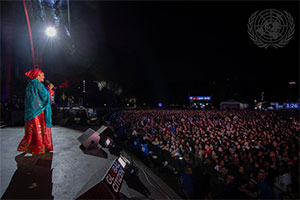 Global Citizen Festival in New York. Credit: UN Photo/Eskinder Debebe
Active citizens are committed to social change because they know that it is achievable. However, major political challenges face active citizens across the world. For example, in authoritarian regimes in Latin America where the hegemonic party has been in power for decades on end, protestors and human rights activists face enormous repression and struggle to materialize their advocacy into concrete results. The same can be said for Africans, where a shift towards elected government in recent decades has yet to translate into an effective voice in decision-making. Now, the Strengthening Citizen Demand for Good Governance, which uses evidence-based approaches – funded by DFID's Governance and Transparency Fund – seeks to raise their voices.
In 2025, the CIVICUS Monitor’s People Power Under Attack report revealed that civic freedoms are severely limited in 122 of 198 countries and territories, and only 7.2% of the global population now lives in countries where civic space is open. Through partnership with the Overseas Development Institute (ODI) and CIVICUS, IPS reporters across the continent will seek to define the extent and limits of state capability, government accountability and the responsiveness of leaders to the needs of citizens.

The Week with IPS

NEXT STOP - SDGs
Tracking global progress towards a sustainable world
Tracking global progress towards a sustainable world
