Languages
Friday, November 20, 2026



News and Views from the Global South
Civil Society

Mystery Attackers Hit Sinai
A period of more than three months since former president Mohamed Morsi's ouster by Egypt's powerful military establishment have been marked by almost daily attacks on Egyptian security personnel, especially in the restive Sinai Peninsula. The identity of the attackers remains a mystery.OP-ED: Grenada’s IMF Sunday School
As the International Monetary Fund shares initial proposals for Grenada's debt restructuring during the Washington DC meetings this week, the Caribbean island could gain a reputation for more than nutmeg, calypso, beaches and the 2012 gold medal sprinter Kirani James.
Swat Not at Peace With Malala
Back in Swat Valley in Pakistan where she comes from, Malala Yousafzai who had been tipped to win the Nobel peace prize this year, has not only left behind more girls in school now than there were a year ago but also large numbers of people who are now distanced – and even hostile – to her.U.S. Accused of Unprecedented Assault on Press Freedom
Press freedom advocates here charge that the administration of President Barack Obama is engaged in a war on “leaks” of secret information that is without parallel in this country.
Nobel Laureate Fights African Pullout from Global Court
South Africa's Desmond Tutu, the 1984 Nobel Peace prize laureate, has launched a global campaign to stop African nations from abandoning the Hague-based International Criminal Court (ICC).
Ethiopian Government Choking Muslim Unrest
The refusal by the Ethiopian government to redress grievances harboured by the Muslim community here, which comprises about 34 percent of the country’s 91 million people makes this Horn of African nation vulnerable to extremism.
World Bank Mulls First Strategic Overhaul in Two Decades
World Bank President Jim Kim has formally put forward a major new proposal to refocus both the bank’s priorities and how it pursues those aims.
Building a Better World, One Block at a Time
One evening in the small village of Ashton Hayes in Cheshire, England, someone started a conversation about climate change and energy at the local pub. It was 2005. Two years later, residents had cut their carbon dioxide emissions and energy costs by 20 percent.Pakistan Government Failing to Go Local
Had the provincial governments of Pakistan heeded their apex court, the country’s four provinces - Punjab, Sindh, Balochistan and Khyber Pakhtunkhwa - would have had local governments in place by now. The Supreme Court of Pakistan had in July this year directed that local government elections be held by Sep. 15.
Pacific Pact – a Minefield for Health Care
The Trans Pacific Partnership Agreement (TPP), the negotiation of which is set to conclude this year, could drive research into new drugs and improve access to medicines. Except – it won’t.
Treaty Poised to Cut Toxic Mercury Pollution
A new international convention opening for signatures this week will for the first time offer an agreed-upon roadmap by which to significantly decrease the global use of mercury while offering stronger safeguards for both human health and the environment.
In Trinidad, Sports Complex Targets a Key Watershed
Trinidad's Orange Grove Savannah sits at the foothills of the Northern Range, whose watersheds provide copious volumes of fresh water into the aquifers - natural underground water storage areas - lying below these green spaces.
Little Girls Killed, Who Cares
Twenty-eight-year-old Omar Zaib, a taxi driver in Lahore, capital of Pakistan’s Punjab province, confessed in court last month to drowning his one-and-a-half-year-old daughter because he wanted a son. A few days later, the media reported that two newborn girls had been found abandoned at a railway station.
Egyptians Clash on Streets and over Constitution
Bloody clashes erupted in Cairo on Sunday Oct. 6 between supporters of the military and followers of ousted elected president Mohamed Morsi as the latter protested against the July military coup that deposed their leader. But as clashes occurred on the streets, a clash of ideologies has been occurring on the country’s 50-member committee as it amends Egypt’s constitution.
How to Tell the Biggest Stories of Our Times
What does gorilla conservation have in common with the provision of contraceptives to women? How does rural-urban migration contribute to global warming? What does city planning in Kenya have to do with coastal erosion in the Philippines?
Mayors Leading an Urban Revolution
With presidents and prime ministers failing to take meaningful action to avert a planetary-scale climate crisis, the mayors of cities and towns are increasingly stepping up to enact changes at the local level.
Homeless Again
A police cordon kept everyone out of the Buenaventura “corrala” on Thursday after the police evicted 13 families living in the occupied building in the centre of this southern Spanish city early in the morning.
Amid Shutdown, Cutting Through the “Noise of Democracy”
Frustration is mounting with elected representatives here on the fourth day of a U.S. government shutdown that has left nearly 800,000 federal workers temporarily out of work, and advocates across the political spectrum are working to get their voices heard.Turkey’s Reform Package Gets Tepid Reception
Turkey’s new democratisation reform package may mark a step forward for civil rights, but it does not go far enough to ease social tension and feelings of mistrust that are afflicting the country, analysts say.OP-ED: Bahrain Repression Continues Amid Sham Trials and Imprisonment
The lengthy prison sentences handed down to 50 Shia activists last week and the refusal of Bahraini courts to hear their allegations of torture once again confirm the regime’s continued repression of the opposition.
Q&A: You Are One Percent Away from Being a Bonobo
When author Deni Béchard discovered bonobos shared almost 99 percent of human DNA, and based their relationships on cooperation and collaboration, he knew he had to write about them.« Previous Page — Next Page »


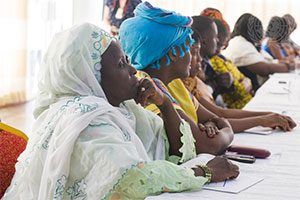 Representatives of Civil Society, Sierra Leone. Credit: UN Photo/Eskinder Debebe
Civil society faces mounting threats worldwide, even as it remains essential for democratic accountability, especially in countries struggling with economic instability and social inequality. However, at the same time, nations with weak democratic governance structures also systemically suppress the power of civil society. Human rights activists across the Global South frequently challenge issues such as political persecution and gender oppression, but in return face state-sanctioned punishment for their advocacy. Imprisonment and exile are common mechanisms of punishment that seek to erode the strength of civil society. The 2026 World Press Freedom Index has reached its lowest level in 25 years, with more than half of the world’s countries now falling into the "difficult" or “very serious” category for press freedom. IPS seeks to highlight the work of civil society across the Global South as well as the challenges that they face.
Updated by Yilan Batista and Shuli Wong August 2026

The Week with IPS

NEXT STOP - SDGs
Tracking global progress towards a sustainable world
Tracking global progress towards a sustainable world
