Languages
Monday, November 23, 2026



News and Views from the Global South
Civil Society

Egypt Revolution Makes It Worse for Women
During the uprising that toppled Egyptian dictator Hosni Mubarak women stood shoulder to shoulder with men in Cairo’s Tahrir Square, pressing the revolution’s demands for freedom, justice and dignity. But those who hoped the revolution would make them equal partners in Egypt’s future claim they may be worse off now than under Mubarak’s authoritarian rule.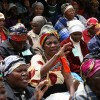
Entrepreneurs and Women: Keys to Growth in Africa
The international financial crash of the late 2000s created more than a global economic recession: it accentuated popular doubts about the paradigms on which our economies are built and prompted a closer look at two crucial drivers of economic growth: women and entrepreneurship.U.S. Muslims Could Be Critical Voting Bloc
With Barack Obama and Mitt Romney virtually tied with Election Day less than two weeks away, Muslim voters could play an unexpected critical role in deciding the outcome Nov. 6.
‘Malala’s Cause Is Our Cause’
Less than two weeks after being left for dead by the Taliban, Malala Yousafzai is standing up on her own two feet.
Migrant Women Trapped in Sex Trade
When French police broke up a Nigerian human trafficking ring that allegedly forced young migrant women into prostitution, the arrests cast a sharp light on the plight of what the authorities called “modern-day slaves”, here and throughout Europe.
For U.S. Voters, “Faith” Often Means Political Party, not Religion
While religious coalitions in the United States have remained generally stable during the 2008 and 2012 president election campaigns, new research released here on Tuesday suggests far more complexity among what is often called the U.S. “values voter”.Jewish, Christian Groups Clash Over U.S. Aid to Israel
Jewish groups have reacted furiously to a letter to Congress by 15 leaders of Christian denominations asking for a review of whether some of the three billion dollars in annual United States aid to Israel is being used in violation of U.S. law and policies.Fighting Abusive Rates on Loans and Credit Cards*
The parliaments of El Salvador and Guatemala are debating bills aimed at halting abusive loans and high credit card costs. But the initiatives have run up against strong opposition from the financial sector.
Climate Change, the Taboo Phrase in U.S. Electoral Politics
The United States endured its hottest summer in history this year, with droughts and wildfires ravaging the country. And according to a new report from the global reinsurance giant Munich Re, insurance losses related to extreme weather have nearly quadrupled in the U.S. since 1980.
Worms, Termites, Microbes Offer Food Security
Worms and termites are not likely to win hearts and minds, but they, along with lichens and microbes, are vital to food security, say biodiversity specialists who attended this month’s United Nations conference on the Convention on Biological Diversity (CBD) in this south Indian city.
Cooperatives Cushion the Blows of Hunger
“One in eight people goes to sleep hungry every day,” according to the ‘State of Food Insecurity in the World 2012’, a document released annually by the Food and Agriculture Organisation (FAO).
Q&A: “Developing Countries Are Doing Their Part for Biodiversity”
Developing countries are investing enormously in preserving biological diversity, and it is unimaginable that the wealthy nations will not fulfill their obligations to provide funding for these efforts, Brazilian environmental negotiator André Aranha Corrêa do Lago told Tierramérica*.
Q&A: “There Is No National Boundary for Medical Care”
For millions of people in developing countries, having cataracts means permanently impaired vision or even blindness. While treatment can fix the problem, the cost is well beyond most sufferers' reach.
Gang Truce Can Break Down, Prevention Should Be Priority
El Salvador has managed to bring down one of the world’s highest murder rates thanks to a truce between gangs that was lauded by the United Nations as an example to be followed in other countries of Central America.
Violence Arising From Madrassas
The increasing numbers of religious schools is being cited as the main reason behind violent protests in the northern Khyber Pakhtunkhwa province of Pakistan bordering Afghanistan.
Palau Proves Sharks Worth More Alive Than Dead
Sharks have a safe haven the size of France, and the Republic of Palau that protects them is making millions of dollars from shark tourism.
Q&A: Health Impacts of Genetically Modified Foods Still Unknown
In 1994, genetically modified produce, in the form of tomatoes, first appeared in grocery stores in the United States. Numerous other types of produce have been genetically modified since, and consuming them has become common practise. But because the phenomenon is so recent, the long-term effects of eating such foods remain unknown.
Injured Struggle in the Sahara
Safia’s six-year-old body is riddled with scars from the rocket that hit her home in February. With her immediate family all killed in the violent attack, this sole survivor smiles shyly as she visits the medics that fought to save her life.
The Face of Food Security Is Female
In a major endorsement for investment in women - the bulk of food growers in the developing world - United Nations Secretary General Ban Ki-moon said food security could not be achieved without women, and that the world's hungry also needed leaders to prioritise actions.
‘Urban Planning Must Factor in Biodiversity’
“With more than 60 percent of the world projected to be urban by 2030 why not prepare for it and build cities that include biodiversity preservation into planning?” asks Kobie Brand of ICLEI Local Governments for Sustainability in Cape Town, South Africa.
Violence Against Women Surging in India
As gender-based violence across India becomes more frequent, and more savage, increasing numbers of women are speaking out against the cruelty.« Previous Page — Next Page »


 Representatives of Civil Society, Sierra Leone. Credit: UN Photo/Eskinder Debebe
Civil society faces mounting threats worldwide, even as it remains essential for democratic accountability, especially in countries struggling with economic instability and social inequality. However, at the same time, nations with weak democratic governance structures also systemically suppress the power of civil society. Human rights activists across the Global South frequently challenge issues such as political persecution and gender oppression, but in return face state-sanctioned punishment for their advocacy. Imprisonment and exile are common mechanisms of punishment that seek to erode the strength of civil society. The 2026 World Press Freedom Index has reached its lowest level in 25 years, with more than half of the world’s countries now falling into the "difficult" or “very serious” category for press freedom. IPS seeks to highlight the work of civil society across the Global South as well as the challenges that they face.
Updated by Yilan Batista and Shuli Wong August 2026

The Week with IPS

NEXT STOP - SDGs
Tracking global progress towards a sustainable world
