Languages
Tuesday, November 24, 2026



News and Views from the Global South
Civil Society
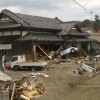
JAPAN: Training Volunteers to Deal With Disasters
Seven months after a massive earthquake and tsunami devastated northeastern Japan, Japanese citizens and relief organisations are working to learn from the tragedy in order to mitigate the fatal impact of future natural calamities at home and abroad.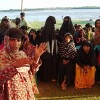
CLIMATE CHANGE: Bangladeshi Women on the Brink
Char Nongolia village is a basket case when it comes to climate change impacts such as increasing salinity, frequent cyclones, tidal surges, erratic rainfall and extended droughts.
U.S.-UGANDA: Award Honours Courageous Gay Rights Activist
Frank Mugisha was just a young teenager in Uganda when he came out as gay. He faced bullying and threats, but he says the stories of lesbian, gay, and transgender friends he later met were much worse - some were kicked out of their homes by their families, subjected to sexual violence to "make them straight", or arrested.MIDEAST: Jailed Activists Get Little Help
As a number of international activists remain in an Israeli prison following the take-over of two Gaza-bound aid ships late last week, the activists have condemned their respective governments for failing to apply pressure on Israel to release the detainees and to respect international law.
CANADA: Harper Government Guts Environment Programmes
Canada's Stephen Harper government is spending more than 60 billion dollars on new military jets and warships while slashing more than 200 million dollars in funding for research and monitoring of the environment.
ENVIRONMENT: Nepali Women Live With Climate Terror
Suntali Shrestha wrings her hands in tension and despair as she recounts how she has been spending sleepless nights fearing that the flood alarm in her village would go off while she slept and she would be submerged.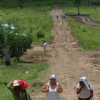
MEXICO: DNA Databank to Identify Missing Migrants
DNA analysis, ethical tribunals and diplomatic pressure are the new instruments that migrants' organisations are wielding to combat the abuses suffered by undocumented migrants in Mexico and the United States.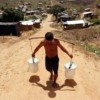
Brazilian NGOs Say Rio+20 Paper Short on Details
Environmentalists criticised the lack of concrete proposals in the Brazilian government's submission to the preparatory process for the Rio+20 conference, to be held in this city in June 2012.
U.S.: Occupy Activists, Union Leaders Find Common Cause
When Mary Clinton, 25, joined other activists to help organise the Occupy Wall Street movement on Sep. 17, she never imagined the gamble would turn into a "populist left movement of the 21st century".
JAPAN: Women Fight to Save Fukushima’s Children
Hundreds of Japanese women have been converging on the Japanese capital demanding better relief for some 30,000 children exposed to nuclear radiation by the Fukushima meltdown.OP-ED: A Rio+20 Activist Manifesto and Action Plan
Unless civil society activists launch their own programme of action at the United Nations Conference on Sustainable Development in Rio de Janeiro next summer (Jun. 4-6), the event will be little more than an expensive talkfest.
PAKISTAN: Cricket Idol Bowls Political Googly
He could be Pakistan’s Obama, although he spews venom at the United States government for its drone attacks and its policies in the region. But Imran Khan speaks of change and, like Obama, enjoys huge online support from the youth.
G20: Final Push for Financial Transactions Tax
While the Greek bailout and stimulus package dominated discussion among the Group of 20 (G20) major industrialised and emerging market economies at the high-level summit in Cannes, France, this week, the proposed financial transactions tax (FTT) received meagre attention.
GUATEMALA: “We Want Girls to Be Visible”
"I learned to not be afraid, and to love myself. Before, I never wanted to talk to people because I felt like they looked down on me and that I was no good," says 12-year-old Hilda Tura, one of the participants in a programme fostering leadership among indigenous girls in Guatemala.
As Arab Spring Turns to Winter, Women Fear Pushback
For the women who participated in the political and social revolutions during the Arab Spring in 2011, there is a significant opportunity to enact real change for women's roles and relationships in the region - and also the possibility things could go the other way.
BRAZIL: “Occupy” Movement Rolls to Rio
Inspired by the movement for real democracy and people's power that has spread to hundreds of cities around the world, young Brazilians in Rio de Janeiro have created their own version of "Occupy Wall Street", dubbed "Occupy Rio".
U.S.: Occupy Oakland Shuts Downtown, Port Areas
The early morning sun bounced off of the 150 or so multicoloured tents that crowded into the re-populated Oscar Grant Plaza Wednesday, just one week and one day after police raided the Occupy Oakland camp and evicted its occupants using tear gas, batons and possibly rubber bullets.
Mexico Hides Cadmium Under the Rug
Despite the threat cadmium poses to health and the environment, Mexico has no plan to reduce the use of the heavy metal in the production of toys and industrial products like batteries and fertiliser.
U.S. Concerned Over Uganda’s “Deteriorating” Human Rights
The U.S. State Department Wednesday released a statement criticising what it said was a "deteriorating" human rights situation in Uganda and the government's increasingly heavy- handed tactics to repress political opposition and silence dissent.
Q&A: Female Empowerment, In-Depth: More Than Just a Resolution
The first United Nations (U.N.) Security Council resolution to specifically address women's contributions to conflict prevention and sustainable peace was passed just 11 years ago, on Oct. 31, 2000.
U.S. Carbon Emissions Down Seven Percent In Four Years
Between 2007 and 2011, carbon emissions from coal use in the United States dropped 10 percent. During the same period, emissions from oil use dropped 11 percent.« Previous Page — Next Page »


 Representatives of Civil Society, Sierra Leone. Credit: UN Photo/Eskinder Debebe
Civil society faces mounting threats worldwide, even as it remains essential for democratic accountability, especially in countries struggling with economic instability and social inequality. However, at the same time, nations with weak democratic governance structures also systemically suppress the power of civil society. Human rights activists across the Global South frequently challenge issues such as political persecution and gender oppression, but in return face state-sanctioned punishment for their advocacy. Imprisonment and exile are common mechanisms of punishment that seek to erode the strength of civil society. The 2026 World Press Freedom Index has reached its lowest level in 25 years, with more than half of the world’s countries now falling into the "difficult" or “very serious” category for press freedom. IPS seeks to highlight the work of civil society across the Global South as well as the challenges that they face.
Updated by Yilan Batista and Shuli Wong August 2026

The Week with IPS

NEXT STOP - SDGs
Tracking global progress towards a sustainable world
