Languages
Wednesday, November 25, 2026



News and Views from the Global South
Civil Society
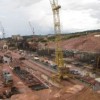
BRAZIL: Megaprojects Revive Class Struggle
The rage was proportional to the size of the crowd cornered between the jungle and the wall that will dam up the Madeira River in northwest Brazil. Over the space of three days, workers set fire to some 50 buses and other vehicles, work installations and even their own lodgings, which were built to house 16,000 people.U.N. to Launch International Year of Cooperatives
When the United Nations commemorates the International Year of Cooperatives (IYC) in 2012, the world body will recognise the contributions made by cooperatives to socioeconomic development, including poverty reduction, employment generation and social integration.
BRAZIL: Amnesty Highlights ‘Entrenched Inequalities’
Despite "considerable progress" made in reducing poverty, "stark inequalities" remain in Brazil, as well as high levels of police and gang violence in poor urban neighbourhoods, Amnesty International warns in its annual human rights report, released as it reaches its 50th anniversary.
DEVELOPMENT: Programme of Action Adopted for World’s Poorest Nations
"The future for least developed countries lies in trade, productive capacity and governance more than in aid," said Cheick Sidi Diarra, United Nations High representative for the Least Developed Countries, responding to criticism of the plan of action put forward as the U.N. conference on the world's poorest nations drew to a close in Istanbul.World in the Throes of a Human Rights Revolution, Says Amnesty
The growing demands for democratic reforms spreading across the Middle East and North Africa - along with the dramatic rise of social media networks - have triggered "a human rights revolution on the threshold of a historic change", says Amnesty International (AI).Uganda Police and Opposition Supporters Clash
Up to five people were killed when Ugandan police clashed with opposition supporters who attacked cars carrying African leaders at the inauguration of President Yoweri Museveni.
Egypt Seeks End to Foreign Wheat Dependence
Egypt is stepping up its wheat production in a bid to stem the country’s rising dependence on foreign imports that escalated during the 30-year rule of former President Hosni Mubarak, who was ousted in February.Within the Arab Left, Contradictions Emerge Over Syria
Though the Arab Spring has heralded newfound hope and optimism across the Middle East, the mood has darkened considerably as entrenched governments have fought back viciously against democratic opposition.
AZERBAIJAN: Govt Fears Spread of Arab Spring
In the wake of anti-government protests by the opposition and youth activists in Baku, Azerbaijan, authorities have arrested and detained scores of demonstrators and journalists in deplorable and inhumane conditions.
Young Panamanians Develop Antibodies Against Violence
In Panama's largest cities, minors under 18 not under supervision of an adult must be off the streets after 9:00 p.m. The juvenile curfew law means some spend several days behind bars until someone shows up to pay the fine.
DEVELOPMENT: Civil Society Rejects ‘Toothless’ Istanbul Plan of Action
Civil society groups have vowed to mobilise citizens of the world’s poorest nations to take to the streets, rejecting the Istanbul Programme of Action agreed today by the Fourth U.N. Conference on the Least Developed Countries.
DEVELOPMENT: Women Demand Access to Water and Energy
"Women in LDCs bear the brunt of economic and social hardships," said Wubitu Hailu, managing director of an Ethiopian NGO, the Kulich Youth Reproductive Health and Development Organisation. The failure to provide access to basic services like clean water and electricity is a major factor preventing women from realising their full potential.Cuban Gov’t Refutes Claims About Dissident’s Death
The Cuban government refuted reports by dissident groups that claimed that Juan Wilfredo Soto died as a result of a beating by police. The authorities stated that he died from "acute pancreatitis."WORLD: Better Global and Local Governance Keys for LDCs
The world’s poorest citizens must struggle for more democratic governance and demand that their leaders fulfill their duties and responsibilities if their countries are to graduate from the group of 48 least developed countries, say civil society representatives.
MEXICO: Four-Day March against Violence Calls for Social Pact
"I want to request the resignation of the Secretary (Minister) of Public Security. We want a message today from the president, showing that he did hear us," said poet Javier Sicilia before a crowded square overflowing with demonstrators who participated in a four-day-long March for Peace with Justice and Dignity in Mexico.ECONOMY: Looking for Development Leverage
Given a few incentives, private companies can be attracted to invest in poor countries that before were not on their radar. Donor countries are betting on this new avenue of public-private-partnerships (PPPs) to channel funds, technology and business knowledge to the 48 Least Developed Countries (LDCs) - the impact can be huge, but many challenges remain.
PHILIPPINES: Women Clamour for Contraceptives
In a small women's clinic in the congested community of San Andres Bukid in the Philippine capital, a mother of 11 is availing herself of family planning services for the first time in her life.
MEDIA: Uniting in the Face Of “Unnatural” Disasters
"In my opinion, there is no such thing as a natural disaster," says Sylvia Richardson, a volunteer broadcaster, mother of two, assistant librarian, and the new vice president of the North American region of the World Association of Community Radio Broadcasters (AMARC).Iran’s Two Executives Play a Lose-Lose Game
The very public disagreement between Iran's Leader, Ayatollah Ali Khamenei, and President Mahmoud Ahmadinejad over the sacking of the intelligence minister, Heydar Moslehi, is turning out to be a losing game for both sides.
DEVELOPMENT: Time For New Approaches says Civil Society
The dominant approaches to development have failed the world’s poorest citizens and now the paradigm must change. This is the strong message coming from over 2,000 non-governmental organisations gathered at the civil society forum for the Fourth U.N. Conference on the Least Developed Countries (LDC-IV) in Istanbul, Turkey.
DOMINICAN REPUBLIC: Four Percent for Education
The government of the Dominican Republic, where one-third of the population of is under 14 years of age, is facing a well- organised and growing citizens' campaign to increase the amount spent on public education.« Previous Page — Next Page »


 Representatives of Civil Society, Sierra Leone. Credit: UN Photo/Eskinder Debebe
Civil society faces mounting threats worldwide, even as it remains essential for democratic accountability, especially in countries struggling with economic instability and social inequality. However, at the same time, nations with weak democratic governance structures also systemically suppress the power of civil society. Human rights activists across the Global South frequently challenge issues such as political persecution and gender oppression, but in return face state-sanctioned punishment for their advocacy. Imprisonment and exile are common mechanisms of punishment that seek to erode the strength of civil society. The 2026 World Press Freedom Index has reached its lowest level in 25 years, with more than half of the world’s countries now falling into the "difficult" or “very serious” category for press freedom. IPS seeks to highlight the work of civil society across the Global South as well as the challenges that they face.
Updated by Yilan Batista and Shuli Wong August 2026

The Week with IPS

NEXT STOP - SDGs
Tracking global progress towards a sustainable world
