Languages
Thursday, November 19, 2026



News and Views from the Global South
Food and Agriculture

Decriminalisation Comes to Davos
In the exclusive, rarified air of Davos, Thursday’s attendees at the World Economic Forum shared in a whiff of decriminalisation at a panel on drug policy in the Swiss alpine city that included former U.N. Secretary-General Kofi Annan, Colombian President Juan Manuel Santos, Texas Governor Rick Perry and the head of Human Rights Watch, Ken Roth.

World Bank Arm Admits Wrongs in Honduras Loan
In an unusual statement, the World Bank’s private-sector arm has threatened to cancel a controversial investment in a Honduran palm oil company that has been implicated in serious human rights abuses, including numerous killings, over the past five years.U.S. Agency Accused of Safeguards Failure in Liberia Investment
Hundreds of Liberians have filed a complaint accusing a U.S. government agency of failure to carry out due diligence or ensure that safeguards were followed for investments made to a failed biomass project in Liberia.
Drugs Displace Maize on Mexico’s Small Farms
As the North American Free Trade Agreement (NAFTA) passes its 20-year milestone, Mexico is seeing the displacement of traditional crops like maize by marihuana and opium poppy as a result of falling prices for the country’s most important agricultural product.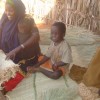
Seasonal Migration Frustrates Ethiopia’s Family Planning
Yohamin Kesete, 32, and her six children live in Dollo Ado, a pastoralist community in Ethiopia’s drought-stricken Somali Region. But this is not where you will always find them.
OP-ED: Avoiding Another Crisis in the Central African Republic
The European Union and the United Nations will co-chair a high-level meeting in Brussels on Monday, aiming to mobilise funding to provide immediate life-saving assistance for the Central African Republic.
Syrian Crisis Threatens Development in Arab World
The widespread sectarian violence and ongoing military conflicts in several political hotspots, including Syria, Iraq and Lebanon, have not only claimed thousands of human lives and devastated fragile economies but also undermined the U.N.’s longstanding plans to eradicate hunger and extreme poverty worldwide.
Tanzania Struggles to End Clashes Between Farmers and Herders
Tanzanian authorities are finding it increasingly difficult to deal with ongoing conflicts between farmers and pastoralists as they fight over limited land and water resources in this East African nation.
Kuwait Tops Humanitarian Aid to Syria at Pledging Conference
As Secretary-General Ban Ki-moon grimly predicted a worsening of the monumental humanitarian disaster in war-torn Syria, the international community Wednesday pledged over 2.4 billion dollars in new funds to help the displaced and devastated in the politically-troubled Arab nation.
Development Follows Devastation from Brazilian Dam
Valdenor de Melo has been waiting for 27 years for the land and cash compensation he is due because his old farm was left underwater when the Itaparica hydroelectric dam was built on the São Francisco river in Brazil’s semiarid Northeast.
Jordan Valley Produces Conflicting Dates
Israeli settler Gadi Blumenfeld distributes machetes to 15 Palestinian labourers and instructs them to cut the thorns off of his dates’ fronds. “I might be stabbed in the back,” he says, “but thanks to farming, we keep the area safe from terrorists.”
Next Step in Uruguay: Competitive, Quality Marijuana
Uruguay, about to become the first country in the world where the state will fully regulate production, sale and distribution of marijuana, will spend the next few months selecting a good quality strain of the crop that can be sold at a price similar to current illegal prices.
Natural Disasters Add to Myanmar’s Troubles
As Myanmar nurses a fragile democracy after long years of military rule, a new danger has reared its head. Climate change, say experts, has the potential to spur migration and exacerbate conflict in the country.
Four Years Later, USAID Funds in Haiti Still Unaccounted For
As the fourth anniversary of the devastating earthquake in Haiti approaches on Jan. 12, development analysts are decrying an ongoing lack of transparency in U.S. foreign aid to the country, even as those assistance streams are drying up.
Small-scale Organic Farming Gets a Boost in Peru
A new institution set up in Peru will strengthen small-scale organic farming, providing support to some 43,000 exporters of ecological products and another 350,000 who supply the domestic market with environmentally-friendly products.
Eucalyptus Trees Make Way For Food Crops
 A project to reclaim agricultural land lost to eucalyptus plantations is bearing fruit in Cameroon.

Christmas Storm Underlines Caribbean’s Vulnerability
Guyanese President Donald Ramotar says the death and destruction caused by intense rainfall in three Caribbean Community (CARICOM) countries over the Christmas holidays is a sign that the region has no time to lose in fortifying its resiliance to climate change.
Sawhoyamaxa Battle for Their Land in Paraguay
The Sawhoyamaxa indigenous community in Paraguay have spent over 20 years fighting to get back their land, which they were pushed off by cattle ranchers.
Women Farmers in Chile to Teach the Region Agroecology
An organisation that brings together some 10,000 peasant and indigenous women from Chile is launching an agroecology institute for women campesinos, or small farmers, in South America.
Hospitality, Agriculture Firms Vulnerable to Human Trafficking
Shareholders are calling on 15 U.S.-based multinational corporations to ensure that their global supply chains are not facilitating human rights abuses, particularly labour and sex trafficking.
Seedpods Worth More than Gold in Argentina’s Arid North
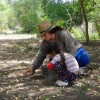
Tired of the drought driving away their men and killing their livestock, the women of Guanaco Sombriana, a town in northern Argentina, have found a new source of income by using the seedpods of native trees that up to now merely provided shade in this arid landscape.« Previous Page — Next Page »


 Farming on the Outskirts of Juba. Credit: UN Photo/JC McIlwaine
Promoting human and planetary health is a central focus of the United Nations, as laid out in the 2030 Sustainable Development Goals (SDGs). World hunger and unsustainable farming practices continue to be pressing concerns for the world. According to the 2025 State of Food Security and Nutrition in the World report by the Food and Agriculture Organization (FAO), 673 million people faced hunger in 2024. There are stark regional disparities, with the FAO projecting that 60% of the world population facing hunger will reside in Africa by 2030. Globally, the prevalence of food insecurity has remained consistently higher for women than men.
Sustainable and efficient national food systems are essential in preserving health, education, environmental well-being, peace, economy, and security. However, creating sustainable food systems can be a challenging endeavor, as food production takes a heavy toll on the environment. The agricultural sector accounts for a significant portion of greenhouse gases. Finding safe, sustainable, and ethical strategies to feed the world is crucial in ensuring planetary longevity. A recent initiative from 2023, the EU Regulation on Deforestation-free Products (EUDR), seeks to advocate for sustainable food systems. The main driver of deforestation is the expansion of agricultural land used to produce commodities like cattle, wood, cocoa, coffee, etc. The EUDR is part of the 2020 European Green New Deal and the EU Biodiversity Strategy for 2030 and aims to limit Europe’s consumption of products linked with deforestation by requiring that companies prove that their products are deforestation-free. Despite aiming to achieve major strides in sustainability, policies such as EUDR also raise socioeconomic concerns for targeted countries. Many emerging Latin American economies are impacted by the policy, and have raised the question of how developing countries can grapple with the tensions between economic development and advancing sustainability.
IPS has been at the forefront of providing compelling and insightful stories on communities facing hunger as well as the cost of food production. IPS uses statistics from FAO, the World Food Programme (WFP) and the International Fund for Agricultural Development (IFAD) to bring relevant and hard-hitting facts to readers. This gathering of information and data from such organizations helps bring the best stories from IPS journalists working in the different regions in consultation with experts on the ground.

The Week with IPS

NEXT STOP - SDGs
Tracking global progress towards a sustainable world
Tracking global progress towards a sustainable world

