Languages
Thursday, November 19, 2026



News and Views from the Global South
Food and Agriculture

Reviving Family Farming in Angola, Carrot by Carrot
"We never used to eat carrots, but now we like them," said Rebeca Soba, admiring her vegetable garden, an island of diversity in the midst of a vast sugarcane plantation. Vegetable gardening has been introduced at the Capanda Agroindustrial Pole (PAC) as a source of income for local small farmers.
Increasing Uganda’s Cotton and Coffee Production
 Cotton was once one of Uganda's key cash crops but a collapse in world prices in the 1980s led to a slump in the market and production. However, cotton production doubled in the 2010/2011 season and brought in 48 million dollars in export earnings.

The Rise of Uganda’s Tobacco Production
Over the years with the demise of cotton production, tobacco has become one of Uganda's key exports.
Six years after British American Tobacco set up regional headquarters in this East African nation, it has become a key tobacco producer for the company.

The Industrialisation of Africa’s Smallholder Agriculture
Africa’s smallholder farmers, who contribute 80 percent of food and agricultural production in sub-Saharan Africa and much of the world’s food supply, are being encouraged by big business, governments and NGOs to become less subsistence based and more entrepreneurial by tailoring production to market forces.
Salvaging Waste Food for the Hungry in Spain
A recurring question in crisis-stricken Spain is how to ensure that surplus agricultural products reach those most in need. One response is citizen initiatives to protest the waste of food and to advocate efficient management along the full length of the food chain.
Forests, Fruit and Fish Could Save Coastal Communities
Scientists predict that in the coming years, Bangladesh will be battered by even more climate disasters than it has already endured. Global warming has caused devastating damage in this lower Himalayan delta country of 150 million people, where seawater intrusion, increasingly intense cyclones, dried up rivers and extreme weather events have become the norm.
Colombian Landowners, Peasants Listen to Each Other
Colombia's large-scale agricultural producers and peasant farmers managed to listen to each other for the first time about the core cause of the decades-long armed conflict: the concentration of rural land ownership and the social and economic development of the countryside.
Q&A: Mutant Fruit Trees to Grow in Saline Soils in Cuba
During some parts of the year, a layer of salt can be seen on the ground in eastern Cuba, which makes it difficult, and sometimes impossible, to farm. Since agronomist Orlando Coto saw this with his own eyes, he has been searching for salt-tolerant fruit trees.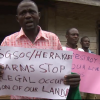
Q&A: Fighting to Save Africa’s Richest Rainforest
Protests against a controversial palm oil plantation in the Korup National Park, Africa’s oldest and richest rainforest in terms of floral and faunal diversity, in Mundemba, southwest Cameroon will continue despite the arrests and intimidation of local environmental campaigners.

Funding Restored for U.S. Military Biofuels Programme
Reversing attempts to eliminate the U.S. military’s advanced biofuels programme, both houses of Congress on Tuesday approved major legislation that now presents no obstacles to broad-reaching Defence Department plans to mainstream and spread the use of alternative fuels throughout its operations.
Community Water Management Stuck in Legal Limbo*
Community-based water supply systems, which serve thousands of rural communities in Mexico, are seeking official recognition under the new federal legal framework currently under development.
Curbing Tanzania’s “Land Grabbing Race”
From January 2013, Tanzania will start restricting the size of land that single large-scale foreign and local investors can “lease” for agricultural use. The decision follows both local and international criticism that major investors are grabbing large chunks of land here, often displacing small-scale farmers and local communities.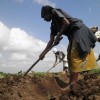
Farmers Need to Grow Climate Smart
Farmers cannot wait much longer for negotiators to reach an agreement on including a work programme on agriculture in the United Nations Framework Convention on Climate Change. And until one is approved, “it will continue to be difficult for farmers to produce the food needed, and at the same time reduce greenhouse gas emissions."
Big Landowners Block Rural Development Law in Guatemala
An “integral rural development law” to promote access to land, employment and other rights for small farmers is bogged down in the Guatemalan Congress due to opposition from large landowners, who see it as an attempt at land reform.
Critics Brand Climate Talks Another Lost Opportunity
Rich countries came to the U.N. climate talks in Doha intent on delaying needed action on climate change for another three years and a still to be hammered out new global treaty.
Farming in the Sky in Singapore
With a population of five million crammed on a landmass of just 715 square kilometres, the tiny republic of Singapore has been forced to expand upwards, building high-rise residential complexes to house the country’s many inhabitants.
A Hotter World Is a Hungry World
Food prices will soar and hundreds of millions will starve without urgent action to make major cuts in fossil fuel emissions. That is what is at stake here on the last day of the U.N. climate talks known as COP 18, scientists and activists say.
Small Rural Businesses in Brazil Set Sights on Domestic Market
"Canjinjin has special powers," said Deize Coelho de Barros. The recipe for this local liquor, made from a mixture of herbs, was handed down from her African ancestors, and is seen as a sort of traditional "Viagra" in her homeland, the western Brazilian state of Mato Grosso.Bumper Grain Harvest Expected in Southern Senegal
Farmers in Médina Yoro Foula, in Senegal's southern Kolda region, are expecting a good grain harvest this year, and hope to sell thousands of tonnes of grain in the local and regional markets.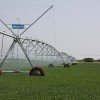
Investments Into, Out of Developing Countries at Record Levels
Foreign direct investment (FDI) both into and out of developing countries is at or nearing record levels, an arm of the World Bank reported on Thursday.
An Empty Table at Doha Climate Talks
United Nations climate talks are on the edge of collapse Thursday, according to a coalition of civil society and representatives from half of the world's countries.« Previous Page — Next Page »


 Farming on the Outskirts of Juba. Credit: UN Photo/JC McIlwaine
Promoting human and planetary health is a central focus of the United Nations, as laid out in the 2030 Sustainable Development Goals (SDGs). World hunger and unsustainable farming practices continue to be pressing concerns for the world. According to the 2025 State of Food Security and Nutrition in the World report by the Food and Agriculture Organization (FAO), 673 million people faced hunger in 2024. There are stark regional disparities, with the FAO projecting that 60% of the world population facing hunger will reside in Africa by 2030. Globally, the prevalence of food insecurity has remained consistently higher for women than men.
Sustainable and efficient national food systems are essential in preserving health, education, environmental well-being, peace, economy, and security. However, creating sustainable food systems can be a challenging endeavor, as food production takes a heavy toll on the environment. The agricultural sector accounts for a significant portion of greenhouse gases. Finding safe, sustainable, and ethical strategies to feed the world is crucial in ensuring planetary longevity. A recent initiative from 2023, the EU Regulation on Deforestation-free Products (EUDR), seeks to advocate for sustainable food systems. The main driver of deforestation is the expansion of agricultural land used to produce commodities like cattle, wood, cocoa, coffee, etc. The EUDR is part of the 2020 European Green New Deal and the EU Biodiversity Strategy for 2030 and aims to limit Europe’s consumption of products linked with deforestation by requiring that companies prove that their products are deforestation-free. Despite aiming to achieve major strides in sustainability, policies such as EUDR also raise socioeconomic concerns for targeted countries. Many emerging Latin American economies are impacted by the policy, and have raised the question of how developing countries can grapple with the tensions between economic development and advancing sustainability.
IPS has been at the forefront of providing compelling and insightful stories on communities facing hunger as well as the cost of food production. IPS uses statistics from FAO, the World Food Programme (WFP) and the International Fund for Agricultural Development (IFAD) to bring relevant and hard-hitting facts to readers. This gathering of information and data from such organizations helps bring the best stories from IPS journalists working in the different regions in consultation with experts on the ground.

The Week with IPS

NEXT STOP - SDGs
Tracking global progress towards a sustainable world
Tracking global progress towards a sustainable world

