Languages
Friday, November 20, 2026



News and Views from the Global South
Food and Agriculture

Women in Brazil Turn to Eco-Friendly Farming in Wake of Storms
In the green belt of market gardens that feeds the Brazilian city of Rio de Janeiro, women farmers are learning environmentally friendly techniques in response to extreme weather events and their effects on the land.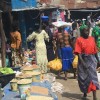
Hit by Fighting, Now by Prices
As thousands of people flee the conflict in South Sudan’s northern border states, increasing numbers have also been forced to leave their homes and towns in search of affordable food.AGRICULTURE: Farm Animals Join Rio+20 Agenda
Human development and biodiversity will not be the only focus of the Rio+20 Earth Summit in June, for which representatives of hundreds of states and non- governmental organisations (NGOs) will gather to discuss sustainable development.
Tribal Farming Beats Climate Change
Tribal farmer Harish Saraka has rediscovered the key to sustainable farming in this rain-dependent hinterland of eastern Odisha state – mixed cropping.
In New U.S. “Bioeconomy”, Industry Trumps Environment
The White House on Thursday announced the formulation of the National Bioeconomy Blueprint, aimed at shoring up the U.S. commitment to bioscience-related research.
DRC Cassava Farmers Reap Rewards from New Methods
Farmers in the Democratic Republic of Congo are embracing a new variety of cassava which, in combination with improved agricultural techniques, easily outperforms yields from other popular types of this important crop.
Coming Together for Environmental Restoration in Haiti
In honour of Earth Day, we run an interview with Yves-André Wainright, who discusses ways that poor governance and the role of foreign donors have contributed to the country's environmental catastrophe.
World Bank Overseeing Global Land Grab
The World Bank continues to facilitate land-grabbing in poor and developing countries around the world, according to new research released here on Monday.Massive Theft of Developing World’s Farmland
The mass acquisition or lease of arable land in developing countries, especially in Africa, by foreign investors – a practice aggravated by the outbreak of the financial crisis in 2007 – has reached record highs, according to several new studies.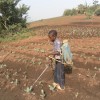
Cameroonian Farmer Won’t Let Low Rainfall Defeat Him
Olivier Forgha Koumbou washes some freshly picked carrots in a small brook and eats them with relish. His thriving farm in Santa, in Cameroon’s North West region, looks like a miracle in the midst of surrounding farms where carrots, lettuce, potatoes and leeks have withered and died.
Intra-African Trade or Global Integration: A Chicken-and-Egg Dilemma?
Though the World Trade Organisation (WTO) has long held that trade between African countries is too low, experts at the South Centre, an inter-governmental think tank of developing countries, say intra-continental trade is already significant in manufactured goods and promises a new path to industrialisation.
South Africa’s Smallholders Lose Battle for Seed Security
In an almost ceremonial manner, Selinah Mncwango opens her big plastic bag and pulls out several smaller packets, each filled with different types of seeds: sorghum, bean, pumpkin, and maize. They are her pride, her wealth, the "pillar of my family," says the farmer from a village in South Africa’s KwaZulu-Natal province.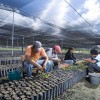
Food Security Slipping Ever Further Away
Continuing near-record high food prices around the world are highlighting international inattention to a looming threat, observers here warned on Friday.
Ghanaian Fisherfolk Blasting Their Way to Finding Fish
Explosives, high-watt light bulbs, monofilament nets, and poison: these are a few methods fisherfolk are using to catch ever-dwindling fish stocks off Ghana’s shores.
Listening to the Hum of Tilling Machinery in the Sierra Leone Countryside
In the eastern Sierra Leonean community of Lambayama, rice paddies are carved far into the landscape before being abruptly halted by distant hills. Aside from a paved road that draws a grey line through the green, swampy valley, it looks much as it did a century ago.

Regularising Land Tenure in Brazil’s Impoverished Northeast
Despite the abundance of natural resources on its more than 25 million hectares of land, including six million hectares ideal for agriculture, the northeast Brazilian state of Piauí has some of the country’s lowest socioeconomic indicators.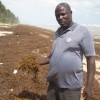
Western Ghana’s Fisherfolk Starve Amid Algae Infestation
Sam Kojo stands in a thigh-high pile of brown seaweed that blankets a beach in western Ghana. Behind him, a decomposing mound of Sargassum stretches down the shore past the fishing village of Beyin.
Mexican Seeds, the New Spoils for Food Corporations
Biodiversity and small and medium farms are threatened in Mexico by the looming approval of a reform of the law on plant varieties that will extend patent rights over seeds, activists and experts warn.‘The Land is Never Wrong’, Says Togolese Farmer
Awuissa Walla has no regrets over choosing farming as a profession. He earned a degree in agronomy a decade ago, and borrowing money from friends, set himself up on an 18-hectare plot at Badja, some 50 kilometres from Lomé, the Togolese capital.Sea Level Rise Threatens Mekong Rice
With Vietnam’s fertile Mekong delta threatened by rising sea levels and salt water ingress, the country’s future as a major rice exporter depends critically on research underway in the Philippines.
Indonesian Farmers Burned in Biofuel Drive
Dreams of sending his children to quality schools have vanished for 40-year-old farmer Muslikin, as the father of three now struggles to repay the bank loan he took out to finance his jatropha plantation in 2006.« Previous Page — Next Page »


 Farming on the Outskirts of Juba. Credit: UN Photo/JC McIlwaine
Promoting human and planetary health is a central focus of the United Nations, as laid out in the 2030 Sustainable Development Goals (SDGs). World hunger and unsustainable farming practices continue to be pressing concerns for the world. According to the 2025 State of Food Security and Nutrition in the World report by the Food and Agriculture Organization (FAO), 673 million people faced hunger in 2024. There are stark regional disparities, with the FAO projecting that 60% of the world population facing hunger will reside in Africa by 2030. Globally, the prevalence of food insecurity has remained consistently higher for women than men.
Sustainable and efficient national food systems are essential in preserving health, education, environmental well-being, peace, economy, and security. However, creating sustainable food systems can be a challenging endeavor, as food production takes a heavy toll on the environment. The agricultural sector accounts for a significant portion of greenhouse gases. Finding safe, sustainable, and ethical strategies to feed the world is crucial in ensuring planetary longevity. A recent initiative from 2023, the EU Regulation on Deforestation-free Products (EUDR), seeks to advocate for sustainable food systems. The main driver of deforestation is the expansion of agricultural land used to produce commodities like cattle, wood, cocoa, coffee, etc. The EUDR is part of the 2020 European Green New Deal and the EU Biodiversity Strategy for 2030 and aims to limit Europe’s consumption of products linked with deforestation by requiring that companies prove that their products are deforestation-free. Despite aiming to achieve major strides in sustainability, policies such as EUDR also raise socioeconomic concerns for targeted countries. Many emerging Latin American economies are impacted by the policy, and have raised the question of how developing countries can grapple with the tensions between economic development and advancing sustainability.
IPS has been at the forefront of providing compelling and insightful stories on communities facing hunger as well as the cost of food production. IPS uses statistics from FAO, the World Food Programme (WFP) and the International Fund for Agricultural Development (IFAD) to bring relevant and hard-hitting facts to readers. This gathering of information and data from such organizations helps bring the best stories from IPS journalists working in the different regions in consultation with experts on the ground.

The Week with IPS

NEXT STOP - SDGs
Tracking global progress towards a sustainable world
Tracking global progress towards a sustainable world

