Languages
Friday, November 20, 2026



News and Views from the Global South
Food and Agriculture
Action Needed Now to Prepare for Severe Drought
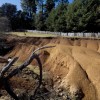
Mexico and Central America look like they are covered in dried blood on maps projecting future soil moisture conditions.
Jakarta Poaches on Farmland Waters
The 18,000 litres of clean water that Jakarta consumes per second are expected to hit 26,000 litres by 2015. The solution? A 54-km stretch of toll road cut through prime paddy land to access the water resources of this salubrious hill district.
G8 Turns to Private Sector for Food Crisis Solutions
On the eve of the Group of Eight (G8) summit near Washington, President Barack Obama on Friday unveiled a major new initiative aimed at shoring up food security and combating global hunger.
From Mubarak To Worse
More than 15 months after Egypt's Tahrir Square uprising and four months after free parliamentary polls, many Egyptians say that daily living conditions are worse now than they were in the Mubarak era.
Q&A: The Future of Agriculture May Well Be in Cities
In the coming decades, the world's population is expected to grow by at least another two billion people, 80 percent of whom will live in cities by the year 2050.
Colombian River Basin Passes the Test of El Niño and La Niña
Patricia Gómez, an engineer, is leading a training workshop for a group of 11 men at the fire station in Neiva, the capital of the department of Huila in southwest Colombia.
Adding Rice Farmers to the Rio+20 Agenda
The year 2011 was one of extremes for the small Sri Lankan village of Verugal.
Despite Economic Growth, Food Insecurity Lingers in Africa
Everlyne Wanjiku, a single mother of five, has earned a living selling vegetables in the sprawling Kibera slum in Nairobi, Kenya, for over three decades. And even though her earnings were meagre, she was able to provide all her children with a tertiary education.
Guatemalan Coffee Growers Get Creative
Overwhelmed by climate change, worried about speculation in international prices and still hurting from the effects of the crisis in 2000, coffee growers in Guatemala are trying in various ways to recover the production levels they achieved 12 years ago.
U.S.: Occupiers Reclaim Land for Sustainable Farming
With hoes, shovels, some 15,000 seedlings and a bolt cutter to break the locks that kept them out, students, community members and participants from nearby Occupy movements have laid claim to an undeveloped 10-acre parcel since Earth Day, Apr. 22, in Albany, California.
“Not a Famine, but an Issue of Food Insecurity”
Millions of Angola’s poorest families are facing critical food insecurity as a prolonged dry spell across large parts of the country has destroyed harvests and killed off livestock.
Q&A: Women Farmers Are Key to a Food-Secure Africa
While women constitute the majority of food producers, processors and marketers in Africa, their role in the agricultural sector still remains a minor one because of cultural and social barriers.
Struggles over Land Rights Fall Under the Rio+20 Radar
Land is the missing element at next month's big U.N. sustainable development summit known as Rio+20, where nations of the world will meet Jun. 20-22 with the goal of setting a new course to ensure the survival and flourishing of humanity.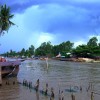
Vietnam’s Climate Woes Ignite National Strategy
Vietnam is hailed as a development success story for lifting millions out of poverty and staying on track to meet all of its Millennium Development Goals (MDGs) by 2015. But the country's future progress is severely threatened by the impact of global climate change.
American Beef on the Political Grill
Taiwanese civic activists and opposition parties are persisting in efforts to block imports of high-risk American beef even though the ruling rightist Chinese Nationalist Party (Kuomintang) legislative majority narrowly defeated a push by opposition legislators Apr. 27 to suspend imports of American beef products.Cashew Producers’ Pain Is Intermediaries’ Gain in Senegal
Cashew nut growers in the southern Senegalese region of Casamance are complaining bitterly that intermediaries are cutting them out of a fair share of the profits.
Urban Farming Takes Root in Brazil’s Favelas
Women in one of the poorest neighbourhoods of this city 40 km north of Rio de Janeiro no longer have to spend money on vegetables, because they have learned to grow their own, as organic urban gardening takes off in Brazil.
“The Two Guatemalas” Meet
"It’s very hard for them to put food on the table, but they are very noble people," Diego Orozco, one of the thousands of young urban Guatemalans who spent last weekend with a poor rural family, told IPS.
Q&A: Restructuring the Planet’s Food System
Thirty percent of food is wasted globally, while one billion people go hungry and another billion are obese.
Energy Forests, the Feminine Art of Reforesting
María Elena Muñoz industriously weeds a clearing in the forest and then digs several holes, where she and another four dozen women are planting plantain seedlings, to help feed their families in this poor farming area in El Salvador.Laos’ Herculean Effort to Join the WTO
After almost a decade of major economic transformation, the Lao People’s Democratic Republic is on the brink of World Trade Organisation (WTO) membership.« Previous Page — Next Page »


 Farming on the Outskirts of Juba. Credit: UN Photo/JC McIlwaine
Promoting human and planetary health is a central focus of the United Nations, as laid out in the 2030 Sustainable Development Goals (SDGs). World hunger and unsustainable farming practices continue to be pressing concerns for the world. According to the 2025 State of Food Security and Nutrition in the World report by the Food and Agriculture Organization (FAO), 673 million people faced hunger in 2024. There are stark regional disparities, with the FAO projecting that 60% of the world population facing hunger will reside in Africa by 2030. Globally, the prevalence of food insecurity has remained consistently higher for women than men.
Sustainable and efficient national food systems are essential in preserving health, education, environmental well-being, peace, economy, and security. However, creating sustainable food systems can be a challenging endeavor, as food production takes a heavy toll on the environment. The agricultural sector accounts for a significant portion of greenhouse gases. Finding safe, sustainable, and ethical strategies to feed the world is crucial in ensuring planetary longevity. A recent initiative from 2023, the EU Regulation on Deforestation-free Products (EUDR), seeks to advocate for sustainable food systems. The main driver of deforestation is the expansion of agricultural land used to produce commodities like cattle, wood, cocoa, coffee, etc. The EUDR is part of the 2020 European Green New Deal and the EU Biodiversity Strategy for 2030 and aims to limit Europe’s consumption of products linked with deforestation by requiring that companies prove that their products are deforestation-free. Despite aiming to achieve major strides in sustainability, policies such as EUDR also raise socioeconomic concerns for targeted countries. Many emerging Latin American economies are impacted by the policy, and have raised the question of how developing countries can grapple with the tensions between economic development and advancing sustainability.
IPS has been at the forefront of providing compelling and insightful stories on communities facing hunger as well as the cost of food production. IPS uses statistics from FAO, the World Food Programme (WFP) and the International Fund for Agricultural Development (IFAD) to bring relevant and hard-hitting facts to readers. This gathering of information and data from such organizations helps bring the best stories from IPS journalists working in the different regions in consultation with experts on the ground.

The Week with IPS

NEXT STOP - SDGs
Tracking global progress towards a sustainable world
Tracking global progress towards a sustainable world

