Languages
Thursday, November 19, 2026



News and Views from the Global South
Health
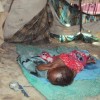
SOMALIA: Aid Dwindles, Disease Spreads
Doctors in Mogadishu are warning that famine victims in internally displaced camps have become vulnerable to contagious diseases like cholera and measles, as conditions here are ripe for an outbreak. This comes as internally displaced persons complain that relief aid to some camps has dwindled or stopped.
MALAWI: Painkillers Prescribed for Malaria Amid Drug Shortage
Malawi is experiencing a drug shortage as the country's international donors remain reluctant to release aid meant for the health sector.
Q&A: Cuba Advancing Towards a Dengue Vaccine
"We don’t like to talk about our specific goals," says Cuban virologist María Guadalupe Guzmán, as a subtle way to avoid going into too much detail about the research she is heading up to develop a dengue vaccine.
Toxins Rob More Than a Decade of Life from Millions
Toxic pollution affects the health of more than 100 million people, shortening their productive life spans by an astonishing 12.7 years on average.
CANADA: Harper Government Guts Environment Programmes
Canada's Stephen Harper government is spending more than 60 billion dollars on new military jets and warships while slashing more than 200 million dollars in funding for research and monitoring of the environment.
Haitian Cholera Victims Seek Reparations from U.N.
More than 5,000 Haitian cholera victims are seeking compensation, action and an apology from the U.N. and the United Nations Stabilisation Mission in Haiti (MINUSTAH) for the ongoing epidemic that has killed more than 6,600 Haitians and sickened more than 476,000 since October 2010.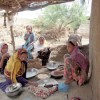
PAKISTAN: Wanted: A Revolution For Girls
Sixteen-year-old Noor Bano believes nothing short of a revolution will convince the men in Malangabad – her remote village in the Khairpur district of the Sindh province, some 460 kilometres from the southern port city of Karachi – to treat women as equals.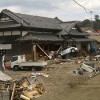
JAPAN: Women Fight to Save Fukushima’s Children
Hundreds of Japanese women have been converging on the Japanese capital demanding better relief for some 30,000 children exposed to nuclear radiation by the Fukushima meltdown.
GUATEMALA: “We Want Girls to Be Visible”
"I learned to not be afraid, and to love myself. Before, I never wanted to talk to people because I felt like they looked down on me and that I was no good," says 12-year-old Hilda Tura, one of the participants in a programme fostering leadership among indigenous girls in Guatemala.
MALAWI: No Social Safety Nets for the Poor
In Mbedza village, a remote rural community in southern Malawi, Fedson Feston beams an infant’s awkward smile and swings his tiny arms up towards the face of his mother. Four months old, Fedson is too young to know how lucky he is to be alive.
POPULATION-CUBA: Young People as Agents of Change
At 19, Liz Sandra Falcón had never imagined that every decision she made could have an impact beyond her own life: not only on people close to her, but on Cuban society itself, and even – although it might seem like an exaggeration – on global tendencies.
Brazil’s Health System Inspires Abroad, Frustrates at Home
News that the government of South Africa was inspired by Brazil's health system in setting up its own universal coverage scheme might meet with scepticism in this South American country.
Mexico Hides Cadmium Under the Rug
Despite the threat cadmium poses to health and the environment, Mexico has no plan to reduce the use of the heavy metal in the production of toys and industrial products like batteries and fertiliser.
GREECE: Austerity Measures Responsible For Athens’ ‘New Poor’
Harsh austerity measures and a struggling economy have given birth to the ‘new poor’ in Athens, a term used to describe those suffering the impacts of social exclusion and rapidly shrinking civic welfare institutions.
GHANA: Toxic Electronic Waste Contaminates Nearby Areas
Mountains of hazardous waste grow by about 40 million tons every year. This waste, mostly from Europe and North America, is burned in developing countries like Ghana in a hazardous effort to recover valuable metals.
PERU: In Prison, a Little Health Care Goes a Long Way
"I caught tuberculosis, but I'm lucky because it's been cured," says Hernán Arévalo from his bed in the new hospital at the Peruvian prison of Lurigancho, one of the most crowded and dangerous in Latin America. "Before, whoever came in here was unlikely to get out alive."POPULATION: Youth Bulge Adds to Pakistan’s Woes
Pakistan’s population explosion is posing a greater danger than militancy and religious intolerance, says noted medical doctor and demographer Farid Midhet.
GHANA: Stigma Surrounding Breast Cancer Stymies Prevention Efforts
Mary Mingle thought she had a boil on her breast, so she bought some medication and tried to treat it at home. Two months later, bothered by persistent pain, she went to the doctor.
Q&A: “We Are Facing the Threat of a Social and Health Catastrophe”
For Brazilian pediatrician and public health expert Paulo Buss, the worst enemy of health is unemployment. And if unemployment continues to rise, the result will be a global "catastrophe", he told Tierramérica.
Gene Patents “Like Trying to Keep Water in a Sieve”
If the U.S. Supreme Court agrees to hear a case on gene patents, observers say the resulting face-off - between a large genetics testing company and a vocal coalition of breast cancer patient advocates – will have a massive impact because of what is at stake: valuable information about the human genome.
Reduce Inequalities to Boost Health, WHO Says
Economic status, education, access to clean water and sanitation, nutrition and the environment determine the level of health of persons, communities or countries, and so does the extent to which rights are enjoyed or denied.« Previous Page — Next Page »


 Bangladesh: Sarid, born one month early, receives specialized newborn care and grows stronger every day. Credit: UNICEF/UNI944397/Mojumder
Since the onset of the 2000s, global life expectancy has seen an overall rise, attributed to significant technological and scientific innovations in healthcare. Due to an increased understanding of different conditions as well as a rise in cooperation among healthcare experts around the world, there have been major strides made in ensuring that as few people die from chronic illnesses as possible. Despite the belief that healthcare is a fundamental human right, people from low- or middle-class backgrounds, marginalized groups, and underdeveloped countries have far more limited access to basic healthcare services.
The COVID-19 pandemic showed how marginalized communities are disproportionately affected by health crises, proving that we have much work to do in ensuring that no one dies of terminal conditions. While the global response to the coronavirus saw significant strides in immunization and vaccine development, the global outbreak of mpox in 2022 and its upsurge in parts of Africa in 2024 must remind us to remain vigilant.
Other major disease outbreaks in recent years have been linked to the destruction of infrastructure during warfare. Notably, in 2024, the Gaza Strip witnessed a return of the poliovirus since its eradication in the region 25 years ago. Israel’s blockade on Gaza has resulted in the collapse of the region’s sewage plants and desalination plants, and also destroyed healthcare capacities. The UN stated that this lack of clean water and sanitation would lead to an outbreak of cholera and other deadly infectious diseases. The 2026 OCHA Humanitarian Situation Report confirmed that the over two years of conflict in Gaza has produced a catastrophic health emergency, with millions remaining dependent on relief aid amid tight restrictions and no functioning public health system.
IPS is committed to providing full and comprehensive coverage on healthcare challenges around the world. IPS seeks to address the multifaceted causes of such challenges, including unprecedented pandemics, conflict-driven disease outbreaks, as well as socioeconomic barriers to equal healthcare access. IPS is also dedicated to reporting on innovations in the healthcare industry.

The Week with IPS

NEXT STOP - SDGs
Tracking global progress towards a sustainable world
Tracking global progress towards a sustainable world
