Languages
Wednesday, November 11, 2026



News and Views from the Global South
Development & Aid

Artisanal Miners Ruining Already Diminishing Forests in Zimbabwe
With homemade tents scattered about, hordes of artisanal gold miners throng parts of Mazowe village in Zimbabwe’s Mashonaland Central Province, where they have cut down thousands of trees to process gold ore.
Migration for Many Venezuelans Turns from Hope to Nightmare
Thousands of Venezuelans who have crossed the treacherous Darien jungle between Colombia and Panama, or who have made the perilous journey through Central America and Mexico to reach the United States, have found themselves stranded in countries that do not want them, unable to continue their journey or to afford to return to their country.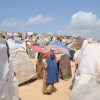
Droughts Don’t Need To Result in Famine: Ethiopia and Somalia Show What Makes the Difference
The Horn of Africa is facing its worst drought in 40 years. Scientists suspect that a multi-year La Niña cycle has been amplified by climate change to prolong dry and hot conditions.
Education Cannot Wait and UNICEF, with Partners, Call for Substantial Increase in Funding for Crisis-Affected Children in the Democratic Republic of the Congo
The Director of Education Cannot Wait (ECW), Yasmine Sherif, and the UNICEF Representative, Grant Leaity, called on donors worldwide to provide US$45 million in urgent, additional funding to support ECW’s Multi-Year Resilience Programme in the Democratic Republic of Congo (DRC), a country facing one of the world’s most overlooked crises.
Will The Lettuce Outlast All This?
No. No lettuce, no matter how British it may be, could outlast such a steady depletion of the very foundation of life.
COP27 President Envoy on Youth: With Hurricanes, Floods, Heatwaves, Climate Change Cannot Be Ignored
COP 27’s official Youth Envoy, Dr Omnia El Omrani, realised the impact of climate change in 2017, and Hurricane Irma slammed Miami. As a doctor, she witnessed the influx of emergency patients into the hospital as a result of the hurricane, which piqued her interest in environmental and climate issues. She described it as a significant milestone in her life.
A New Political Reality in Myanmar: A People No Longer Willing to Accept Military Rule
The political, human rights and humanitarian crisis in Myanmar continues to take a catastrophic toll on the people, with serious regional implications.
How China Can Retire Coal Early in Pakistan and Elsewhere Through the BRI
With COP 27 approaching, pressure is mounting on wealthy countries to increase their support to poorer ones in the face of climate change. The recent floods in Pakistan have amplified this issue. China, as the world’s second largest economy, will similarly face increasing pressure to help other developing countries on climate.
War, Greed and Mass Manipulation
In his treatise On War, the Prussian general Carl von Clausewitz (1780–1831) stated that war is “merely a continuation of policy with other means”. With his experience from the Napoleonic Wars von Clausewitz knew that totalitarian regimes could end up conducting huge and ruthless military campaigns. Furthermore, he assumed that to win a war it is necessary to mobilize and indoctrinate the inhabitants of an entire nation. Such an endeavour is called total war, a term that actually can be applied to Putin’s war in Ukraine.
While Developing Nations Hang on to a Cliff’s Edge, G20 & IMF Officials Repeat Empty Words at Their Annual Meetings
Held in-person for the first time in three years, the annual meetings of the International Monetary Fund and World Bank last week in Washington, D.C. failed to offer solutions to the dozens of developing countries in debt distress or on the forewarned global recession instigated by monetary tightening.
Macroeconomic Policy Coordination More One-Sided, Ineffective
Widespread adverse reactions to the UK government’s recent ‘mini-budget’ forced new Prime Minister Liz Truss to resign. The episode highlighted problems of macroeconomic policy coordination and the interests involved.
Europe in Its Labyrinth
European politicians continue to run in all directions to find a way out of their energy crisis. One of them – Simonetta Sommaruga, the Swiss Environment Minister, asked people to ‘shower together’. Others are competing to grant the business of transporting energy from the North of Africa to the continent. All this is not new.
U.S. Political Divides on Demographic Issues
Given the upcoming midterm elections in the United States and the consequences of the outcome for domestic legislation and programs as well as the country’s foreign policy, it’s useful and fitting to review fundamental differences between America’s two major political parties on vital demographic issues.
Indian Village Unlocks Treasure of Organic, Indigenous Farming
At Jhargram, a far-flung village in India’s West Bengal state, a group of farmers sit together in one of the open fields. They debate, deliberate, and confabulate about the marketing strategy they should use when selling their harvest on the open market.
Public Development Banks Can’t Drag Their Feet When It Comes to Building a Sustainable Future
A coalition of civil society organisations is demanding public development banks (PDBs) to take radical and innovative steps to tackle human rights violations and environmental destruction. No project funded by PDBs should come at the expenses of vulnerable groups, the environment and collective liberties, but should instead embody the voices of communities, democratic values and environmental justice.
Saving Lives Can’t Ever Be Divisive
That’s why a new ship with a big white “E” will navigate the Mediterranean Sea. The vessel has a red hull, is more than fifty meters long and has low decks. Soon, it will leave the port of Genoa and go out into the open sea. If those living on the north shore of that ‘water cemetery’ bearing the name of Mediterranean had chosen life, the "Life Support" would not have been greeted by the applause of a people packed square, on a late summer night, in the Italian city of Reggio Emilia. It would not be ready to sail now; . if they had chosen life, that ship would have another job.
Accelerating Post-Pandemic SDG 6 Achievements on Water & Sanitation
Global progress has been staggeringly inadequate against Sustainable Development Goal 6, “clean water and sanitation for all.” According to the latest SDGs progress assessment, 2 billion people still lack safely managed drinking water, 3.6 billion lack sanitation services, and 3 billion lack basic hygiene services.
Solar Energy, the Solution for Remote Communities in Argentina
When asked about the impact of incorporating solar energy at the school he runs in Atraico, a remote rural area in the Patagonian steppe in southern Argentina, Claudio Amaya Gatica is unequivocal: "Life has changed, not only for the school but for the whole community.”
Time is Running Out for Decisions on Debt Relief as Countries Face Escalating Development Crisis
Developing low- and middle-income economies are taking hard hits from global economic developments outside their control. Monetary tightening in advanced economies coupled with increasing fears of a global recession have weakened currencies, sent interest rates soaring, and investors fleeing.
Farmers in Laos Imagine Improved Livelihoods Thanks to New Cross-border Links
Mountainous terrain in northern Laos has until now restricted chances for farmers and producers in much of the nation to export their goods, limiting them primarily to subsistence farming and also curbing development, education and poverty reduction in their communities.
Are Climate Summits a Waste of Time?
Next month, the latest annual United Nations climate extravaganza, COP27, will take place in Sharm el-Sheikh, Egypt. Last year it was in Glasgow. Next year it will be held in (drum roll please) … Dubai!« Previous Page — Next Page »





 2026 High-level Political Forum on Sustainable Development. Credit: UN Photo/Eskinder Debebe
In 2015, the United Nations and its Member States adopted the Sustainable Development Goals (SDGs) in an effort to make the world a more sustainable and peaceful place for future generations. Progress on the 17 SDGs has been uneven, and inequality persists across the globe. 10 years after adoption, the 2025 UN SDGs Report revealed that only 35% of the SDG targets are on track, with more than half moving too slowly, and 18% moving backwards from the 2015 baseline. Poverty remains one of the world’s most pressing issues, with hunger, violence, and inequality impeding the opportunities for all people to achieve success. In September 2024, the United Nations Summit of the Future introduced a new goal: to eradicate global poverty by 2030, ensure universal rights to basic services, and increase the overall standard of living in terms of industrialization, economic well-being, citizen health, and literacy. Furthermore, recent shifts in United States foreign aid policy – notably, major budget cuts to USAID and the termination of thousands of development programmes– have severely threatened vital lifelines of financial aid to impoverished communities around the world. Additionally, the United States’ withdrawal from the Paris Climate Agreement has undercut international efforts at sustainable development. With the upcoming 2030 deadline, the UN Secretary-General has called for urgent multilateralism across six priority areas: food systems, energy, digital connectivity, education, jobs and social protection, and climate and biodiversity. IPS sheds light on marginalized communities that struggle on a daily basis to survive and have their stories heard and respected.
Updated by Yilan Batista and Shuli Wong August 2026

The Week with IPS

NEXT STOP - SDGs
Tracking global progress towards a sustainable world
Tracking global progress towards a sustainable world
