Languages
Thursday, November 26, 2026



News and Views from the Global South
Development & Aid

“Blessed” Rains Become a Curse in Antigua
 Antigua is one of the most drought-prone countries in the Caribbean. So whenever it rains, the inhabitants generally regard the weather as “showers of blessing”.
Students Take On the Army
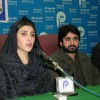
Disturbed by civilian casualties and moved by the plight of people living like refugees in their own country, students from Pakistan’s Federally Administered Tribal Areas (FATA) are demanding an end to army operations against militants on their native soil.
Refugees Ski Too, in Iraq
No one here has heard of the Sochi Winter Olympics. But the snow conditions are perfect in these Kurdish mountains of Iraq and 11-year-old Syrian refugee Hassan Khishman is thrilled to glide on skis for the first time.European Ruling Ignites Freedom Debate
A ruling by the European Court of Human Rights (ECHR) in relation to a Turkish national has kicked up a new row on anti-racism legislation.
Russian Health Going Down With Vodka
Sitting in the dining room of a Moscow hotel, manager Yulia Golovanova explains why she always likes to see Russians, rather than foreigners, bring guests in.
Abolitionists Want to Set a Deadline for Nuclear Ban
Countries in favour of nuclear disarmament have reached the point where they are ready to set a date for the start of formal negotiations to eliminate nuclear weapons, a decision that could be taken in Austria at the end of this year.
Growing Inequality Mars 20 Years of Women’s Progress
As the world moves closer to the 2015 end mark of the Millennium Development Goals (MDGs), a new U.N. report illuminates how far global society has come, but also how far it still must travel to achieve its objectives.
Nuclear Weapons Leave Unspeakable Legacy
For decades, Yasuaki Yamashita kept secret his experiences as a survivor of the nuclear attack launched by the United States on the Japanese city of Nagasaki on Aug. 9, 1945.
Internet Holds a Presidential Hope
Turkey is waiting to see if President Abdullah Gul will ratify the government's controversial Internet bill, which opposition parties, civil society and the international community call a major restriction on freedom of expression.
USAID Unveils Five-Year Plan in Afghanistan
Even as most international military forces are slated to leave Afghanistan by the end of 2014, USAID, the foreign aid arm of the U.S. government, is emphasising its sustained commitment to developing Afghanistan’s economy after the withdrawal.OECD in “Game-Changing” Move to Halt Tax Evasion
A major grouping of rich countries has unveiled a new model for the automatic exchange of certain individual financial information between countries, aimed at significantly cutting down on offshore tax evasion.
Waiting for Justice for Mali’s Missing Soldiers
Aminata Diarra last saw her brother, Malamine, a member of the Malian Red Berets, special forces loyal to ousted president Amadou Toumani Toure, alive on national television almost two years ago.
OP-ED: We Need Everyone to Build a More Sustainable World
Last week, I had the privilege of attending the Delhi Sustainable Development Summit, an annual event that deals with a subject that is very close to my heart. The summit gathered together amazing people: Nobel Prize winners, thought leaders, heads of state, corporate innovators, and academicians to deal with the paramount challenges of the 21st Century all focused on three pressing dimensions of sustainability: food, water and energy.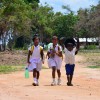
After War Comes Peace, Not Prosperity
Sri Lanka’s war-battered Northern Province had reason to celebrate when the results of a countrywide exam were announced last December. Of the 16,604 students from the province who sat for the exam, 63.8 percent secured the required marks for entry into prestigious national universities.
Plugging South Africa’s Post-Apartheid Leaks
The South African government’s earnest rush to provide water to millions of people post-apartheid may have jeopardised its attempts to provide services to the country in the long run.
U.S. Leans Toward Restoring Voting Rights for Felons
U.S. Attorney General Eric Holder and several key Republican and Democrat senators agree on the need for criminal justice reform, and some are now even seeking to restore voting rights to former felons.
Nuke Summit Agenda Circumvents Armed Powers
When over 50 world leaders meet in the Netherlands next month for a Nuclear Security Summit (NSS), the primary focus will be on a politically-loaded question: how do we prevent non-state actors and terrorists from getting their hands on nuclear weapons or nuclear materials?
Mexico Deputises Vigilantes in Cartel Wars
“In the long term, what benefit will regulation of the autodefensas [self-defence groups] bring us? Do you think I have an aptitude or professional vocation for police work?” asked Juan Carlos Trujillo, a peace activist in the Mexican state of Michoacán.
India’s Gay Voices Crackle to Life
It is Wednesday afternoon in Bangalore, known as India’s tech city for being the hub of information technology companies. In her small four by four-foot studio, Vaishalli Chandra, channel manager of QRadio which is dedicated to the Gay, Lesbian, Bisexual and Transgender (LGBT) community, is in conversation with Ankit Bhuptani, a 21-year-old gay youth from Mumbai.
Surviving Zimbabwe’s Anti-Gay Laws
Matthew Jacobs* has been married for two years but his wife doesn’t know that he is also in a relationship with someone else. If his secret were discovered, it could result in him ending up in jail. His crime? Being in a same-sex relationship.
DRC Mega-Dam to Be Funded by Private Sector, Groups Charge
Watchdog groups here are warning that a deal has been struck that would see Chinese investors fund a massive, contentious dam on the Congo River, the first phase of a project that could eventually be the largest hydroelectric project in the world.
« Previous Page — Next Page »


 2026 High-level Political Forum on Sustainable Development. Credit: UN Photo/Eskinder Debebe
In 2015, the United Nations and its Member States adopted the Sustainable Development Goals (SDGs) in an effort to make the world a more sustainable and peaceful place for future generations. Progress on the 17 SDGs has been uneven, and inequality persists across the globe. 10 years after adoption, the 2025 UN SDGs Report revealed that only 35% of the SDG targets are on track, with more than half moving too slowly, and 18% moving backwards from the 2015 baseline. Poverty remains one of the world’s most pressing issues, with hunger, violence, and inequality impeding the opportunities for all people to achieve success. In September 2024, the United Nations Summit of the Future introduced a new goal: to eradicate global poverty by 2030, ensure universal rights to basic services, and increase the overall standard of living in terms of industrialization, economic well-being, citizen health, and literacy. Furthermore, recent shifts in United States foreign aid policy – notably, major budget cuts to USAID and the termination of thousands of development programmes– have severely threatened vital lifelines of financial aid to impoverished communities around the world. Additionally, the United States’ withdrawal from the Paris Climate Agreement has undercut international efforts at sustainable development. With the upcoming 2030 deadline, the UN Secretary-General has called for urgent multilateralism across six priority areas: food systems, energy, digital connectivity, education, jobs and social protection, and climate and biodiversity. IPS sheds light on marginalized communities that struggle on a daily basis to survive and have their stories heard and respected.
Updated by Yilan Batista and Shuli Wong August 2026

The Week with IPS

NEXT STOP - SDGs
Tracking global progress towards a sustainable world
