Languages
Sunday, November 29, 2026



News and Views from the Global South
Development & Aid
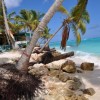
Anguilla Battles a Shrinking Coastline
When Hurricane Luis, a category four storm, lashed the tiny Caribbean island of Anguilla on Sep. 4, 1995, its forceful waves eroded all of the beaches, leaving vast areas of the shoreline carpeted with dead sea grass and debris torn from the coral reefs.
Argentina Responds to Climate Challenge with Transgenic Seeds
Researchers in Argentina have isolated a sunflower gene and implanted it into corn, wheat and soybean seeds to make them more resistant to drought and soil salinity, problems increasingly faced by this South American agricultural powerhouse as a result of global warming.
Struggling to Rebuild Côte d’Ivoire’s Health System
One-year-old Angama Ouattara lies on a rusted hospital bed, a drip attached to her tiny, left foot. Her mother, Minata, sits on the edge of the mattress, smoothing out the sheets she had to bring from home.Antibiotics Toughen Bacteria on German Farms
The recent death of five prematurely born children in the northern German city Bremen as a result of infections acquired in the hospital has strengthened fears among environmental and health experts that massive use of antibiotics in industrial livestock farming is creating extremely resistant bacteria.
Victims of War, Victims of Oblivion
"In 1982 they killed my mama and 15 other people, and they burned down our house. Now we are trying to get support, because we have not received any aid," says Jacinto Escobar, an Ixil Indian who is seeking reparations for the damages sustained during Guatemala’s 1960-1996 civil war.
Q&A: Cuban Census “Will Show a Very Diverse Reality”
Thirteen hurricanes, three of which had a major impact on housing; increased access to goods and services; and the start of the so-called "updating" of the country’s economic and social policies are a few of the aspects that make Cuba different from what it was a decade ago.
Gender Empowerment Still Lags Far Behind in Global Village
When the United Nations concluded a two-week session highlighting the plight of rural women last week, the meetings singled out both the achievements and shortcomings of the ongoing relentless battle for gender equality in a world still dominated - and overwhelmingly ruled - by men.Schoolchildren and Teachers Under Fire in El Salvador
Wilber Geovany Hernández was gunned down as he left his night classes at a school in the capital of El Salvador. He was the 11th murder victim among the country's schoolchildren since the school year began on Jan. 23.Children Lost in Aftermath of Congo’s Arms Dump Explosion
Five-year-old Vianey hasn't seen his parents since a series of explosions ripped through an ammunition dump in Brazzaville on Mar. 4. A stranger, Jules Bomboko, said he found Vianey days later, wandering around the Tréchot neighbourhood, a few hundred metres from the site of the blasts.
Q&A: Cultural Sensitivity Key to Reaching Rural Women
Empowering rural women in the Iraqi marshlands, who mostly remain off the radar of international support, must involve local languages and dialects as well as local women trainers, says Mishkat Al Moumin, founder of the Iraqi group Women and the Environment Network (WATEO).
Angola’s Police Silence the Media
Rights groups and activists are warning of a rapidly deteriorating political climate in Angola following a police raid on a private newspaper and a violent crackdown on anti-government protests.
Mesoamerica Ignores Its Water Footprint
It takes 1,600 litres of water to produce one kilo of bread. This is the type of calculation used to measure a water footprint, the total volume of freshwater used to produce the goods and services consumed by people and communities.
PODCAST: The Sound of Peace in Kenya’s Kibera Slum
 Pamoja (Swahili for ‘Together’) community radio serves the Kibera community, the biggest slum in the country. Most of the programmes are geared towards peace making at the community and family levels

The Sound of Peace in Kenya’s Kibera Slum
In a Kibera-bound mini-bus taxi, the driver changes the station just as he turns onto Ngong Road, kilometres away from the Kenyan slum. He tunes into Pamoja Radio 99.9 FM, a local community radio station that broadcasts only in Kibera.
For Caribbean Bloc, It’s Adapt or Perish
More than a decade of efforts to promote closer socioeconomic cooperation among the 15 nations of the Caribbean Community are threatened by stagnant funding and a grim global financial situation, experts warned here.
The Sun Shines Less on Solar Power in Germany
Germany is capable of producing as much solar energy as the rest of the world together. But now the German government is proposing dramatic cuts in subsidies for solar panels. They say consumer demand is so high it can no longer support the technology.Fresh Warning of Water Wars
As non-governmental organisations question the relevance of the World Water Forum being held here this week and slam its "corporate" nature, the United Nations says that a coordinated approach to managing and allocating water is critical.Ecobreves – ARGENTINA: NGOs Demand Protection for Glaciers
Environmental organizations in Argentina have called on the country’s Supreme Court of Justice to order a halt to the activities of a mining company operating in a glacier area.Ecobreves – HONDURAS: Fires Destroy 127,000 Hectares of Forests
In the last two years alone, Honduras has lost 127,000 hectares of forests in 2,400 fires, reports the Independent Forest Monitoring Committee of the National Human Rights Commission.Ecobreves – MEXICO: Scientists Call for Regulation of Nanotechnology
Nanotechnology, which is currently unregulated in Mexico, could pose serious threats to human health and the environment, cautions a new study.Ecobreves – BRAZIL: Research to Monitor São Paulo Aquifers
The State University of São Paulo (UNESP) and the Environmental Company of the State of São Paulo, a government agency, have signed an agreement for the monitoring of underground water resources in this southern Brazilian state.« Previous Page — Next Page »


 2026 High-level Political Forum on Sustainable Development. Credit: UN Photo/Eskinder Debebe
In 2015, the United Nations and its Member States adopted the Sustainable Development Goals (SDGs) in an effort to make the world a more sustainable and peaceful place for future generations. Progress on the 17 SDGs has been uneven, and inequality persists across the globe. 10 years after adoption, the 2025 UN SDGs Report revealed that only 35% of the SDG targets are on track, with more than half moving too slowly, and 18% moving backwards from the 2015 baseline. Poverty remains one of the world’s most pressing issues, with hunger, violence, and inequality impeding the opportunities for all people to achieve success. In September 2024, the United Nations Summit of the Future introduced a new goal: to eradicate global poverty by 2030, ensure universal rights to basic services, and increase the overall standard of living in terms of industrialization, economic well-being, citizen health, and literacy. Furthermore, recent shifts in United States foreign aid policy – notably, major budget cuts to USAID and the termination of thousands of development programmes– have severely threatened vital lifelines of financial aid to impoverished communities around the world. Additionally, the United States’ withdrawal from the Paris Climate Agreement has undercut international efforts at sustainable development. With the upcoming 2030 deadline, the UN Secretary-General has called for urgent multilateralism across six priority areas: food systems, energy, digital connectivity, education, jobs and social protection, and climate and biodiversity. IPS sheds light on marginalized communities that struggle on a daily basis to survive and have their stories heard and respected.
Updated by Yilan Batista and Shuli Wong August 2026

The Week with IPS

NEXT STOP - SDGs
Tracking global progress towards a sustainable world
