Languages
Thursday, November 12, 2026



News and Views from the Global South
Poverty & SDGs

On Sri Lanka’s Tea Estates, Maternal Health Leaves a Lot to Be Desired
A mud path winds its up way uphill, offering views on either side of row after row of dense bushes and eventually giving way to a cluster of humble homes, surrounded by ragged, playful children.
Saving the Lives of Cameroonian Mothers and their Babies with an SMS
“You can’t measure the joy in my heart,” Marceline Duba, from Lagdo in Cameroon’s Far North Region, tells IPS as she holds her grandson in her arms.
Experts Warn of Dire Consequences as Lake Victoria’s Water Levels Drop Further
Over the years, Cassius Ntege, a fisherman from Kasenyi landing site on the Ugandan side of Lake Victoria, has observed the waters of the lake receding. And as one of the many who depend on the lake for their livelihoods, he has had to endure the disastrous consequences of the depleting lake.
Climate Change an “Existential Threat” for the Caribbean
When it comes to climate change, Prime Minister Ralph Gonsalves doesn’t mince words: he will tell you that it is a matter of life and death for Small Island Developing States (SIDS).
Biodiversity Offsetting Advances in Latin America Amidst Controversy
Compensation for biodiversity loss, which is taking its first steps in Latin America, is criticised by social organisations for “commodifying” nature and failing to remedy the impacts of extractive industries and other activities that destroy natural areas and wildlife.
Mongolia’s Poorest Turn Garbage into Gold
Ulziikhutag Jigjid, 49, is a member of a 10-person group in the Khan-Uul district on the outskirts of Mongolia’s capital Ulaanbaatar, which is producing brooms, chairs, containers, and other handmade products from discarded soda and juice containers.
Green Economy Isn’t Rocket Science – And It’s Not Even Costly
Acting on climate change will not hurt domestic economic growth, and in fact is more likely to boost growth, most analyses now show.
Kenya’s Ogiek Women Conquer Cultural Barriers to Support their Families
Just two years ago, Mary Ondolo, a 50-year-old mother of nine from Kenya’s marginalised, hunter-gatherer community, the Ogiek, used to live in a grass thatched, mud house. She'd been living there for decades.
Half a Century of Struggle Against Underdevelopment
The idea of creating Inter Press Service (IPS) arose in the early 1960s in response to awareness that a vacuum existed in the world of journalism, which had two basic aspects.OPINION: Invest in Young People to Harness Africa’s Demographic Dividend
Different issues will be competing for the attention of different African leaders attending the 69th United Nations General Assembly Special Session on International Conference on Population and Development (ICPD) Beyond 2014 in New York on Sep 22.
Environmental Funding Bypasses Indigenous Communities
When she talks about the forests in her native Kalimantan, the Indonesian part of the island of Borneo, Maridiana Deren’s facial expression changes. The calm, almost shy person is transformed into an emotionally charged woman, her fists clench and she stares wide-eyed at whoever is listening to her.
Will Governments Keep Their Promises on the Human Right to Water?
It was a dramatic moment at the United Nations when it voted in 2010 to affirm water and sanitation as a human right.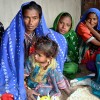
U.N. Urged to Reaffirm Reproductive Rights in Post-2015 Agenda
The U.N.'s post-2015 development agenda has been described as the most far-reaching and comprehensive development-related endeavour ever undertaken by the world body.
OPINION: Step Up Efforts Against Hunger
At the 1996 World Food Summit (WFS), heads of government and the international community committed themselves to reducing the number of hungry people in the world by half. Five years later, the Millennium Development Goals (MDGs) lowered this level of ambition by only seeking to halve the proportion of the hungry.
Geographical Divide in Maternal Health for Syrian Refugees
At the largest refugee camp in Iraqi Kurdistan, young Syrian mothers and pregnant women are considered relatively lucky.
Rare Zambian Tree Faces Exploitation Because of Legal Loophole
Steven Nyambose used to sell charcoal for a living until he discovered that the trees could be more lucrative in another way - through cutting them down and selling the logs to international buyers.

New Fund to Build on “Unprecedented Convergence” Around Land Rights
Starting next year, a new grant-making initiative will aim to fill what organisers say has been a longstanding gap in international coordination and funding around the recognition of community land rights.
Can ‘Womenomics’ Stem the Feminisation of Poverty in Japan?
Fifty-four-year-old Marlyn Maeda, an unmarried freelance writer living in Tokyo who never held a permanent job, is now watching her dream of aging independently go up in smoke.
Honduran Mothers and Grandmothers Search Far and Wide for Missing Migrants
United by grief and anxiety, the grandmothers, mothers and other relatives of people who disappeared on the migration route to the United States formed a committee in this city in northern Honduras to search for their missing loved ones.
Uganda’s Youth Discover the Beauty in Farming
Before she entered the Miss Uganda beauty contest, 24-year-old Fiona Nassaka was a farmer.
Latin America at a Climate Crossroads
World leaders gathered at the Climate Change Summit during the United Nations General Assembly on Sep. 23 will have a crucial opportunity to mobilise political will and advance solutions to climate change.« Previous Page — Next Page »


 Romani people in Cairo, Egypt, forage through trash. Credit: UN Photo/Armineh Johannes
In 2015, the United Nations adopted the Sustainable Development Goals (SDGs) in an effort to promote “peace and prosperity for people and the planet.” To achieve that goal, it is essential to provide equal opportunities and access to basic services to all people. The 2025 UN SDG Report found that 35% of the 169 SDG targets are on track or making moderate progress, while 18% have reversed compared to the 2025 baseline. One in ten people still live in extreme poverty, one in eleven experience food insecurity, and over 1.1 billion people live in slums without access to clean water and sanitation. It is imperative to acknowledge the societal, technological, economic, and political issues that sustain poverty in countries around the world. Eradicating poverty will require significant frameworks in policy and governance on a national and international scale to ensure that all people will have equal access to basic services and economic opportunities by 2030. Furthermore, a dramatic reduction of United States foreign aid in 2025, including the termination of 83% of USAID programmes, threatens to erode years of fragile development gains.
Throughout the world, violent conflict and natural disasters also contribute to extreme poverty. The complete destruction of infrastructure and blockage of aid has significantly impoverished Palestine since October 7th. The destructive impact of Hurricane Maria in Puerto Rico left $91 billion in damage. An inadequate US government response also revealed significant and enduring questions within the issue of mitigating poverty: how do we rebuild infrastructure after its destruction? How do we restimulate economic development and bring in financial aid after disasters? Similar questions have been raised in the realm of regional cooperation, as devastating floods have wrecked hundreds of thousands of homes across multiple Southeast Asian nations in the past few years. Furthermore, the COVID-19 pandemic has greatly exacerbated the global poverty crisis, particularly in developing countries, setting back the United Nations goal of eradicating poverty by 2030.
IPS is committed to providing comprehensive features that focus on the persisting environmental, sociopolitical, and systemic issues that sustain poverty, and the steps taken worldwide towards poverty eradication.

The Week with IPS

NEXT STOP - SDGs
Tracking global progress towards a sustainable world
Tracking global progress towards a sustainable world

