Languages
Friday, November 13, 2026



News and Views from the Global South
Poverty & SDGs

In Developing World, Pollution Kills More Than Disease
Pollution, not disease, is the biggest killer in the developing world, taking the lives of more than 8.4 million people each year, a new analysis shows. That’s almost three times the deaths caused by malaria and fourteen times those caused by HIV/AIDs. However, pollution receives a fraction of the interest from the global community.
Q&A: “Some Individuals Are Now as Wealthy as Entire Countries”
As it turns 50, the United Nations Conference on Trade and Development (UNCTAD) finds itself engaged in an ongoing struggle to reduce economic and social inequalities in the world.
Op-Ed: Not Only Hunger, but Malnutrition Too
Continued growth in developing countries, along with poverty-reduction policies, have helped to improve both income and food security globally.
Post-2015 Development Agenda – Will the Voices of the Hungry be Heard?
The Millennium Development Goals (MDGs) will expire in 2015 and be replaced with the Sustainable Development Goals (SDGs), which are intended to strengthen the international community's engagement with eradicating poverty and hunger.
‘Travelling Testimonies’ – Uganda’s First Mobile Exhibition to Document Conflicts Other Than the LRA War
 The late Malian writer and ethnologist Amadou Hampâté Bâ said, “In Africa, when an old person dies, it is a library that burns”, so huge is the loss of oral stories and information. It’s a saying that rings true with the Acholi ethnic group, that was left devastated by the war in northern Uganda. “Our culture believes, when someone dies, there is a grave and it documents the loss. Now we need to look beyond the graves,” Acholi chief Rwoth Achoro says.

Deadline Looms for Due Diligence Reporting on U.S. Investments in Myanmar
U.S. companies newly operating in Myanmar have until the end of the month to file official reports detailing the actions they’ve taken to ensure that their investments comply with safeguards around land, human rights and other concerns.
Cameroon, Where Poor Infrastructure Doesn’t Dim Love for Football
It is almost 6pm. A group of kids are plying their craft in a dusty, dirty courtyard in a poor neighbourhood in Yaounde, Cameroon’s capital. That craft is football. They kick the once-white-but-now-brown, aged football around. One child is barefoot, the other wears worn shoes and is dressed in the kit of the national team.
Chile’s Patagonia Celebrates Decision Against Wilderness Dams
The Chilean government rejected Tuesday the controversial HidroAysén project for the construction of five hydroelectric dams on rivers in the south of the country. The decision came after years of struggle by environmental groups and local communities, who warned the world of the destruction the dams would wreak on the Patagonian wilderness.
U.N.’s Energy Funding Falls Short of Target by Billions
When the United Nations inaugurated the first-ever global forum on renewable energy last week, it provided a laundry list of financial pledges aimed at achieving one of the world body's most ambitious goals: sustainable energy for all (SE4ALL) by 2030.
Mothers Light Up Homes in Rural Tanzania
“My mother used to just stay at home, now she has come back and is an engineer and a leader. She is on the Village Energy Committee,” said a 10-year-old girl from the village of Chekeleni, in Tanzania’s southeastern Mtwara district.
Housing Crisis Worsens Urban Inequality in Pacific Islands
Rapid migration to cities and towns, driven by scarce public services and jobs in rural areas, is producing a profound social shift in Pacific Island countries, where agrarian life has dominated for generations. But the urban dream remains elusive as a severe lack of housing forces many into sprawling, poorly-serviced informal settlements.
Peru Needs to Know More About its Water in Order to Supply More People With the Valuable Resource
Peru urgently needs a national plan for the management of water over the next two decades, one that will take into account the effects of climate change and the social and environmental conflicts triggered by problems over water.
Mauritian Sugar Farmers Squeezed by Low Prices as Bagasse and Ethanol Become Popular By-products
While Mauritius has been forced to transform its sugar industry because of low prices for the commodity, the country’s small-scale sugarcane farmers who contribute to it say they are barely earning a living.
Op-Ed: First Decolonisation, Now ‘Depatriarchilisation’
At the end of this week leaders of the Group of 77 and China will meet in Bolivia to commemorate the 50th anniversary of the group.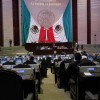
Latin America’s Forests Need Laws – and Much More
Latin America’s parliaments have failed to protect the forests and to guarantee their sustainable use, despite the fact that a number of countries have laws on forests, legislators from the region said at a global summit in the Mexican capital.
Sri Lankan Monsoon Comes for the Poor
By now, the tale has become almost mundane: first the rains remain elusive, refusing to quench the parched earth. Then, without warning, they fall in such torrents that they leave scores dead, hundreds injured, and thousands homeless, plus a heavy bill in accrued damages.
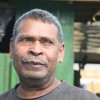
Kiribati President Purchases ‘Worthless’ Resettlement Land as Precaution Against Rising Sea
You can count the inhabitants of this isolated, tidy village of multi-coloured houses and flower bushes among global warming’s first victims – but not in the usual sense.
Nature Is Talking And Africa’s Legislators Are Listening
Africa's climate change legislative frameworks, though a step in the right direction, have come under fire for not being ambitious enough to meet the challenge of a changing climate.
Q&A: Developing World Leads in Advancement of Climate Change Laws
Developing countries in Africa, Asia and Latin America are increasingly leading the way in providing a legal framework for climate security and are being hailed for their continued advancement in formulating climate change laws and policies.Brazil, Football and Protests
It is unlikely that Brazilians will listen to the audacious call made by Michel Platini – a great player in his time and now the politicking president of the Union of European Football Associations (UEFA) – on Apr. 26: “Brazil, make an effort for a month, calm down!”International Cooperation on Key Issues Fell in 2013
International cooperation on key global challenges declined in 2013, according to a new “report card” released here Friday by the influential Council on Foreign Relations (CFR).« Previous Page — Next Page »


 Romani people in Cairo, Egypt, forage through trash. Credit: UN Photo/Armineh Johannes
In 2015, the United Nations adopted the Sustainable Development Goals (SDGs) in an effort to promote “peace and prosperity for people and the planet.” To achieve that goal, it is essential to provide equal opportunities and access to basic services to all people. The 2025 UN SDG Report found that 35% of the 169 SDG targets are on track or making moderate progress, while 18% have reversed compared to the 2025 baseline. One in ten people still live in extreme poverty, one in eleven experience food insecurity, and over 1.1 billion people live in slums without access to clean water and sanitation. It is imperative to acknowledge the societal, technological, economic, and political issues that sustain poverty in countries around the world. Eradicating poverty will require significant frameworks in policy and governance on a national and international scale to ensure that all people will have equal access to basic services and economic opportunities by 2030. Furthermore, a dramatic reduction of United States foreign aid in 2025, including the termination of 83% of USAID programmes, threatens to erode years of fragile development gains.
Throughout the world, violent conflict and natural disasters also contribute to extreme poverty. The complete destruction of infrastructure and blockage of aid has significantly impoverished Palestine since October 7th. The destructive impact of Hurricane Maria in Puerto Rico left $91 billion in damage. An inadequate US government response also revealed significant and enduring questions within the issue of mitigating poverty: how do we rebuild infrastructure after its destruction? How do we restimulate economic development and bring in financial aid after disasters? Similar questions have been raised in the realm of regional cooperation, as devastating floods have wrecked hundreds of thousands of homes across multiple Southeast Asian nations in the past few years. Furthermore, the COVID-19 pandemic has greatly exacerbated the global poverty crisis, particularly in developing countries, setting back the United Nations goal of eradicating poverty by 2030.
IPS is committed to providing comprehensive features that focus on the persisting environmental, sociopolitical, and systemic issues that sustain poverty, and the steps taken worldwide towards poverty eradication.

The Week with IPS

NEXT STOP - SDGs
Tracking global progress towards a sustainable world
Tracking global progress towards a sustainable world

