Languages
Wednesday, November 18, 2026



News and Views from the Global South
Poverty & SDGs

G8 Turns to Private Sector for Food Crisis Solutions
On the eve of the Group of Eight (G8) summit near Washington, President Barack Obama on Friday unveiled a major new initiative aimed at shoring up food security and combating global hunger.
Funding Dries Up Even as Rains Worsen Cholera Deaths
As predicted, the beginning of the rainy season in Haiti brought exponential increases in the numbers of people sickened and killed by cholera.
Q&A: How Sex Education Programs Can Shape a Better Future
In Latin American countries and in the Caribbean, where income disparities are among the greatest in the world, too many people often lack access to comprehensive health services and information needed to live healthy lives.
Caught Between Diarrhoea Bugs and Arsenic
Achieving the Millennium Development Goal of providing access to safe drinking water for its 160 million people by 2015 is a tough call for Bangladesh, which is caught between arsenic contaminated groundwater and diarrhoea-causing microbes in its ponds and rivers.
From Mubarak To Worse
More than 15 months after Egypt's Tahrir Square uprising and four months after free parliamentary polls, many Egyptians say that daily living conditions are worse now than they were in the Mubarak era.
World Bank Accused of Ignoring Lessons on Mega Infrastructure
In a renewed funding focus on large-scale infrastructure, the World Bank, Group of 20 (G20) countries and other multilateral groups are wilfully overlooking lessons learned decades ago, a new report by International Rivers warns.
Maternal Deaths Drop By Nearly Half
The statistics have remained staggering: every two minutes, a woman dies of pregnancy and child birth-related complications caused primarily by severe bleeding, infections, high blood pressure and unsafe abortions.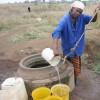
Brazilian Government Sets Guidelines for Success at Rio+20
As the host of Rio+20, the Brazilian government has defined guidelines for achieving success at the upcoming world summit, whose aim is to assess and strengthen what has been done since the 1992 Earth Summit, the first global meeting on sustainable development.
Despite Economic Growth, Food Insecurity Lingers in Africa
Everlyne Wanjiku, a single mother of five, has earned a living selling vegetables in the sprawling Kibera slum in Nairobi, Kenya, for over three decades. And even though her earnings were meagre, she was able to provide all her children with a tertiary education.
Jamaica’s Rich Biodiversity Faces Multiple Threats
Jamaican authorities are going all out to achieve environmental sustainability as one way of minimising the expected impacts of climate change on the local biodiversity.
Shedding Light on Inequality in World’s Most Unequal Region
A new report takes a close look at the territorial distribution of poverty and inequality in Latin America, which has long had a reputation of being the most unequal region in the world.
“Not a Famine, but an Issue of Food Insecurity”
Millions of Angola’s poorest families are facing critical food insecurity as a prolonged dry spell across large parts of the country has destroyed harvests and killed off livestock.
Q&A: Women Farmers Are Key to a Food-Secure Africa
While women constitute the majority of food producers, processors and marketers in Africa, their role in the agricultural sector still remains a minor one because of cultural and social barriers.War Widows Turn to Sex Work in Sri Lanka
On May 18, some 800 women in Sri Lanka’s northern region will hold Hindu religious ceremonies for the welfare of thier husbands who disappeared or surrendered to the military as it moved in to mop up nearly three decades of armed Tamil separatism.
U.N. Warns of Social Fall-Out from Spain’s Austerity Plan
An expert body of the United Nations has warned the Spanish government that the severe budget cutbacks it is applying must not undermine its commitment to upholding the economic, social and cultural rights of the country's people.
Struggles over Land Rights Fall Under the Rio+20 Radar
Land is the missing element at next month's big U.N. sustainable development summit known as Rio+20, where nations of the world will meet Jun. 20-22 with the goal of setting a new course to ensure the survival and flourishing of humanity.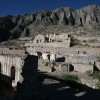
An Argentine Perspective on Degrowth
The controversial concept of degrowth receives little press coverage in a region like Latin America. But the idea of a way of life that is not aimed exclusively at GDP growth does have its proponents in Argentina.
Major Effort to Reduce Child Mortality Not Enough
Ghana has taken a major step towards reducing its under-five mortality rate by becoming the first African country to introduce two new vaccines for rotavirus and pneumococcal disease.
Water Conflicts Move Up on U.S. Security Agenda
On Wednesday, the United States intelligence community unveiled a first-ever assessment of global water-security issues.
Q&A: Protecting Oceans Equals Protecting Our Planet
The U.N. Environment Programme (UNEP), whose mandate includes the preservation and protection of the world's fast-degrading oceans, will play a pivotal role in Expo 2012, an international exhibition to be formally opened later this week in the coastal town of Yeosu in South Korea.
Africa’s Two Female Presidents Join Forces for Women
The only two female heads of state in Africa, Liberian President Ellen Johnson Sirleaf and Malawian President Joyce Banda, have just committed to using their positions to improve the lives of women across the continent.« Previous Page — Next Page »


 Romani people in Cairo, Egypt, forage through trash. Credit: UN Photo/Armineh Johannes
In 2015, the United Nations adopted the Sustainable Development Goals (SDGs) in an effort to promote “peace and prosperity for people and the planet.” To achieve that goal, it is essential to provide equal opportunities and access to basic services to all people. The 2025 UN SDG Report found that 35% of the 169 SDG targets are on track or making moderate progress, while 18% have reversed compared to the 2025 baseline. One in ten people still live in extreme poverty, one in eleven experience food insecurity, and over 1.1 billion people live in slums without access to clean water and sanitation. It is imperative to acknowledge the societal, technological, economic, and political issues that sustain poverty in countries around the world. Eradicating poverty will require significant frameworks in policy and governance on a national and international scale to ensure that all people will have equal access to basic services and economic opportunities by 2030. Furthermore, a dramatic reduction of United States foreign aid in 2025, including the termination of 83% of USAID programmes, threatens to erode years of fragile development gains.
Throughout the world, violent conflict and natural disasters also contribute to extreme poverty. The complete destruction of infrastructure and blockage of aid has significantly impoverished Palestine since October 7th. The destructive impact of Hurricane Maria in Puerto Rico left $91 billion in damage. An inadequate US government response also revealed significant and enduring questions within the issue of mitigating poverty: how do we rebuild infrastructure after its destruction? How do we restimulate economic development and bring in financial aid after disasters? Similar questions have been raised in the realm of regional cooperation, as devastating floods have wrecked hundreds of thousands of homes across multiple Southeast Asian nations in the past few years. Furthermore, the COVID-19 pandemic has greatly exacerbated the global poverty crisis, particularly in developing countries, setting back the United Nations goal of eradicating poverty by 2030.
IPS is committed to providing comprehensive features that focus on the persisting environmental, sociopolitical, and systemic issues that sustain poverty, and the steps taken worldwide towards poverty eradication.

The Week with IPS

NEXT STOP - SDGs
Tracking global progress towards a sustainable world
Tracking global progress towards a sustainable world

