Languages
Friday, November 20, 2026



News and Views from the Global South
Natural Resources

Renaissance Rice Rises From the Debris
This April, a small rice paddy field in Minami Sanriku, destroyed by the massive earthquake and tsunami last year in Japan, provided one of its most fertile yields yet - bringing hope and joy to the devastated local community.
ANTIGUA: Mysterious Pest Targets Valuable Palm Trees
Something is decimating the coconut and other palm trees here and no one seems to know exactly what it is.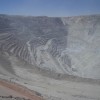
Outsourced Chilean Copper Workers “21st Century Slave Labour”
"Temporary and subcontracted workers in the copper industry are the slave labour of the 21st century. Lacking rights and social protection, they are vulnerable and defenceless," complained Cristián Cuevas, the leader of a union for outsourced Chilean copper workers.Brazil and China, Oiling the Wheels of Business
China's voracious demand for energy has prompted it to embrace Brazil as a major oil partner, fuelling the dramatic expansion of Chinese companies in this South American country. But while some see this as a boost to the Brazilian economy, others fear that it poses a risk to this country’s future self-sufficiency.
In Antigua, Fishing Brings Both Income and Ecological Destruction
Eli Fuller is a third-generation Antiguan who, for the past two decades, has been exploring the Antigua and Barbuda coastline. But he laments the fact that he can no longer see the coral that he recalls were somewhat of an underwater jungle when he was a young boy, akin to what you'd see in the Amazon rain forest.
Big Hydropower Dams Trump Alternative Energy in Chile
Chile has enormous potential for producing non-conventional renewable energies (NCRE) like solar and geothermal, yet they only contribute three percent of the country's energy mix.
“Africa – a Place Where You Will Make Money, Not Lose Money”
Africa needs to reduce its dependency on foreign aid and get to the point of financing its own development, some of the continent’s key development experts say. Timing is optimal now that Africa is experiencing an economic boom with annual growth rates of up to eight percent.
Nothing to Show for Hard Work but Burnt Fields of Maize
Gertrude Mkoloi earns a living harvesting maize on a small piece of land in rural Zimbabwe. Or at least she used to.
Guatemalan Communities Have No Say in Exploitation of Resources
"People haven’t been coming in for the past month or so because they are afraid again, like during war-time," complained Juan Gaspar, a shopkeeper in the northwestern Guatemalan town of Santa Cruz Barillas, where a fierce battle is raging between locals opposed to a hydropower dam and the security forces.
Brazil Drives Energy Integration in South America
Energy integration in South America will be a reality "in the medium to long term," driven by hydropower and drawing on Brazil’s experience, predicts Altino Ventura Filho, secretary of planning in this country’s Ministry of Mines and Energy.Public Funds Could Help Provide Water and Electricity, Researchers Say
For several decades, governments around the globe have turned to privatisation as the best option to help relieve the world's destitute by providing them with health care services, water and electricity. By and large, however, this effort has failed.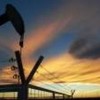
Argentina Faces the Dilemma of Unconventional Oil and Gas
Vast reserves of natural gas and oil trapped underground, whose exploitation would signify major environmental impacts, will be the greatest challenge facing YPF, the Argentine oil company that recently returned to state control.Chile’s Native Communities Find Ally in Supreme Court
Indigenous groups in Chile celebrated a recent court ruling that represented the latest victory in the struggle for respect for their right to be previously consulted about major projects which directly affect their communities.
Egypt-Israel Gas Issue Becoming Explosive
The two weeks since Egypt's abrupt cancellation of a Mubarak-era gas-export deal with Israel have seen an exchange of indirect threats and warnings between the two countries, culminating in an apparent Israeli military build-up on the border of Egypt's Sinai Peninsula.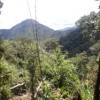
Indigenous Peruvian Community Locked in Dispute with Oil Company
An indigenous group in the Amazon rain forest took its anti-oil message to Canada in a case rife with accusations of social and environmental damage that highlights the issue of securing consent prior to commencing exploration operations.
Renationalised YPF Aims to Bring Self-Sufficiency in Oil and Gas
After the Argentine Congress approved the renationalisation of YPF, the country’s biggest oil company, late Thursday, thousands of demonstrators from different political and social groups cheered the decision outside the legislature.
U.S. Corporations Sponsor Carbon Scam in Europe**
Major publicly traded U.S. corporations, including Dow Chemical, ConocoPhillips, Chevron and Cabot Corporation, have secured multi-million-dollar dubious carbon credits to compensate for their greenhouse gas emissions in Europe, as revealed in this investigative report.
Bolivia Boosts Incentives for Foreign Oil Companies
Almost six years after the nationalisation of gas and oil reserves in Bolivia, foreign companies maintain an active presence in the sector, and the government is now offering them greater incentives to increase oil production.
Brazilian Mining Giant under Fire for Deaths, Environmental Damage
Social movements from several countries accused Brazil’s Vale, the world’s second largest mining company, of causing serious environmental and social damage, as well as the deaths of 15 workers in labour accidents between 2010 and 2012.
U.S.: Occupy Earth Day Targets Chevron
This year, Earth Day in Richmond, California was more than planting organic gardens or exploring solar panels.Sudan’s President Rules Out Talks with South
Omar al-Bashir, Sudan's president, has pledged not to negotiate with South Sudan amid reports of fresh air attacks on his country's southern neighbour.« Previous Page — Next Page »


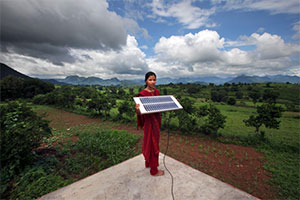 Bringing clean energy to rural India. Credit: Abbie Trayler-Smith / Panos Pictures / Department for International Development
Large reserves of oil, gas and minerals in developing countries generate opulent revenues. They could be used to stimulate economic growth and reduce poverty, but often result in environmental destruction and conflict, benefiting large companies and corrupt governments. Furthermore, competition over natural resources often manifests through geopolitical conflict. For example, before the US-Iraq war, Iraq’s domestic oil industry was nationalized. With US aggression came weakened Iraqi institutions and foreign intervention, thus eventually leading to the privatization of Iraqi oil, leaving the industry now largely dominated by Western companies. As another example, China’s rising investments within the lithium sector in South America are increasing the US-China rivalry across the Western Hemisphere. Notably, Bolivia has the largest reserves of lithium in the world, and the nation’s state-owned lithium extraction firm recently signed a contract with China’s CBC Consortium, while rejecting the entry of Western firms into the nation. In Bolivia’s case, rising Chinese investment in the nation’s lithium sector also raises concerns about environmental sustainability and the sociopolitical rights of Indigenous communities. More broadly, Sub-Saharan Africa holds nearly 30% of global reserves of critical minerals required for low-carbon technologies. Despite this, the region attracts less than 10% of global exploration investment, depicting a critical barrier to both the clean energy transitions and Sub-Saharan Africa’s economic development. Furthermore, resource wealth continues to fuel conflict like Sudan’s civil war, which has led to 9.1 million internally displaced people and is intensely connected to competition over gold, water, and agricultural land. IPS covers news about major oil, gas, and mining projects, their effects on the environment and local communities, and the ideas and actions of the interest groups involved.

The Week with IPS

NEXT STOP - SDGs
Tracking global progress towards a sustainable world
Tracking global progress towards a sustainable world
